Police auction ATVs for sale: A Professional Overview of Government Surplus and Asset Liquidation
Understanding the Nature of Police and Municipal Surplus Auctions
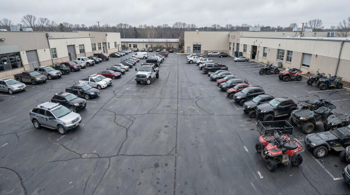
Police auctions serve as a formal liquidation channel for law enforcement agencies and municipal governments to dispose of confiscated property, abandoned vehicles, and aging fleet equipment. These events involve a variety of assets, ranging from standard patrol cruisers to specialized off-road machinery such as all-terrain vehicles (ATVs) 1, 4, 11. When agencies declare equipment surplus, such as vehicles that have reached a specific mileage threshold or are no longer mission-critical, they are often liquidated through public tenders or online auction portals 11, 12. Prospective buyers should recognize that these assets are frequently sold on an as-is, where-is basis, meaning the burden of due diligence rests entirely with the participant 2, 3.
The inventory available at these sales is often heterogeneous, including units ranging from operational surplus to damaged theft recoveries 2, 3. For example, items recovered by police departments might have been part of criminal investigations or simply abandoned at impound lots 3, 4. Because of the unique history associated with these machines, agencies often require specific legal documentation before a transfer can be completed, including the processing of salvage titles or bills of sale depending on the jurisdiction and the unit’s condition 2. Transparency regarding these conditions is a core component of the municipal auction framework 3, 5.
Essential Procurement Protocols and Eligibility Requirements
Participating in government-led auctions requires strict adherence to registration and identity verification protocols. Most municipal and state auctions necessitate that bidders present a valid state-issued identification card or driver’s license, and in some instances, specific documentation like a passport or consulate ID is required 4, 10. Furthermore, age restrictions are typically enforced, with most auctions requiring attendees to be at least 18 years old to bid on assets 4. Registrants must also ensure their account information matches their legal credentials to avoid potential bidding errors or disqualification 5.
Financial compliance is equally rigorous, with many agencies rejecting standard payment methods like personal credit cards for high-value items, preferring instead wire transfers, cashier’s checks, or cash 9, 10. Failure to satisfy payment terms within the designated timeframe-often as short as one hour after the final bid for physical auctions or a few days for online platforms-can result in the forfeiture of the asset, a permanent ban from future auctions, and the loss of any initial security deposits 3, 4, 10.
Assessing Asset Condition and Mechanical Viability
A primary challenge for bidders in police auctions is the often-unknown mechanical history of the ATVs being sold. Unlike private-market transactions, these units are rarely accompanied by maintenance logs or service histories 3. Units are frequently sold without keys, and it is standard for the auctioning agency to stipulate that the unit's ability to run or operate is unverified 3, 5. Because these vehicles are frequently sourced from impound lots, they may have suffered from prolonged exposure to environmental elements or, in the case of theft recoveries, significant operational abuse 2, 3.
Buyers are strongly encouraged to utilize independent reporting services such as VIN check databases or vehicle history reports to uncover potential encumbrances, although these services are not affiliated with the selling agency and require separate fees 1, 12. Physical inspection, when permitted by the agency, remains the most reliable method for evaluating the true state of the equipment 9. Prospective owners must account for the high likelihood of necessary repairs, including engine work, electrical overhauls, or structural component replacements, when calculating the total cost of acquisition 12, 17.
Logistics: Removal, Titling, and Decommissioning
Winning a bid does not conclude the transaction; the logistics of moving the asset represent a significant operational consideration. In many municipal auctions, assets cannot be driven away from the lot; they must be removed by a licensed wrecker or a professional transport service within a strict, predefined window-often within a few days of the sale’s conclusion 4, 10. Failure to comply with these removal deadlines can lead to storage fees or the immediate relisting of the item by the agency 7, 16.
Furthermore, purchasers should be aware that police-issued vehicles are often sold as retired emergency equipment. This status requires that the buyer, if they are not a legal law enforcement entity, takes responsibility for the removal or decommissioning of any remaining red or white lights, strobes, sirens, or internal radio equipment 17, 18. The title documentation process can also be complex, as title delivery may take several weeks following the receipt of payment and processing of necessary government forms 2, 9.
Market Trends: Factors Influencing Asset Availability
The supply of ATVs available through police channels is highly cyclical, influenced by municipal budget cycles, equipment replacement schedules, and law enforcement operational needs. Large agencies, such as those overseeing border patrol or tactical units, periodically upgrade their fleets, which contributes to the availability of specialized, high-performance equipment in the secondary market 16. Conversely, municipal police departments often list retired patrol vehicles and smaller impounded assets on a rolling basis, depending on the volume of abandoned property processed through their local tow lots 4, 10.
Buyers should also monitor government procurement tenders, which occasionally detail the acquisition of new equipment for agencies; tracking these announcements provides insight into what types of older models may be scheduled for phase-out in upcoming fiscal periods 14, 15. While public sector entities prioritize transparency in these auctions, the market remains volatile, as items can be withdrawn from sale at any point prior to the conclusion of the auction at the discretion of the government agency 5, 16.
Risk Mitigation and Independent Verification
The inherent risks of purchasing government-seized assets-including potential legal title disputes, mechanical failures, and hidden damage-necessitate a cautious approach. Utilizing reputable, large-scale auction platforms that specialize in government surplus can provide a measure of protection through standardized terms and conditions 8, 13. However, even on these platforms, the lack of warranties, whether expressed or implied, remains the industry standard for government sales 2, 5.
Before engaging in any auction, bidders should verify the specific requirements of the local jurisdiction, as regulations regarding abandoned property, title transfers, and public access to police lots vary significantly by state and municipality 4, 10. By focusing on transparently listed items with clear identification and maintaining a strict, pre-determined budget that accounts for both the buyer's premium and potential post-purchase repair costs, interested parties can navigate the complexities of police asset liquidation with greater predictability 7, 8, 17.
Sources
- Auction757 - Norfolk Police Towing Auction
- Central Auction Group - Asset Details
- Official Auctions - Kansas City Police Tow Lot Terms
- City of Dallas Police - Auto Pound Auction Policy
- Woolsey Auction - Kansas City Police Tow Lot
- Tenderyetu - GSU Police Boarded Vehicles
- Jackson Township - GovDeals Public Notice
- Miramar Police - Surplus Vehicle Auction
- Capital Auto Auction - Used ATV Guidance
- Powell Auction - Police Seizure Terms
- NoticeRegistry - Columbus Impound Lot Notices
- Keizertimes - Surplus Auction Reporting
- AutoBidMaster - Salvage ATV Market Data
- Maine Government - Surplus Property
- Auction Finder - Australian Police Auctions
- SCA - Salvage ATV Listings Indiana/Texas
- ABetter.Bid - Michigan Salvage Auctions
- YourOhioNews - Lake Township Police Cruiser Auction
- Global Auction Guide - Retired Police Vehicle Listings
- Ridgely Auction - Confiscated Assets
- NoticeRegistry - Artesia Procurement Notice
- BidsFactory - Chile Carabineros Tender
- Okoboji City - Bid Notice
- Village of Shelby - Law Enforcement Surplus
- Biz Trade Centres - Police Electric ATV Overview
Authored by MyTrendSpot team