Affordable fencing materials near me: A Consumer Guide to Local Options
Searching for Affordable fencing materials near me usually means comparing local suppliers, home-improvement retailers, and material-only options rather than evaluating installation services alone. The main considerations are fence type, total linear footage, included components, transportation, maintenance, and local rules.
What affordable fencing materials generally include
A complete fence project normally requires more than panels or rolls of fabric. Suppliers commonly organize materials into posts, rails or framework, pickets or mesh, gates, hinges, latches, fasteners, post caps, and concrete. Tim’s Fencing in Knoxville describes material packs that can include lumber, vinyl, aluminum, chain link, posts, hardware, and concrete, while allowing homeowners to provide dimensions and fence specifications for a project estimate. 2
Local inventories differ by region and business model. Chamblee Fence Company reports a 40,000-square-foot warehouse and a selection of aluminum, wood, chain link, vinyl, and gate materials in the Atlanta metropolitan area. Area Wide Fencing lists vinyl panels, chain-link fabric, posts, gates, deck boards, railing, and related hardware at its Warsaw, Indiana location. These examples show why a nearby supplier may carry individual components that are not packaged together at a retail store. 1 4
Chain link and wire options
Chain-link fencing is commonly positioned as an affordable security and containment material because it uses relatively little material and can serve backyards, pet areas, pool enclosures, commercial perimeters, and temporary sites. Available configurations may include galvanized fabric, vinyl-coated fabric, terminal posts, line posts, gate frames, hinges, and latches. PDQ Fence Supply describes galvanized and black vinyl-coated systems for Fayetteville-area projects, including dog kennels and runs. 6
Wire fencing and livestock panels can be practical for rural properties, gardens, agricultural boundaries, and animal enclosures. Tractor Supply’s fencing category includes wire fencing, livestock panels, posts, gates, and electric-fence supplies, while Scheiderer Fence identifies fencing wire for agricultural, residential, and commercial uses. Gauge, height, coating, post spacing, and gate requirements affect the amount of material needed and the project’s final cost. 14 3
Wood fencing and lumber choices
Pressure-treated pine commonly has a lower initial material cost than vinyl, composite, or ornamental-metal fencing, although its long-term upkeep can include staining, painting, inspection, and replacement of damaged boards. Forney Fence Supply identifies treated pine, Western Red Cedar, Japanese Cedar, redwood, and Douglas fir among its wood options, with designs ranging from picket and split rail to board-on-board privacy. Wood also allows customization through stains, paints, and fence profiles. 10
Cedar may carry different material and maintenance considerations from treated pine. Dallas Cedar’s Arlington yard describes Western Red Cedar pickets, rails, and posts as naturally resistant to rot and insects, with several widths, lengths, and profiles. Southern Roots Fencing emphasizes the importance of straight, consistent lumber and appropriate fasteners, noting that warped or split boards can complicate installation. Inspection at pickup is therefore relevant for both appearance and structural reliability. 9 5
Vinyl, aluminum, and ornamental metal
Vinyl fencing generally requires less painting, staining, and routine surface maintenance than wood, but its initial material cost is often higher than basic wood or chain link. Typical components include privacy, picket, or semi-privacy panels, posts, caps, rails, connectors, and hardware. Area Wide Fencing lists six-foot and eight-foot privacy panels alongside picket and semi-privacy systems, illustrating how height and configuration influence material requirements. 4
Aluminum is used where appearance, corrosion resistance, and low upkeep are priorities, particularly for decorative boundaries and pool enclosures. Chamblee Fence describes powder-coated aluminum panels as rust resistant, while Tim’s Fencing lists aluminum and ornamental metal among its available categories. These materials may reduce painting obligations, but they can involve a higher initial material commitment than chain link or basic wood. Pool applications also require careful attention to local safety rules and gate hardware. 1 2
Where local materials may be found
Potential sources include dedicated fence-supply yards, regional lumber suppliers, agricultural retailers, hardware stores, and national home-improvement chains. Home Depot’s fencing category includes wood, vinyl, chain link, metal, posts, gates, and hardware. Lowe’s describes fencing and landscaping products that include panels, posts, gates, and installation supplies, while Ace Hardware lists fencing, gate products, posts, repair parts, and installation hardware. Local inventory and pricing can vary by ZIP code and store. 11 12 15
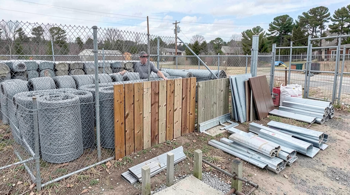
Material-only suppliers can be useful when a homeowner plans to install the fence independently or needs replacement components. Scheiderer Fence serves DIYers and contractors with wood boards, panels, posts, and wire, and Area Wide Fencing states that its program is open to homeowners without a minimum order. Some suppliers may offer delivery, while others require pickup, and availability should be confirmed before traveling because common items and specialty dimensions may not be stocked at every location. 3 4
How to compare the total project requirement
Comparing a panel price alone can conceal necessary expenses. Angi identifies linear footage, material, labor, terrain, gates, and site preparation as factors that influence fencing costs. A useful comparison should therefore record fence height, total footage, number and width of gates, post count, concrete quantity, hardware, delivery or transport, and any finishing materials such as stain or paint. 17
| Material category | Common use | Primary consideration |
|---|---|---|
| Chain link | Security, pets, yards, commercial boundaries | Fabric gauge, coating, posts, and gates |
| Pressure-treated wood | Privacy, picket, decorative fencing | Board quality and ongoing finishing |
| Wire or livestock panels | Gardens, farms, animal enclosures | Mesh design, tension, and support posts |
| Vinyl | Privacy and low-maintenance boundaries | Panel height, style, connectors, and posts |
| Aluminum | Decorative fencing and pool enclosures | Coating, gate design, and local requirements |
For broader comparisons, Forbes Home and HomeGuide identify chain link and wire as lower-cost categories relative to more elaborate privacy and composite systems, while Bob Vila and This Old House describe tradeoffs among initial expense, durability, appearance, and maintenance. These comparisons are general rather than local quotes, because regional labor, terrain, dimensions, and inventory can materially change the result. 18 20 19 16
Risks, rules, and maintenance realities
Fence installation can be constrained by zoning, property setbacks, height limits, permits, easements, pool regulations, and homeowners-association standards. The American Fence Association provides consumer information about fence types, installation considerations, and selecting a fencing professional. Requirements vary by jurisdiction, so a material that appears suitable may not be permitted at a proposed height, boundary, or location. 21
Post holes also create an underground utility risk. Call811.com directs homeowners to request utility marking before digging, an important site-preparation step regardless of material. Reclaimed, used, or surplus fencing can reduce material expenditure, but it should be inspected for rot, rust, bent sections, damaged coatings, missing hardware, and inconsistent dimensions. Maintenance remains part of ownership: wood may need refinishing, metal may need corrosion checks, and gates require periodic hardware inspection. 22
Practical local comparison checklist
A location-based comparison is more reliable when every supplier receives the same project description. The requested information should include the ZIP code, linear footage, desired height, fence type, color or finish, number of gates, terrain conditions, and whether materials alone or installation is being considered. Tim’s Fencing specifically requests dimensions, fence type, color, and project details, while PDQ Fence Supply describes itemized material quotations based on project measurements. 2 6
- Verify whether posts, concrete, rails, caps, gates, and hardware are included.
- Compare matching heights, gauges, board dimensions, coatings, and grades.
- Ask whether pickup, delivery, or custom milling changes the material requirement.
- Inspect lumber, mesh, panels, and hardware for damage before accepting them.
- Confirm zoning, setback, HOA, permit, and utility-marking requirements before digging.
The most economical material in a local search is not necessarily the one with the lowest individual component price. A complete comparison weighs the required system, transport, installation complexity, maintenance, regulatory compliance, and expected service conditions. Chain link, pressure-treated wood, wire, vinyl, and aluminum each occupy a different position in that evaluation, making project specifications more informative than a generic category label. 17 18
Sources
- Chamblee Fence Company, Fence Materials
- Tim’s Fencing, Fence Materials and Supply in Knoxville
- Scheiderer Fence, Fence Material Sales
- Area Wide Fencing, Wholesale Fence Supply
- Southern Roots Fencing and Supply, Fence Supplies
- PDQ Fence Supply, Chain Link Fencing
- American Fence Supply, Chain Link Fencing
- Lowe’s, Fencing and Landscaping
- Dallas Cedar, Arlington Building Materials
- Forney Fence Supply, Wood Fencing
- The Home Depot, Fencing
- Lowe’s, Fencing Installation
- Menards, Fencing
- Tractor Supply Co., Fencing
- Ace Hardware, Fencing
- This Old House, Fence Cost Review
- Angi, Fence Installation Cost Factors
- Forbes Home, Fence Cost Comparison
- Bob Vila, Fence Cost and Material Guide
- HomeGuide, Fence Installation Cost
- American Fence Association, Consumer Information
- Call811.com, Utility Marking Guidance
Authored by MyTrendSpot team