Dental assistant salaries by state: regional pay variations across the U.S. - An Analytical Overview of Industry Compensation
Dental assistant compensation is subject to significant regional fluctuations across the United States, driven by a complex interplay of labor demand, local cost of living, and state-specific regulatory requirements 5. While the national median annual wage for dental assistants sits at approximately $47,000, individual pay can vary substantially based on geography 4, 6. Understanding these regional disparities is essential for professionals evaluating career opportunities and long-term earning potential within the dental healthcare sector 5.
National Compensation Benchmarks and Regional Trends
The dental assisting profession is currently navigating a period of significant structural demand, with many dental practices identifying staffing shortages as a primary operational challenge 5. As of recent data, the national median hourly wage for these professionals is approximately $22.74, with annual earnings generally falling between $35,470 and $61,060 for entry-level positions 4, 6. However, these national averages often mask the reality that earning power is highly localized 3. Regions with higher costs of living consistently demonstrate higher wage floors to account for the increased overhead and metropolitan expenses associated with clinical practice 3, 8.
Highest-Paying States for Dental Assistants
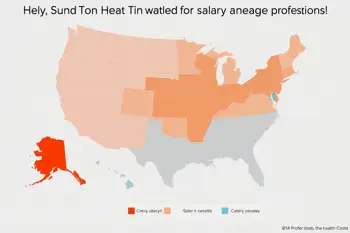
Data consistently indicates that the Pacific region and select areas in the Northeast offer the highest average annual salaries for dental assistants 8. States such as Alaska, Washington, and Massachusetts frequently appear at the top of compensation lists, often exceeding $55,000 annually 1, 4, 8. In Alaska, for instance, dental assistants report an average annual salary of $55,950, a figure supported by a robust local economy and the absence of state income tax 1. Similarly, Minnesota has reported median annual earnings reaching up to $65,000, placing it among the most competitive markets in the nation 4.
| State | Estimated Median Salary | vs. National Average |
|---|---|---|
| Minnesota | $65,000 | +38% |
| Massachusetts | $58,000 | +23% |
| Oregon | $58,000 | +23% |
| Washington | $57,000 | +21% |
| Alaska | $56,000 | +19% |
The Impact of Licensing and Expanded Functions
Salary potential is intrinsically linked to the certifications and professional responsibilities permitted by state boards of dentistry 7. In states like Oregon, where dental assistants can perform expanded functions through specific certifications from the Dental Assisting National Board (DANB), compensation often reflects these advanced clinical capabilities 7, 8. Professionals who invest in credentials such as Radiation Health and Safety (RHS) or Infection Control (ICE) often command higher hourly rates compared to those in roles with more limited or basic chairside scopes of practice 7, 8.
Metropolitan vs. Non-Metropolitan Pay Dynamics
Within any given state, there is a marked difference in pay between metropolitan hubs and rural or non-metropolitan areas 8. Metropolitan areas generally support higher pay scales due to increased patient volume, higher competition for talent, and higher facility overhead costs 8. For example, cities such as Los Angeles, Chicago, and Houston serve as localized centers of employment where the concentration of private practices creates a more volatile and competitive wage environment 3. While these urban roles may offer higher gross salaries, the purchasing power of those wages is often tempered by the local cost of housing and daily living expenses 3.
Professional Growth and Experience-Based Salary Scaling
Beyond geography, an individual's career stage remains a primary driver of income growth 6. Entry-level dental assistants typically start in the $32,000 to $40,000 range, but as they gain specialized skills and independence, earnings frequently progress toward the $55,000 to $60,000 threshold within a few years 9. Expert-level assistants with more than 12 years of experience or those in management and leadership roles can see their annual earnings exceed $80,000 in specific high-demand markets 1. This trajectory emphasizes that while location sets the baseline, individual competency and clinical experience define the upper limits of pay 6.
Market Friction and Regulatory Considerations
It is important to note that the professional landscape is subject to regulatory friction, particularly regarding license portability 7. Many states do not offer reciprocity for licenses or certifications earned in other jurisdictions, requiring professionals to complete additional coursework or state-specific exams to qualify for higher-tier roles 7. Applicants are encouraged to research the specific requirements of the state boards of dentistry in their desired regions, as these administrative barriers can affect both the time required to enter the local market and the initial salary bracket attainable upon hire 7.
Sources
- WageByState.com, Dental Assistant Salaries in Alaska, 2026.
- AmericaByNumbers, Salary Data by State, 2025 BLS OEWS.
- OCity, Best Cities for Dental Assistants, 2026.
- SalaryByState.com, Zahnarzthelferin Gehalt, 2026.
- TradeColleges.org, Dental Assistant Career Opportunities, 2025.
- JoinKwikly, Starting Pay for Dental Assistants, 2025.
- CertOutlook, California and Arizona Dental Assistant Licensing Requirements, 2026.
- Bureau of Labor Statistics, Occupational Employment and Wage Statistics, 2023-2025.
- FairOaksDentalAssistantSchool.com, Dentist Assistant Salary Trends.
Authored by MyTrendSpot team