Early warning signs of kidney fatigue: a clinical guide to symptoms, testing and care
Key facts
- “Kidney fatigue” is informal wording, while clinicians assess conditions such as chronic kidney disease or acute kidney injury.
- Early kidney disease often causes no noticeable symptoms, so blood and urine testing is central to assessment. 1
- A 2026 Medicare dialysis payment rule sets the bundled ESRD facility base rate at $281.71 per treatment. 2
- A GFR below 15 is classified as kidney failure and may require discussion of dialysis or transplantation. 1 3
Early warning signs of kidney fatigue is a phrase often used to describe tiredness or a general sense that kidney function may be reduced. “Kidney fatigue” is not usually a formal medical diagnosis. Clinicians instead investigate measurable problems such as chronic kidney disease, acute kidney injury, urinary abnormalities or complications affecting blood pressure, fluid balance and blood chemistry.
What “kidney fatigue” means medically
The kidneys filter waste and extra fluid from the blood, help regulate electrolytes and acid-base balance, contribute to blood-pressure control and support red-blood-cell production. When kidney function changes, the underlying cause might involve diabetes, high blood pressure, infection, obstruction, inflammation, medication effects or an inherited disorder. Symptoms alone cannot identify which cause is present.
Chronic kidney disease develops when kidney damage or structural problems interfere with filtration. It often progresses gradually and may produce few noticeable symptoms, which is why the National Institute of Diabetes and Digestive and Kidney Diseases describes testing as the only way to know how well the kidneys are working. More than 35 million U.S. adults are estimated to have CKD. 4 A qualified health professional should interpret symptoms and results.
Possible early signs and important limitations
Fatigue can occur for many reasons, including anemia, infection, sleep disorders, medication effects or other medical conditions. In kidney disease, anemia becomes more common as kidney function declines, although it is less common in early disease. NIDDK explains that kidney disease can contribute to anemia because damaged kidneys do not support red-blood-cell production normally. 5
Other changes that can occur with kidney problems include swelling from fluid retention, changes in urination, foamy urine caused by protein, nausea, itching, reduced appetite or difficulty concentrating. These findings are nonspecific and may have several explanations. Early CKD frequently has no symptoms at all, so swelling or tiredness should not be treated as a diagnosis, while the absence of symptoms does not rule out an abnormal result. 1
When evaluation should be prompt
Urgent medical assessment is appropriate for sudden confusion, severe breathlessness, chest pressure, fainting, rapidly worsening swelling, very little or no urine, severe weakness, persistent vomiting or sudden flank pain with fever. Such features can reflect serious disturbances involving fluid, infection, obstruction or blood chemistry, and require professional triage rather than online interpretation.
Routine kidney assessment is especially relevant when a clinician identifies diabetes, high blood pressure, heart disease or a family history of kidney failure. NIDDK recommends regular testing for people with diabetes and discussion with a health care provider about testing frequency in other higher-risk situations. 1 A urinary infection also merits timely medical attention because untreated infection can damage the kidneys. 6
Tests used by clinics and nephrologists
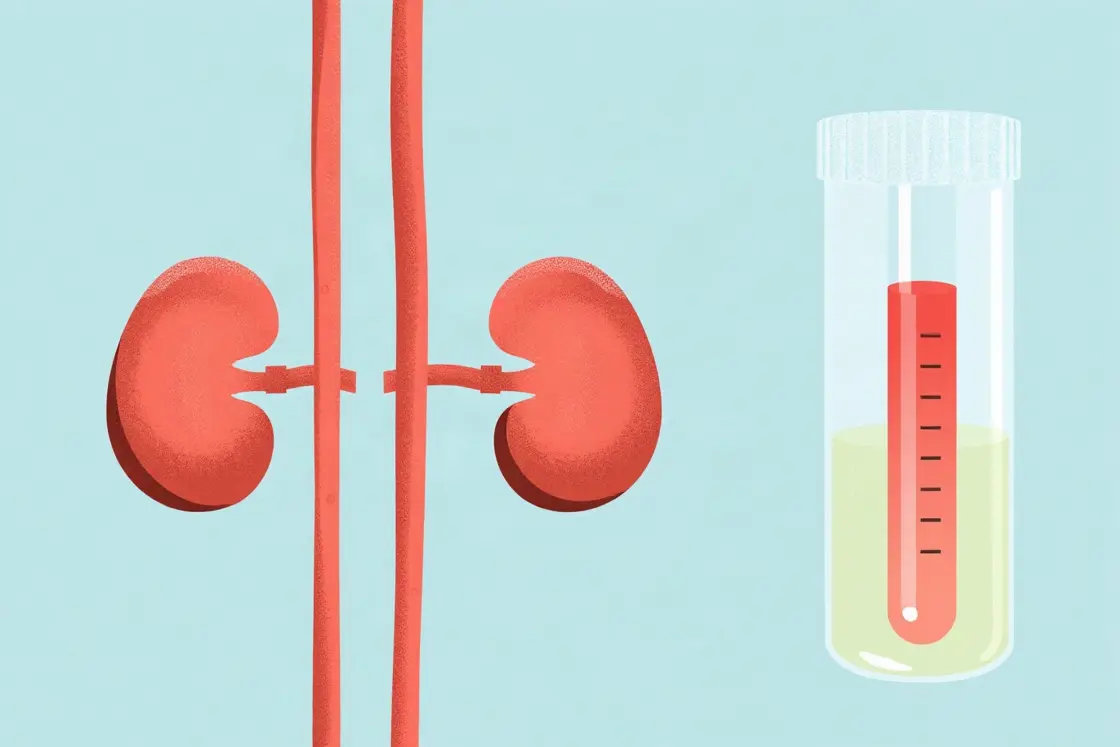
Primary-care clinicians and laboratories commonly begin with a blood creatinine measurement used in an estimated glomerular filtration rate calculation. A urine test checks for albumin, a protein that can pass into urine when kidney damage is present. These two measurements help clinicians assess filtration and possible structural damage, and they are also used to monitor an established kidney problem. 1
Results require context, including previous measurements, medication use, hydration, blood pressure and the suspected cause. A nephrologist is a physician specialising in kidney disease and may become involved when results are persistently abnormal, rapidly changing, difficult to interpret or associated with complications. Assessment may take place through primary-care clinics, hospital nephrology departments or specialist centres, including institutions such as Mount Sinai in New York City and the University of California, San Francisco, which are identified in NIH kidney coverage as clinical and research institutions. 7
Treatment options and associated risks
Treatment depends on the cause and severity rather than on the informal label “kidney fatigue.” Clinicians may address high blood pressure or diabetes, review medicines that can affect the kidneys, treat infection, relieve obstruction, manage fluid and electrolyte problems, or monitor blood and urine results over time. Dietary changes and medicines may be considered, but dosing and restrictions require individual clinical assessment.
Advanced kidney failure may involve hemodialysis, peritoneal dialysis or transplantation. Hemodialysis filters blood through an external circuit, while peritoneal dialysis uses the abdominal lining and dialysis fluid. Transplantation replaces kidney function with a donor organ, but requires suitability assessment and continuing medical follow-up. Risks vary, including infection, bleeding, access complications, blood-pressure changes, treatment burden and medicine side effects. NIDDK identifies kidney failure as kidney function below 15 percent of normal. 3
Where care is provided and what it may cost
Initial testing is often arranged through a primary-care clinic or laboratory. Nephrology departments in hospitals and specialist centres evaluate complex or progressive disease, while dialysis centres provide kidney-replacement treatment. Waiting times are not uniform: urgent kidney injury may require hospital assessment, whereas nonurgent specialist appointments depend on referral priority, local capacity, test completion and clinical need.
For 2026, the Centers for Medicare & Medicaid Services set the ESRD Prospective Payment System base rate at $281.71 per dialysis treatment. The bundled rate applies to Medicare payments to facilities and includes specified dialysis-related services, but it is not a universal patient bill. 2 Public-program eligibility, private coverage, deductibles, copayments, facility contracts and treatment setting can change out-of-pocket costs. Written estimates and a clinician-led review of coverage are appropriate before planned treatment.
Follow-up, safety and decision-making
Kidney care commonly involves repeated creatinine, eGFR and urine-albumin measurements, blood-pressure review and medication reconciliation. Dialysis requires a continuing schedule and monitoring for access or infection problems. Peritoneal dialysis requires training and sterile technique, while transplantation involves ongoing monitoring for rejection and medication-related effects. These requirements can affect work, travel, diet and daily routines.
No symptom list can confirm or exclude kidney disease. A qualified professional should assess concerning changes, distinguish acute from chronic problems and decide whether primary care, nephrology, a dialysis centre or hospital services are appropriate. The most reliable interpretation combines symptoms, examination, blood testing, urine testing and the pattern of results over time.
Sources
- Chronic Kidney Disease Tests & Diagnosis - NIDDK: https://www.niddk.nih.gov/health-information/kidney-disease/chronic-kidney-disease-ckd/tests-diagnosis
- Calendar Year (CY) 2026 End-Stage Renal Disease (ESRD) Prospective Payment System Final Rule | CMS: https://www.cms.gov/newsroom/fact-sheets/calendar-year-cy-2026-end-stage-renal-disease-esrd-prospective-payment-system-final-rule
- What is Kidney Failure? - NIDDK: https://www.niddk.nih.gov/health-information/kidney-disease/kidney-failure/what-is-kidney-failure
- What Is Chronic Kidney Disease in Adults? - NIDDK: https://www.niddk.nih.gov/health-information/kidney-disease/chronic-kidney-disease-ckd/what-is-chronic-kidney-disease
- Anemia in Chronic Kidney Disease - NIDDK: https://www.niddk.nih.gov/health-information/kidney-disease/anemia
- Preventing Chronic Kidney Disease - NIDDK: https://www.niddk.nih.gov/health-information/kidney-disease/chronic-kidney-disease-ckd/prevention
- Curbing Chronic Kidney Disease | NIH News in Health: https://newsinhealth.nih.gov/2026/01/curbing-chronic-kidney-disease
Authored by MyTrendSpot team