Bridal Robes and Lingerie Sets for Wedding Events: A 2026 Consumer Guide
Key facts
- Getting-ready robes prioritize easy removal, comfort, coverage and coordinated photography across the bridal party.
- Published 2026 guides place bridal lingerie examples from about $58 to more than $400, depending on design and brand. 1
- Current bridal lingerie trends include wireless bralettes, stretch lace, silk slips, blush, champagne and blue tones. 2
- Brand measurement charts matter because robe and lingerie sizing can differ substantially between manufacturers.
Bridal robes and lingerie sets serve different roles across wedding events, from hair and makeup to bridal showers, bachelorette gatherings, wedding-night dressing and honeymoon packing. A robe is primarily a removable outer layer, while a lingerie set usually combines coordinated intimate pieces such as a bra or bralette and underwear. Choosing between them involves more than appearance: fabric, coverage, support, temperature, photographs, sizing and care all affect how practical the garments are.
How the garments fit different wedding events
For the wedding morning, a wrap robe is useful because it can be taken off without pulling fabric over styled hair or makeup. The most practical versions have a front tie, secure inner tie, sleeves that do not interfere with hair services and enough coverage for movement. Bridal-party robes may coordinate through color, embroidery or trim rather than identical cuts, which accommodates different body shapes and comfort preferences.
Bridal showers and bachelorette events allow more flexibility. A lightweight satin robe can create a polished group appearance, while cotton, modal or a soft jersey layer may be more comfortable for several hours. A lingerie set intended for a wedding night has different priorities, including support, personal comfort and desired coverage. It does not necessarily need to match the robe, and a separate seamless foundation garment may work better under the wedding dress.
2026 style, color and fabric directions
Recent bridal coverage describes a shift toward softer construction, including wireless bralettes, lightweight mesh and stretch lace, while corsets and bustiers are increasingly designed with details that can work beyond the wedding. Silk chemises and slips are also being treated as reusable wardrobe pieces rather than single-occasion garments. White remains traditional, but blush, champagne, blue and pearl detailing broaden the palette. 2
For robes, satin and silk create a smooth, reflective surface that photographs distinctly, but they can feel slippery and offer limited warmth. Cotton and modal generally provide a softer, more breathable layer, while lace is usually used as an overlay, sleeve or trim rather than as the entire robe. Sheer fabrics, pale colors and unlined lace can appear more transparent under strong photography lighting, so lining and coverage should be checked before an event.
Named examples and typical 2026 prices
Named products illustrate the range without establishing that one label suits every wearer. A 2026 comparison lists For Love & Lemons Gia Bridal Set at about $148, Bluebella Marseille at about $75, Fleur du Mal Lily Bodysuit at about $195 and Eberjey Naya at about $120. The same comparison covers sets and bodysuits from approximately $58 to more than $400 overall. 1
Another 2026 trousseau guide places individual pieces at roughly $30 to $348, with examples including Thistle and Spire, Bluebella, Cosabella, Elomi, Hanky Panky and Savage X Fenty. These figures are typical market references, not guaranteed prices, and the final cost may change with fabric, construction, customization, taxes, shipping and alterations. A coordinated bridal-party wardrobe can also multiply the total by the number of participants. 3
Fit, support and sizing considerations
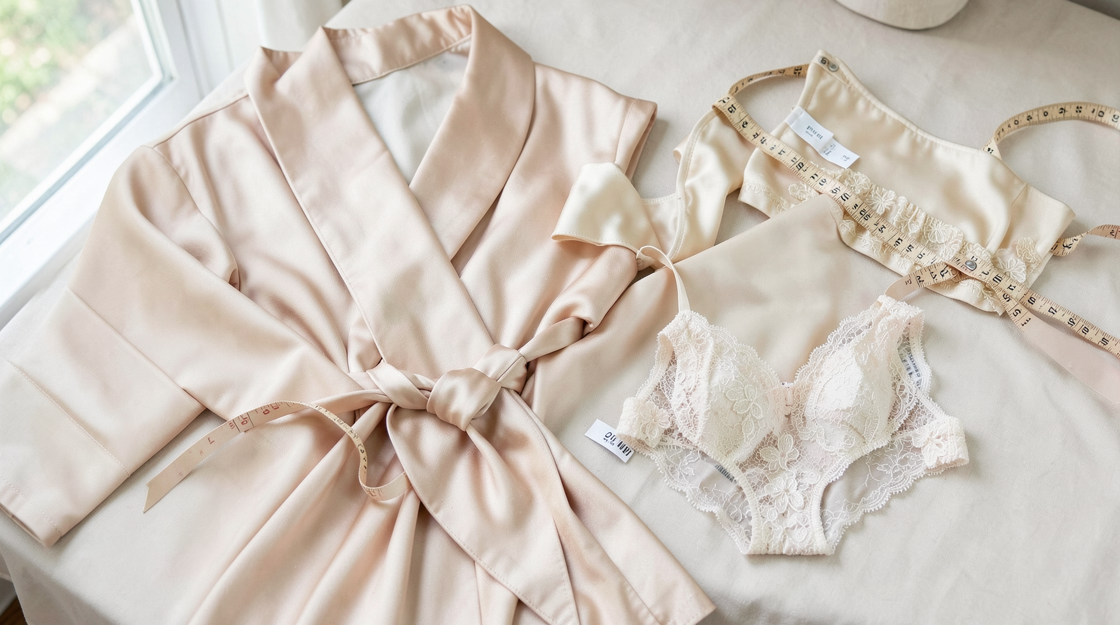
Robes are often sold in broad size groups because the wrap shape allows some adjustment, but shoulder width, sleeve length, robe length and belt placement still matter. A short robe may offer less coverage when sitting or bending, while a long robe can drag or become inconvenient during hair and makeup. Measurements for bust, waist, hips and height are more useful than assuming a standard small, medium or large label.
Lingerie requires more detailed evaluation. Underwire shape, band tension, cup depth, rise, gusset construction and stretch affect support and comfort. A strapless or convertible bra may be necessary for an off-shoulder dress, while a low-back design may require a different foundation piece. Dress fittings should include the intended undergarments because seams, elastic and bra edges can change the gown’s appearance. Brand charts should be checked separately for every garment.
Skin comfort, materials and construction
People with sensitive skin may prefer breathable cotton, modal or silk against the body, along with flat seams, soft elastic, covered hardware and removable tags. Scratchy lace, rough embroidery, sequins and metallic trims can cause friction during long periods of wear. Dyes and finishing treatments may also matter for individuals who already know they react to particular textiles, so a small test period before the event is more useful than wearing an untested garment for the first time on the wedding day.
Construction details can also affect durability. Decorative lettering, embroidery and pearl trims may make a robe or set more distinctive but can complicate washing and storage. Unlined mesh and lace provide less coverage, while lining adds opacity and sometimes warmth. Garments should be evaluated while sitting, walking, reaching and bending, not only while standing, because a wedding morning can involve many hours of movement and repeated photography.
Care, coordination and practical risks
Care instructions vary by fiber and decoration. Delicate lingerie and silk garments commonly need hand washing or a gentle cycle, cool water and air drying, while high heat can damage elastic, lace and trims. Storing pieces flat or loosely folded helps reduce snagging. Robes should be washed before use when the care label permits, particularly if embroidery, dye or finishing chemicals may contact the skin.
The main practical risks are poor fit, unexpected sheerness, uncomfortable embellishment, delayed alterations and inconsistent sizing across brands. Coordinating colors can create a unified bridal-party look without requiring identical garments, but shades described as ivory, white, champagne or blush may vary between manufacturers. A sensible wardrobe separates the dress foundation, getting-ready layer and private post-wedding set, reducing the chance that one garment must perform incompatible jobs.
Sources
- 12 Best Bridal Lingerie Sets for Wedding Night 2026: https://www.gorgeautiful.com/best-lingerie-sets-brides-wedding-night-2026/
- 14 Bridal Lingerie Pieces That Cover Every Wedding Moment, From the Fitting to the Honeymoon: https://glimmeringevents.com/14-bridal-lingerie-pieces/
- 15 Best Lingerie Brands for Bridal Trousseau 2026: https://www.gorgeautiful.com/best-bridal-lingerie-brands-2026/
Authored by MyTrendSpot team