Ways to manage hemorrhoid pain at home: Evidence-based guidance
Ways to manage hemorrhoid pain at home begin with reducing pressure and irritation around the anus. For mild symptoms, evidence-based measures include increasing fiber, drinking adequate nonalcoholic fluids, avoiding straining and prolonged toilet sitting, taking warm sitz baths, and considering short-term over-the-counter treatments. These approaches may relieve discomfort, but bleeding, severe pain, or symptoms that persist require medical assessment because not every anal symptom is caused by hemorrhoids. 1
Why stool management is central to pain relief
Hard stools and constipation can increase pressure on swollen veins and make bowel movements more painful. The National Institute of Diabetes and Digestive and Kidney Diseases recommends eating high-fiber foods, drinking water or other nonalcoholic liquids as advised by a health professional, and considering a stool softener or fiber supplement such as psyllium or methylcellulose. The American Academy of Family Physicians reports that increasing fiber and fluid intake can reduce hemorrhoid symptoms by more than 50%. 1 5
Fiber should be increased as part of a consistent effort to keep stools soft rather than as a one-time response to pain. Straining during bowel movements can worsen irritation, while sitting on the toilet for long periods can add pressure to the area. AAFP guidance identifies constipation assessment as an important part of hemorrhoid care because addressing constipation can substantially reduce symptoms. 5
Warm baths and local comfort measures
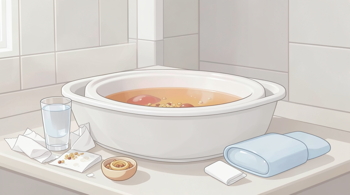
A sitz bath is a period of sitting in warm water that covers the anal area. NIDDK states that sitting in a tub of warm water several times a day can help relieve hemorrhoid pain. Warm water may also ease irritation after bowel movements, although the American Gastroenterological Association notes that scientific data supporting sitz baths for symptom improvement are limited. This makes bathing a comfort measure, not a substitute for evaluation when symptoms are unusual or severe. 1 4
Local care should focus on minimizing friction and irritation. AdventHealth describes a cold compress or wrapped ice pack applied for short intervals as a way to reduce swelling and temporarily numb discomfort. Gentle cleaning with water and careful patting dry may be preferable to rough wiping, while scented products can aggravate sensitive skin. These measures address surface irritation and swelling, but they do not diagnose the cause of a painful lump or bleeding. 3
Over-the-counter options and limits
Over-the-counter creams, ointments, and suppositories may relieve mild pain, swelling, and itching, particularly with external hemorrhoids. Ingredients discussed in the supplied clinical guidance include hydrocortisone, phenylephrine, pramoxine, local anesthetics, and witch hazel. NIDDK most often recommends using nonprescription products for one week and contacting a doctor if symptoms do not improve or if a rash or dry skin develops around the anus. 1 5
Topical medicines are intended for limited symptom relief rather than long-term treatment. The American Gastroenterological Association reports that available evidence for topical anesthetics, astringents, corticosteroids, and vasoactive agents is limited. It also advises that topical steroids should not be used for more than two weeks at a time unless directed by a clinician. Over-the-counter pain relievers listed by NIDDK include acetaminophen, ibuprofen, naproxen, and aspirin. 4 1
Toilet habits that can reduce pressure
Avoiding straining is one of the clearest practical steps for limiting further irritation. A bowel movement should not become a prolonged effort, and remaining seated on the toilet for extended periods may increase pressure on the anal veins. NIDDK specifically recommends not straining and not sitting on the toilet for long periods. These changes are particularly relevant when constipation, hard stools, or repeated attempts to pass stool are part of the symptom pattern. 1
Daily habits can also influence recurrence. FamilyDoctor identifies constipation, diarrhea, strenuous activity, heavy lifting, obesity, and prolonged toilet sitting as factors associated with increased pressure in the anal or rectal veins. The practical objective is to avoid repeated pressure and irritation while maintaining soft stools. If home measures are being used but bowel difficulties continue, a health professional can help assess constipation and possible contributing medicines or conditions. 6
Recognizing symptoms that need medical evaluation
Rectal bleeding should not automatically be attributed to hemorrhoids. FamilyDoctor emphasizes that bleeding from the rectum, anus, or in bloody stools can sometimes signal a more serious condition, including cancer, and recommends medical evaluation to confirm the cause. Internal hemorrhoids may produce small amounts of bright red blood and are often painless, whereas external hemorrhoids are more likely to cause tenderness, swelling, itching, or pain. 6 3
The American Gastroenterological Association notes that hemorrhoids generally cause significant pain when acutely thrombosed, while sharp pain during defecation is more likely to indicate an anal fissure. A painful, nonreducible lump, severe or persistent pain, fever, dizziness, or ongoing bleeding should therefore be assessed rather than managed only at home. These warning signs can indicate a condition requiring examination or treatment beyond conservative care. 4
When home treatment is not enough
NIDDK advises follow-up when over-the-counter products do not relieve symptoms after one week or cause skin reactions. Severely prolapsed or bleeding internal hemorrhoids may also need medical treatment, even though many prolapsed internal hemorrhoids resolve without at-home intervention. Persistent symptoms do not necessarily mean that home care was inappropriate; they may indicate a different diagnosis, a thrombosed hemorrhoid, or a severity level requiring an office procedure. 1
Professional treatment can include office-based procedures such as rubber band ligation, sclerotherapy, or infrared coagulation, depending on the hemorrhoid type and severity. The American Academy of Family Physicians reports that office procedures are preferred over surgery in appropriate cases because they provide similar benefits with fewer complications. Rubber band ligation must be performed by a doctor and should never be attempted at home. 1 5
Sources
- National Institute of Diabetes and Digestive and Kidney Diseases, Treatment of Hemorrhoids: https://www.niddk.nih.gov/health-information/digestive-diseases/hemorrhoids/treatment
- Harvard Health Publishing, Home Remedies for Hemorrhoids: https://www.health.harvard.edu/digestive-health/can-home-remedies-help-with-hemorrhoids
- AdventHealth, How to Treat Hemorrhoids at Home: https://www.adventhealth.com/blogs/how-treat-hemorrhoids-home
- American Gastroenterological Association, Diagnosis and treatment of hemorrhoids: https://gastro.org/clinical-guidance/diagnosis-and-treatment-of-hemorrhoids/
- American Academy of Family Physicians, Management of Hemorrhoids: Guidelines From the ASCRS: https://www.aafp.org/afp/2025/1200/practice-guidelines-hemorrhoids
- FamilyDoctor, Hemorrhoids: https://familydoctor.org/condition/hemorrhoids/
Authored by MyTrendSpot team