Warning signs of primary ovarian insufficiency: Clinical context and evaluation
Warning signs of primary ovarian insufficiency may be subtle, intermittent, or mistaken for stress and other health conditions. The most important pattern is a change in menstrual regularity before age 40, especially when it occurs alongside hot flashes, night sweats, vaginal dryness, or difficulty conceiving. POI does not always mean that ovarian activity has ended permanently, so occasional periods or ovulation can still occur. 1
Menstrual changes are the central warning sign
Irregular, infrequent, or absent menstrual periods are the most recognizable signs of POI. Some people may stop menstruating for several months, while others continue to have unpredictable cycles or even occasional apparently normal periods. This variability reflects the difference between POI and natural menopause, in which menstrual cycles eventually stop permanently. A change in cycle pattern before age 40 therefore deserves medical consideration rather than automatic attribution to stress or lifestyle changes. 1
Clinical diagnostic descriptions commonly focus on persistent amenorrhea, meaning absent periods, lasting approximately four to six months, together with hormone findings that indicate reduced ovarian function. However, missed periods can have many causes, including pregnancy, hormonal contraception, thyroid disorders, and other medical conditions. Menstrual history is consequently an important warning signal, but it cannot establish POI by itself. 2
Low-estrogen symptoms may resemble menopause
Reduced ovarian hormone production can produce vasomotor symptoms, including hot flashes, night sweats, heat intolerance, and awareness of the heartbeat. These symptoms may appear unexpectedly in a younger person and may come and go as ovarian function fluctuates. Their presence is not specific to POI, but their combination with menstrual irregularity before age 40 increases the importance of a clinical evaluation. 3
Other possible physical signs include headaches, breast tenderness, changes in skin or hair, fatigue, and sleep disturbance. Some individuals experience concentration difficulties, anxiety, irritability, mood changes, or depression. These symptoms can be influenced by many physical and psychological factors, so they should be interpreted in context rather than treated as proof of ovarian insufficiency. 3
Fertility difficulties can reveal reduced ovarian function
Difficulty becoming pregnant is another important warning sign because POI can reduce the frequency of ovulation and alter reproductive hormone production. Some people first seek assessment after trying to conceive without success, while others notice menstrual changes beforehand. Reduced fertility does not necessarily mean that pregnancy is impossible, because ovarian activity and ovulation may occasionally resume unpredictably in POI. 2
POI can affect people who have had children and those who have not. A history of infertility, irregular cycles, or a family history of ovarian insufficiency may provide useful context during evaluation. Prior chemotherapy or radiotherapy, autoimmune disease, and certain genetic conditions are among the recognized associations, although the cause is not identified in most cases. 1
Vaginal and urinary symptoms are relevant clues
Low estrogen can affect vaginal and urinary tissues. Possible warning signs include vaginal dryness, discomfort during sex, reduced sexual desire, urinary urgency, frequent urination, painful urination, and recurrent urinary tract symptoms. These changes may be overlooked because they can be discussed separately from menstrual health, yet their appearance alongside cycle disruption may indicate a broader hormone-related pattern. 3
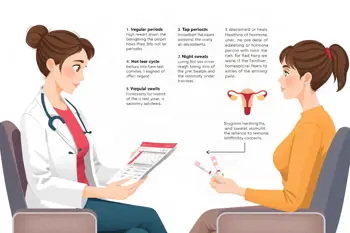
Genitourinary symptoms are not unique to POI and may result from infections, medications, dermatologic conditions, or other hormonal changes. Pain, burning, recurrent urinary symptoms, or bleeding should therefore receive an appropriate medical assessment. Vaginal discomfort can affect quality of life and sexual wellbeing, making it clinically relevant even when fertility is not an immediate concern. 3
POI is different from natural menopause
Natural menopause generally occurs around age 50 to 51 and is defined retrospectively after 12 months without a menstrual period when no other explanation exists. POI occurs before age 40 and involves impaired ovarian function rather than a consistently complete end to ovarian activity. Some people with POI retain follicles and may experience intermittent periods or occasional ovulation, which is why the term insufficiency is preferred to the older term premature ovarian failure. 1
This distinction affects how symptoms and fertility are understood. A person with POI may have menopausal symptoms while still having occasional ovarian activity. Conversely, some people have few symptoms beyond absent or irregular periods. The absence of hot flashes does not exclude POI, and the presence of hot flashes alone does not confirm it. 4
What clinical evaluation generally examines
Evaluation begins with a detailed menstrual and medical history, including the timing of cycle changes, pregnancy possibility, medication use, family history, autoimmune conditions, and previous chemotherapy or radiotherapy. Blood testing is used to assess reproductive hormones and to investigate alternative explanations. Professional descriptions identify elevated follicle-stimulating hormone and reduced estradiol as findings that support the diagnosis when they occur with prolonged menstrual absence. 2
Because ovarian function can fluctuate, a single symptom or one hormone result may not describe the complete picture. Clinicians may repeat testing and consider investigations aimed at identifying possible genetic, autoimmune, or other causes. Evaluation also matters beyond fertility: prolonged estrogen deficiency is associated with concerns such as reduced bone density and may require attention to longer-term health monitoring. 2
When a pattern merits medical attention
A person younger than 40 with persistently absent periods, increasingly irregular cycles, hot flashes, night sweats, vaginal dryness, or unexplained fertility difficulty has a clinically relevant pattern to discuss with a qualified healthcare professional. The same applies when several symptoms occur together, even if each symptom is mild. Recording cycle dates and associated symptoms can help clarify whether the change is occasional or persistent. 3
Assessment is particularly important when menstrual changes follow cancer treatment, occur with autoimmune disease, or are accompanied by a family history of POI. The condition is not always obvious, and symptoms may be attributed to stress or other common explanations. Recognizing the pattern can support earlier attention to reproductive planning, symptom management, bone health, and the possible causes of reduced ovarian function. 1
Sources
- Johns Hopkins Medicine, Primary Ovarian Insufficiency, https://www.hopkinsmedicine.org/health/conditions-and-diseases/primary-ovarian-insufficiency
- Merck Manual Professional Edition, Primary Ovarian Insufficiency, https://www.merckmanuals.com/professional/gynecology-and-obstetrics/abnormal-uterine-bleeding/primary-ovarian-insufficiency
- Leeds Teaching Hospitals NHS Trust, Premature Ovarian Insufficiency, https://www.leedsth.nhs.uk/patients/resources/premature-ovarian-insufficiency/
- Merck Manual Consumer Version, Premature Menopause, https://www.merckmanuals.com/home/women-s-health-issues/menstrual-disorders-and-abnormal-uterine-bleeding/premature-menopause
Authored by MyTrendSpot team