How to participate in local police impound auctions: A practical public-buyer briefing
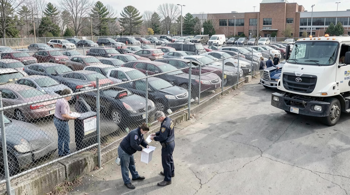
How to participate in local police impound auctions begins with identifying the government agency responsible for the sale and reviewing its published rules. Local auctions may involve abandoned, unclaimed, seized, forfeited, or surplus vehicles, and the process can be conducted online, in person, or through a contracted auction company. 4
Find the official auction announcement
Police departments and municipal agencies commonly announce auctions on their official websites, news-release pages, social-media accounts, or the website of a designated auctioneer. San Antonio states that notices for forfeited property and vehicle auctions appear in its News Release section and on the San Antonio Police Department Facebook page. Dallas directs the public to Lone Star Auctioneers for auction calendars and additional information. 1 2
- Check whether the sale is for abandoned vehicles, seized assets, forfeited property, or surplus fleet vehicles.
- Confirm the location, viewing period, registration deadline, auction format, and removal deadline.
- Prefer announcements that can be traced to a city, police department, sheriff’s office, or named auction contractor.
Determine eligibility and register
Registration requirements vary by jurisdiction and by the type of vehicle being sold. Dallas requires attendees to register before the auction, be at least 18 years old, and present a valid state-issued identification card or driver’s license; a Mexican Consulate identification card is also listed as acceptable there. Kansas City states that buyers of salvage-only vehicles must provide proof of a current salvage or dealer license during registration. 1 3
Online auctions generally require an account on the platform handling the sale, while in-person auctions may require identity verification at the facility. Registration does not remove the obligation to understand the specific terms for deposits, bidding authority, payment, title documents, and vehicle removal. Some auction conditions treat every submitted bid as binding and do not permit retraction for a mistaken selection. 7
Inspect the vehicle and assess condition
Impound vehicles are normally sold “as is” and without warranties. Dallas explicitly states that all items are sold as-is, that all sales are final, and that auction vehicles cannot be driven from its lot. Kansas City’s tow-lot terms warn that many vehicles may not run or drive, many may lack keys, and the available website information may be the only condition information provided before purchase. 1 7
- Use the permitted viewing period to examine body damage, tires, glass, interior condition, visible fluid leaks, and the VIN.
- Review the listing for keys, known defects, title status, storage charges, and restrictions on salvage vehicles.
- Account for towing, diagnostics, repairs, insurance, taxes, registration, and title-related expenses before setting a maximum bid.
Research the VIN and title status
A winning bid does not necessarily mean that a vehicle has a clean title or is immediately road-ready. Kansas City states that the city does not guarantee title to auction vehicles and sends purchasers a bill of sale within 30 days. The city also provides a separate titling guide and requires Missouri Highway Patrol VIN inspections by appointment for the titling process. 3
VIN research should be completed before bidding when records are available. The National Motor Vehicle Title Information System is identified as a resource for checking vehicle history and title status, while state motor-vehicle agencies provide instructions for vehicles purchased through police, abandoned-property, or government auctions. The result should be compared with the auction listing and the documents the agency promises to provide. 8
Understand payment and removal rules
Payment deadlines are often strict, and accepted methods differ by auction. San Antonio lists cash or credit card payment, excluding American Express, and requires property to be paid for and collected on the day of sale. Dallas requires full payment no later than one hour after the final vehicle is sold. Kansas City permits wire transfer or cash at the tow lot by 5 p.m. on the Wednesday after an online Tuesday auction. 2 1 3
Removal planning is a separate responsibility from payment. Dallas requires vehicles to leave by 11:59 p.m. the day after the auction and requires a licensed wrecker to tow them. Kansas City requires retrieval by Saturday at 5 p.m., imposes a $30 per-vehicle, per-day storage fee after the deadline, and prohibits driving auction vehicles off the property. Failure to comply may result in forfeiture, loss of a deposit, or a future-auction ban. 1 3 7
Distinguish local sales from online marketplaces
Some police and municipal sales are administered by outside platforms rather than directly by the department. Kansas City identifies OAI Auctions as its online bidding platform and schedules two public vehicle auctions each month beginning in December 2025, on the first and third Tuesdays, with a viewing day on the second Tuesday. Government surplus and seized-asset sales can also appear through federal auction programs and broader government marketplaces. 3 4
Online listings may include impound cars, repossessions, off-lease vehicles, fleet units, and other government property, so the seller category must be verified for each lot. Copart describes recurring wholesale auctions for repo, bank-owned, off-lease, and impound vehicles, while GovDeals describes location-based searching for government and confiscated inventory. These commercial platforms are not substitutes for reading the specific municipality’s terms, title statements, and pickup instructions. 5 6
Recognize the principal risks
The central risks are uncertain mechanical condition, missing keys, title complications, transportation costs, storage fees, and binding bids. Police impound auctions can provide access to vehicles that require substantial repair, and legal authority to sell does not by itself establish that a vehicle is ready for registration or normal road use. Buyers should also verify whether a license, inspection, rebuilt-title process, or other state requirement applies. 3 7
- Do not assume that a vehicle can be driven away after payment.
- Do not bid without confirming the total payment deadline and accepted payment method.
- Do not rely solely on a photograph or short description when condition information is limited.
- Keep the auction invoice, bill of sale, title documents, inspection records, and towing receipt for later registration questions.
Sources
- Dallas Police Department, Auto Pound Auction: https://www.dallaspolice.net/divisions/Pages/Auto-Pound-Auction.aspx
- City of San Antonio, Seized Property & Auctions: https://www.sa.gov/Directory/Departments/SAPD/Services/Seized-Property-Auctions
- Kansas City, Vehicle Auctions & Titling: https://www.kcmo.gov/city-hall/departments/public-works/tow-services/vehicle-auctions
- USAGov, Government Vehicle Auctions: https://www.usa.gov/car-auctions
- Copart, Repo & Impound Car Auction: https://www.copart.com/repo-and-impound-sales
- GovDeals, Where to Find Police Auctions Near Me: https://blog.govdeals.com/where-to-find-police-auctions-near-me
- Burgess Auctions, Kansas City Police Tow Lot Auction: https://www.burgessauctions.com/auction/kansas-city-tow-lot-2026-04-07-80862/details
- U.S. Department of Justice, National Motor Vehicle Title Information System: https://www.justice.gov/archives/ndic/topics/nmvtis
Authored by MyTrendSpot team