Warning signs of coronary artery disease: Clinical patterns and emergency guidance
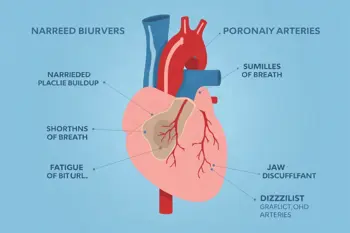
Warning signs of coronary artery disease include familiar symptoms such as chest pressure, shortness of breath, fatigue, palpitations, and discomfort that may extend beyond the chest. Coronary artery disease develops when the arteries supplying the heart become narrowed or blocked, most often because cholesterol plaque accumulates inside the artery walls. 1
Chest discomfort and angina patterns
Chest pain, pressure, fullness, tightness, burning, or squeezing is the most recognized symptom of coronary artery disease. Angina occurs when narrowed coronary arteries cannot deliver enough oxygen-rich blood to the heart muscle, particularly during exercise or emotional stress. Symptoms may improve with rest when the pattern is stable, although any new, worsening, prolonged, or severe chest discomfort requires medical assessment. 1 9
Angina does not always feel like sharp pain. Some people describe heaviness, constriction, dull discomfort, or a sensation resembling indigestion. Episodes can come and go, sometimes lasting several minutes, and may be overlooked when they are mild or intermittent. Atherosclerotic plaque can also rupture and trigger a blood clot, abruptly stopping blood flow and causing a heart attack. 4 6
Breathing changes, fatigue, and reduced stamina
Shortness of breath may occur when restricted coronary blood flow limits the heart’s ability to meet the body’s demand during physical activity. Breathlessness can accompany chest discomfort or appear as the main symptom, especially when a person notices difficulty with ordinary exertion that previously felt manageable. Coronary artery disease may develop gradually, so a progressive reduction in exercise tolerance can be clinically relevant even without dramatic pain. 2 5
Unusual fatigue and weakness are less specific than chest discomfort but can accompany reduced cardiac performance or an evolving heart attack. Cleveland Clinic describes early warning patterns that may begin hours, days, or weeks beforehand, including unusual fatigue, shortness of breath during usual activities, nausea, and a general sense that something is wrong. These symptoms can occur alone or together and should not be dismissed when they are new or unexplained. 6
Pain outside the chest
Heart-related discomfort may radiate to the neck, jaw, throat, upper abdomen, back, shoulders, or arms. Jaw pain can feel like a toothache, while upper abdominal discomfort may resemble indigestion. The Heart Foundation notes that reduced blood flow to the heart can produce jaw pain, and that women are more likely than men to experience this less typical warning sign during a heart attack. 4
Radiating pain becomes more concerning when it occurs with chest pressure, breathlessness, nausea, sweating, lightheadedness, or unusual fatigue. Arm or shoulder discomfort without obvious injury can also warrant evaluation when it occurs during exertion or alongside other cardiac symptoms. These patterns are not proof of coronary artery disease because several noncardiac conditions can cause similar sensations, but their possible cardiac significance makes clinical context important. 4 8
Palpitations, dizziness, and swelling
Palpitations are sensations of a racing, pounding, or irregular heartbeat and are listed among possible symptoms of coronary artery disease. Restricted blood flow can affect heart muscle function and may be associated with rhythm disturbances, although palpitations also have many other causes. Dizziness, lightheadedness, or fainting can indicate that the brain is not receiving a stable blood supply and becomes especially concerning when paired with chest symptoms or breathlessness. 2
Swelling in the hands or feet is another symptom reported with coronary artery disease, although it may reflect impaired circulation or heart failure rather than narrowing alone. A persistent cough, particularly one associated with breathlessness or fluid in the lungs, can occur with heart failure. Cough and swelling are not specific diagnostic signs, but new symptoms accompanied by reduced stamina or nighttime breathing difficulty deserve medical review. 2 4
Silent disease and higher-risk presentations
Coronary artery disease often causes no noticeable symptoms in its early stages. Some people first learn they have the condition after stable angina, a heart attack, or another acute coronary syndrome, while others experience silent ischemia. The absence of chest pain therefore does not establish that the coronary arteries are healthy. Risk assessment remains important for people with smoking exposure, high blood pressure, high cholesterol, diabetes, obesity, physical inactivity, advancing age, or a family history of heart disease. 2 8 9
Women, older adults, and people with diabetes may have less typical or less obvious symptoms, including fatigue, nausea, breathlessness, jaw discomfort, or general weakness. Symptoms may also vary according to whether plaque-related obstruction, coronary spasm, nonobstructive disease, or spontaneous coronary artery dissection is involved. Because symptom patterns overlap with digestive, muscular, lung, and anxiety-related conditions, diagnosis cannot be made reliably from symptoms alone. 2 4
When symptoms require emergency assessment
Severe, new, prolonged, or worsening chest discomfort should be treated as a potential emergency, especially when accompanied by sweating, nausea, shortness of breath, faintness, or pain spreading to the jaw, back, shoulder, or arm. A heart attack can result when a ruptured plaque produces a clot that suddenly blocks a coronary artery. Waiting for symptoms to become extreme is unsafe because some heart attacks begin with subtle, waxing-and-waning sensations. 1 6 8
Clinical evaluation may include a medical history, physical examination, blood tests, and an electrocardiogram. Depending on the findings, clinicians may use stress testing, echocardiography, cardiac magnetic resonance imaging, CT coronary angiography, or invasive coronary angiography to assess blood flow and artery structure. Prevention and treatment commonly address smoking, blood pressure, cholesterol, diabetes, weight, and physical inactivity, with medications or procedures considered according to the individual diagnosis. 5 9
Sources
- Harvard Health, Coronary Artery Disease
- Penn Medicine, Coronary Artery Disease: Symptoms and Causes
- Merck Manual Consumer Version, Overview of Coronary Artery Disease
- Heart Foundation, Seven Surprising Symptoms of Heart Disease
- Mayo Clinic, Diagnosing Coronary Artery Disease
- Cleveland Clinic, Warning Signs of a Heart Attack
- Manipal Hospitals, Coronary Artery Disease: Causes, Warning Signs and Treatment
- Acibadem Hospitals Group, Coronary Artery Disease: Symptoms, Causes, and Treatment Options
- MSD Manual Professional Edition, Overview of Coronary Artery Disease
Authored by MyTrendSpot team