Government surplus commercial vans auction: An Operational Guide to Public Sector Fleet Liquidations
Overview of Public Fleet Disposal Channels
Public sector agencies regularly update their vehicle fleets to maintain operational readiness and safety. When federal, state, and local entities retire older vehicles, they often clear their inventory through a structured government surplus commercial vans auction. These public events offer commercial buyers, contractors, and organizations access to a wide variety of work vehicles that have completed their service life cycles 1. The disposition process is strictly regulated to ensure transparency and maximize asset recovery for public treasuries 2.
While some municipal entities manage their own disposition services, federal and state agencies typically partner with standardized distribution centers or online liquidators. Fleet operations represent one of the most substantial capital investments in the public sector, and these auction processes provide a direct, competitive bidding environment 2. This systematic release of cargo vans, passenger vans, and light-duty trucks represents a significant source of commercial vehicles for secondary markets.
Federal Procurement and the GSA Framework
The General Services Administration (GSA) serves as the primary federal gateway for vehicle disposition. Through dedicated online portals such as the GSA Fleet Marketplace, the federal government coordinates the sale of coming soon and active vehicle lots 3. The inventory encompasses various configurations, including light cargo vans, medium-heavy vans, passenger vans, and specialized multi-passenger shuttle buses 3. Because federal operations span diverse departments, the vehicles liquidated through this platform have often undergone routine, scheduled service.
Federal agencies generally cycle vehicles out of active service when they reach specific thresholds, typically between 80,000 and 120,000 miles 4. Buyers can browse available lots sorted by vehicle type, geographical location, and current bidding status 3. However, physical inspection parameters vary, and many federal assets are sold under strict "as-is, where-is" conditions, meaning the government provides no warranties regarding operational readiness or subsequent road performance 5.
State-Level and Municipal Surplus Programs
Beyond federal frameworks, state governments and regional municipalities manage localized surplus distribution programs. Platforms like GovDeals facilitate the liquidation of assets for hundreds of state and municipal agencies, ranging from local school districts to state departments of transportation 6. For instance, states like Virginia maintain active calendars for regional surplus public auctions, which feature fleet vehicles alongside administrative tools, office equipment, and transit vehicles 5.
Other state agencies, such as the Pennsylvania Bureau of Vehicle Management, coordinate large-scale physical and online public auctions to retire state police vehicles, utility trucks, and passenger vans 7. In New Jersey, the state regularly schedules centralized public auctions at its distribution facility in Trenton to clear surplus trucks, sedans, and cargo vans from major manufacturers including Ford, Chevrolet, Dodge, and GMC 8. These regional events allow local buyers to inspect assets directly prior to bidding, providing a physical verification step that is often absent in larger federal online auctions 5.
Operational Conditions and Vehicle Utility
When evaluating vehicles from a government surplus commercial vans auction, buyers must account for the diverse historical uses of the fleet. Available models often include cargo workhorses like the Chevrolet Express, Ford Transit, and Mercedes Sprinter, alongside heavy-duty diesel box trucks from Freightliner and International 4 9. While some units are retired solely due to scheduled lifecycle updates, others may enter the auction market as non-running salvage vehicles requiring substantial mechanical remediation or parts replacement 9.
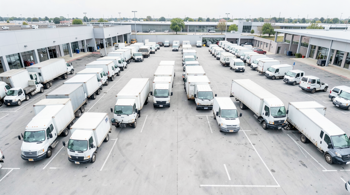
Operational histories vary widely by agency. Mail delivery vans, transit shuttles, and forestry service vehicles endure disparate levels of environmental and mechanical strain. For example, local municipal vehicles may accumulate low mileage but high engine idle hours, whereas highway patrol and state transit vans often accumulate high mileage quickly but benefit from structured preventative maintenance programs 4. Reviewing maintenance logs, vehicle identification numbers, and exact odometer readings is essential to establishing accurate asset valuations.
Registration, Fees, and Compliance Requirements
Participating in public vehicle liquidations requires strict compliance with registration and payment protocols. Most platforms, including GovDeals, require bidders to complete an account setup and verify their identity prior to placing any active bids 6. In addition, local regional auctions, such as the Pennsylvania Commonwealth vehicle sales, require mandatory pre-registration several days before the event, with no walk-up registration permitted on the actual sale day 7.
Financial obligations extend beyond the final hammer price. Winning bidders must account for additional financial friction points, such as sales tax, administrative fees, and buyer's premiums that typically range from 5% to 15%. Payment methods are strictly enforced, with many public agencies accepting only certified funds, money orders, cashier's checks, or approved online payment transfers 7. Furthermore, successful bidders are entirely responsible for vehicle removal, loading, and secure transit within a rigid timeline, typically ranging from 5 to 10 business days post-auction.
Comparative Analysis of Primary Public Disposal Outlets
To navigate the surplus marketplace effectively, buyers must understand the structural differences between major disposal channels. Federal auctions offer a broader geographical footprint and standardized vehicle types, whereas state-level and contracted private auctions provide localized inventory that is often easier to inspect in person. The choice of platform determines not only the bidding structure but also the logistical overhead associated with transporting the acquired asset 4.
The following table outlines the key operational parameters across the primary public sector vehicle liquidation channels, illustrating the variation in inspection access, bidding formats, and inventory sources:
| Disposal Channel | Primary Inventory | Bidding Format | Physical Inspection |
|---|---|---|---|
| Federal (GSA Fleet/Auctions) | Federal agency fleets, cargo and passenger vans 3 4 | Online (timed or sealed bids) 1 | Restricted (primarily photo-based online catalogs) 5 |
| State & Municipal (GovDeals/OSPM) | Local transit, school districts, utility vehicles 6 5 | Online or regional live auctions 5 | Scheduled preview days prior to bidding 5 |
| Contracted Industrial (Bar None/West Auctions) | Highway maintenance, heavy transport, fleet assets 10 11 | Online timed auctions with global reach 10 11 | By appointment only with advance notice 10 |
Sources
- GSA Auctions (gsaauctions.gov)
- USAGov (usa.gov/car-auctions)
- GSA Fleet Marketplace (marketplace.gsafleet.gov)
- GovAuctions.app
- Virginia Department of General Services (dgs.virginia.gov)
- GovDeals (govdeals.com)
- Pennsylvania Department of General Services (wtaj.com)
- New Jersey State Distribution Facility (nj.com)
- Dempsey Auction Company (dempseyauction.com)
- West Auctions (westauction.com)
- Bar None Auction (barnoneauction.com)
Authored by MyTrendSpot team