Understanding Hypertension: Lifestyle Adjustments and Treatment Pathways: A Clinical Guide to Risk, Monitoring, and Care
Understanding Hypertension: Lifestyle Adjustments and Treatment Pathways requires attention to both daily habits and clinically supervised care. Hypertension is commonly defined as a systolic pressure of 130 mmHg or higher or a diastolic pressure of 80 mmHg or higher, although diagnosis depends on accurate, repeated measurement and the applicable clinical guideline. Persistent uncontrolled pressure raises the risk of heart disease, stroke, kidney failure, and vision loss. 1
How hypertension is identified
Blood pressure assessment is the first stage of the treatment pathway. NICE guidance covers the identification and treatment of primary hypertension in adults aged 18 years and older, including adults with type 2 diabetes. Its stated objective is to reduce cardiovascular complications such as heart attacks and strokes through accurate diagnosis and effective treatment. 1
Out-of-office measurement can add important context because readings may differ between clinical settings and ordinary daily life. Home monitoring is generally performed with an upper-arm cuff device, and readings can help clinicians evaluate control and adjust treatment. The 2025 AHA/ACC guideline also places greater emphasis on home blood pressure monitoring and risk-based assessment. 3
Lifestyle adjustments and nutrition
Lifestyle changes are recommended for all adults with hypertension, alongside any medication that a clinician considers appropriate. Dietary approaches commonly emphasize fruits, vegetables, whole grains, and lean proteins, while reducing sodium. The DASH diet is described as a long-term eating pattern designed to treat or prevent high blood pressure rather than a short-term intervention. 2
Sodium reduction is a central dietary measure because dietary sodium has a nearly linear relationship with blood pressure. The World Health Organization advises sodium intake below 2 grams per day, while more than 70% of sodium in a typical Western diet comes from processed foods rather than salt added at the table. Potassium-rich fruits and vegetables may support lower blood pressure, but potassium requires monitoring in chronic kidney disease or when certain medicines are used. 2
Physical activity, weight, and risk factors
Regular movement is another established component of blood pressure management. Public health guidance commonly recommends at least 150 minutes of moderate-intensity aerobic activity each week. Activity plans should reflect a person’s health status and ability, particularly when symptoms, significant cardiovascular disease, or other medical conditions are present. 5
Weight reduction can improve blood pressure control and may increase the effectiveness of antihypertensive medication. A meta-analysis of randomized trials involving adults with hypertension and obesity found mean reductions of 4.5 mmHg in systolic pressure and 3.2 mmHg in diastolic pressure from weight-reducing diets. Smoking cessation, limiting alcohol consumption, and stress-management techniques also address cardiovascular risk associated with hypertension. 2
When medication enters the pathway
The decision to begin antihypertensive medication depends on the degree of blood pressure elevation, cardiovascular risk, coexisting conditions, and the response to lifestyle measures. The 2025 AHA/ACC guidance updates blood pressure classification, risk assessment, treatment thresholds, and care recommendations, while NICE provides a structured framework for adults with primary hypertension. Individual treatment decisions require clinical review rather than a single reading or universal schedule. 1
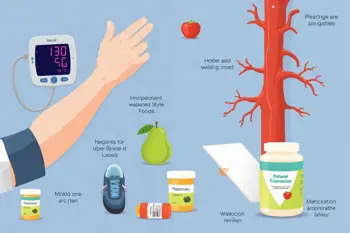
Common medication classes include angiotensin-converting enzyme inhibitors, angiotensin II receptor blockers, diuretics, and calcium channel blockers. Medication selection may be influenced by diabetes, kidney disease, pregnancy, age, adverse-effect risk, and other conditions. Treatment is not a one-time decision: clinicians may need to monitor response, review adherence, adjust doses, or combine medicines when pressure remains above the agreed target. 8
Monitoring, adherence, and follow-up
Home blood pressure records can show whether treatment is controlling pressure outside the clinic and can help distinguish persistent hypertension from an isolated office reading. An upper-arm device is generally used for this purpose, with measurements recorded consistently so a clinician can interpret patterns. Home monitoring supports clinical decisions but does not replace professional diagnosis, medication review, or assessment of symptoms. 6
Ongoing maintenance is a practical challenge because hypertension often requires long-term behavior changes and continued medication use. Follow-up may address missed doses, side effects, sodium intake, activity, weight, tobacco exposure, and home readings. Care pathways can also involve communication between primary care and specialist services, particularly when control is poor or when treatment adherence and coordination are difficult. 9
Secondary causes and urgent concerns
Not all hypertension is explained by lifestyle or ordinary age-related risk. Secondary hypertension can result from an underlying condition such as kidney disease and may require diagnostic testing beyond a lifestyle assessment. The 2025 guideline review reports expanded screening for primary aldosteronism in people with stage 2 or resistant hypertension, reflecting concern that some treatable causes may otherwise remain unidentified. 10
Hypertension management also requires attention to complications and special populations, including people with chronic kidney disease, diabetes, pregnancy, and neurologic disorders. Very high readings accompanied by concerning symptoms require prompt medical assessment because uncontrolled hypertension is associated with cardiovascular, cerebrovascular, renal, and visual harm. Treatment pathways therefore combine measurement, risk evaluation, lifestyle adjustment, medication when indicated, and repeated clinical review. 3
What a structured care plan includes
A complete plan normally links several elements rather than relying on a single intervention. These elements include accurate blood pressure measurement, assessment of overall cardiovascular risk, review of possible secondary causes, nutrition and activity changes, medication selection when indicated, and documentation of follow-up readings. The 2025 AHA/ACC update also describes a patient-centered approach involving risk estimation, home monitoring, and coordinated care. 3
- Dietary assessment, especially sodium intake and potassium-related safety considerations. 2
- Regular physical activity and weight management where clinically appropriate. 5
- Review of prescribed medicines, adherence, side effects, and interactions. 8
- Home readings that support, but do not replace, professional evaluation. 6
- Testing for secondary causes when hypertension is severe, resistant, or clinically atypical. 10
Sources
- NICE Guideline 136, Hypertension in adults: diagnosis and management, NCBI Bookshelf
- Hypertension Canada, Treatment Guidelines
- 2025 AHA/ACC/AANP/AAPA and partner organizations Guideline, PubMed
- American Heart Association, The Facts About High Blood Pressure
- Centers for Disease Control and Prevention, Blood Pressure Prevention
- American Medical Association, Managing High Blood Pressure at Home
- National Heart, Lung, and Blood Institute, High Blood Pressure
- Cleveland Clinic, Hypertension Treatment Information
- Italian Society of Hypertension and Italian Society for Cardiovascular Prevention, Recommended Care Pathway Consensus Document
- MedlinePlus, High Blood Pressure
Authored by MyTrendSpot team