Warning Signs of Psoriasis: A Comprehensive Clinical Overview of Symptoms and Diagnostic Indicators
Psoriasis is a chronic inflammatory condition characterized by the rapid turnover of skin cells, leading to the formation of elevated patches or plaques 1, 3. While often associated with specific visual markers, the presentation of this condition can vary significantly based on an individual's skin tone, age, and the specific variant of the disease 2, 6. Understanding the clinical warning signs is a critical step for patients and clinicians alike, as early recognition allows for more effective management of both skin health and potential systemic involvement 3, 9.
Common Dermatological Presentations and Visual Markers
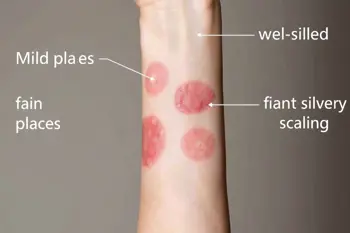
The most frequent manifestation of this condition is plaque psoriasis, which typically presents as well-circumscribed, elevated areas of skin known as plaques 1, 7. In individuals with lighter skin tones, these patches often appear red, pink, or salmon-colored and are frequently covered by silvery-white scales 3, 6. In patients with darker skin tones, these lesions may manifest as purple, dark brown, or dark gray patches, sometimes making the characteristic silvery scale appear more pronounced against the darker base 2, 6. These patches often appear symmetrically on areas such as the elbows, knees, scalp, and lower back 1, 4.
Beyond the primary plaques, patients may experience persistent itching, localized skin pain, or a sensation of dryness 1, 2. When these scales crack or are scraped, the underlying tissue may bleed, a clinical sign often observed during examinations 2. Because psoriasis can mimic other skin conditions like eczema, fungal infections, or dandruff, objective clinical assessment remains the standard for differentiation 3, 6. Professional diagnosis is usually determined through a detailed medical history and physical examination of the skin, scalp, and nails, sometimes requiring a biopsy to confirm the specific underlying pathology 3, 6.
Nail Abnormalities as Diagnostic Indicators
Nail involvement is a recognized indicator of psoriasis and can provide important clues regarding the progression of the disease 1, 3. Clinical signs of nail psoriasis include the appearance of tiny pits on the nail surface, horizontal ridges, or thickening of the nail plate 1, 2. In some cases, the nail may become discolored-often exhibiting a yellowish or brownish hue-or it may begin to lift away from the nail bed, a condition known as onycholysis 1, 2. Build-up of debris beneath the nail is another frequently observed symptom that warrants clinical attention 2.
Systemic Involvement and Psoriatic Arthritis
Psoriasis is categorized as an immune-mediated disorder, and its impact can extend beyond the surface of the skin 3, 5. Approximately one-third of individuals with this condition may develop psoriatic arthritis, a systemic manifestation that affects the joints 1, 5. Warning signs of this condition include joint pain, noticeable swelling, stiffness, or reduced range of motion in the fingers, toes, or along the spine 1, 2. These symptoms often appear independently of the severity of the skin lesions, meaning that even individuals with mild skin involvement should report joint discomfort to a healthcare provider for further assessment 5, 9.
Variations in Disease Presentation
The clinical landscape of psoriasis includes several distinct variants that present differently from common plaque psoriasis. Guttate psoriasis, for instance, often appears as small, drop-shaped scaly spots across the trunk or limbs, typically following a streptococcal infection 1, 4. Conversely, inverse psoriasis affects skin folds such as the armpits, groin, or under the breasts, appearing as smooth, bright-red, and painful patches with minimal or no visible scale 1, 6. Recognizing these variations is vital, as they may necessitate different diagnostic and therapeutic approaches compared to standard plaque variants 3, 6.
Environmental and Genetic Triggers
While the exact cause of psoriasis remains complex, research suggests a combination of genetic predisposition and environmental triggers 1. About one-third of patients report at least one family member with the condition, highlighting a clear hereditary component 1, 5. Triggers that may precipitate a flare include physical trauma to the skin, such as cuts or sunburn, known as the Koebner phenomenon 2, 4. Other recognized triggers include emotional stress, certain medications, obesity, tobacco smoking, and high alcohol consumption 4.
When to Seek Urgent Medical Evaluation
While most cases of psoriasis are characterized by manageable symptoms, certain signs necessitate prompt medical intervention 8. If a person experiences widespread redness accompanied by severe peeling, fever, chills, a rapid heart rate, or significant weakness, these may be indicators of erythrodermic psoriasis, a serious form that requires immediate medical assessment 6, 8. Any sudden, severe change in the extent or intensity of skin lesions, especially when accompanied by debilitating pain or joint involvement, should be discussed with a dermatologist to determine the appropriate course of action and reduce the impact on daily life 6, 8.
Sources
- Canadian Dermatology Association: Psoriasis Overview
- Psoriasis Canada: Symptoms of Psoriasis
- Acibadem Hospitals Group: Early Psoriasis Explained
- Merck Manual Consumer Version: Psoriasis
- Merck Manual Professional Edition: Psoriasis
- Acibadem Hospitals Group: Psoriasis Pictures and Medical Overview
- StatPearls: Plaque Psoriasis
- Cleveland Clinic: Eczema vs. Psoriasis
- Acibadem Hospitals Group: Is Psoriasis Dangerous?
Authored by MyTrendSpot team