Best hospitals for Sleep Medicine: A Data-Based Guide to Clinical Programs
The phrase “Best hospitals for Sleep Medicine” covers a wide range of clinical programs rather than one universally accepted ranking. Available hospital data shows that leading centers differ in their emphasis, including sleep apnea, insomnia, restless legs syndrome, neurological sleep disorders, cardiovascular outcomes, pediatric care, and sleep surgery.
How to interpret “best” in sleep medicine
Sleep medicine programs may combine outpatient consultations, overnight polysomnography, home testing, daytime nap studies, behavioral treatment, medication management, surgery, and research. Penn Medicine describes a multidisciplinary model involving sleep physicians, pulmonologists, otorhinolaryngologists, oral and maxillofacial surgeons, and head and neck surgeons, with care for treatment-resistant and medically complex sleep apnea. 3
Program quality should therefore be assessed against the clinical problem rather than inferred from a single reputation label. Relevant indicators in the available records include American Board of Internal Medicine or American Board of Psychiatry and Neurology certification, fellowship training, multidisciplinary services, research activity, and American Academy of Sleep Medicine accreditation. Penn reports that its sleep centers hold AASM accreditation and use diagnostic tools including home sleep apnea testing and overnight studies. 3
Mass General Brigham and Harvard-affiliated expertise
Mass General Brigham’s published provider information identifies John Weyl Winkelman, MD, PhD, as chief of the Sleep Disorders Clinical Research Program in Massachusetts General Hospital’s psychiatry department. He completed Harvard medical and doctoral training, psychiatry residency, and sleep medicine fellowship at Massachusetts General Hospital, and has published more than 150 articles, reviews, and book chapters. His research centers on restless legs syndrome and insomnia. 1
Mass General Brigham also lists Nilika Chaudhary, MD, at Brigham and Women’s Faulkner Sleep Medicine and Endocrinology Center. Her training includes pulmonary and critical care fellowship at Cedars-Sinai and sleep medicine fellowship at Stanford, with board certifications in internal medicine, pulmonary disease, and sleep medicine. The provider record lists a 4.8 rating from 136 ratings and 57 reviews, although ratings measure reported patient experience and do not establish comparative clinical outcomes. 4
UPMC and sleep-related cardiovascular research
UPMC’s Sanjay R. Patel, MD, is identified as medical director of the UPMC Comprehensive Sleep Disorders program and professor of medicine, epidemiology, and clinical and translational medicine at the University of Pittsburgh. He is board certified in pulmonary disease and sleep medicine, completed Harvard and MIT medical training, and pursued epidemiology study at Harvard. His published research focuses on poor sleep, cardiometabolic disease, obesity management, glucose metabolism, and sleep apnea. 2
Patel also directs the Center for Sleep and Cardiovascular Outcomes Research at the University of Pittsburgh, linking sleep evaluation with broader cardiovascular and metabolic questions. The UPMC record lists care for adults and older adults, a 4.9 rating from 60 ratings and 22 reviews, and affiliation with UPMC. These details can help identify a program for patients whose sleep concerns overlap with cardiometabolic conditions, but individual referral requirements and testing decisions remain clinical matters. 2
Cleveland Clinic’s neurological and multidisciplinary focus
Cleveland Clinic identifies Nancy Foldvary-Schaefer, DO, as a professor of neurology and staff member in its Sleep Disorders and Epilepsy Centers. She is director emeritus of the Sleep Disorders Center and led development of a large multidisciplinary sleep team, advanced diagnostic testing, and a clinical sleep research program over two decades. Her listed interests include sleep medicine, epilepsy neurology, clinical neurophysiology, and neurological sleep disorders. 5
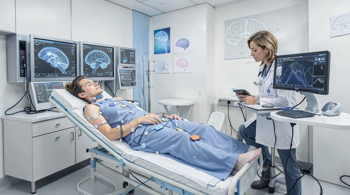
Cleveland Clinic’s broader Sleep Disorders Center is described as treating sleep apnea, insomnia, narcolepsy, and restless legs syndrome. The center’s provider information also lists Sunjeet Kaur, MD, as board certified in sleep medicine, pulmonary disease, critical care medicine, and internal medicine, with fellowships at Cleveland Clinic and Case Western Reserve University’s MetroHealth Medical Center. Such credentials may be especially relevant when sleep symptoms intersect with pulmonary, neurological, or critical-care conditions. 5 8
Specialized options across major academic systems
UCSF Health lists Rochelle S. Zak, MD, in sleep medicine and pulmonology at the Mount Zion Sleep Disorders clinic. Her clinical interests include restless legs syndrome, sleep apnea, parasomnias, and insomnia, while her research examines sleep in women in midlife and variations in restless legs syndrome. UCSF reports a 4.8 out of 5 rating based on 189 reviews and identifies her board certification in sleep medicine and psychiatry and neurology. 7
Other systems named in the research include Mayo Clinic, Stanford Health Care, UCLA Health, Johns Hopkins Medicine, Mount Sinai, Rush University Medical Center, and Emory Healthcare. Their published program descriptions identify dedicated services for sleep evaluation, testing, and treatment. Emory’s Avery Howard Nathanson, MD, has practiced since 1999 and is board certified in sleep medicine, pulmonary disease, critical care medicine, and internal medicine. The Emory record lists a 4.9 rating from 839 ratings. 9 11 12 13 14 15 10
Matching a hospital to the clinical need
Patients with suspected obstructive sleep apnea may need respiratory testing, positive-airway-pressure management, oral appliance evaluation, or surgical assessment. Mass General Brigham lists Phillip Huyett, MD, as an otolaryngologist with specialized sleep medicine and sleep surgery training, focused on obstructive sleep apnea and snoring. His research includes surgical and nonsurgical treatment integration, perioperative safety, and hypoglossal nerve stimulation selection. 6
Neurological symptoms may call for a program experienced with parasomnias, narcolepsy, epilepsy, or restless legs syndrome. UCSF highlights parasomnia and restless legs care, Cleveland Clinic combines sleep and epilepsy services, and Winkelman’s research focuses on restless legs syndrome and insomnia. Pediatric eligibility also varies: Huyett’s record states that he sees adults and pediatric patients, while several other provider records specifically list adult or older-adult populations. 7 5 1 6
Practical constraints, oversight, and continuity
Published ratings are not substitutes for clinical quality measurement. The records show different rating denominators, review volumes, age groups, insurance information, and locations, making direct comparisons inappropriate. Chaudhary’s listing, for example, displays multiple commercial and public insurance plans, while Patel’s record provides a separate accepted-plan directory. Coverage, referral rules, appointment availability, testing location, and travel requirements should be verified directly with the relevant health system. 4 2
Sleep medicine also involves continuing management rather than a single diagnostic encounter. Treatment may require interpretation of testing, equipment follow-up, behavioral changes, medication review, or coordination with pulmonary, neurological, cardiovascular, endocrine, or surgical teams. Patients should confirm board certification, AASM accreditation where relevant, age eligibility, diagnostic capabilities, and the program’s experience with the suspected disorder. These checks reduce the risk of selecting a center whose expertise does not match the clinical situation. 3 5 6
Sources
- Mass General Brigham, John Weyl Winkelman, MD, PhD: https://doctors.massgeneralbrigham.org/provider/john-weyl-winkelman/3005821
- UPMC, Sanjay R. Patel, MD: https://providers.upmc.com/provider/sanjay-r-patel/1324738
- Penn Medicine, Sleep Apnea Care: https://www.pennmedicine.org/specialties/sleep-apnea-care
- Mass General Brigham, Nilika Chaudhary, MD: https://doctors.massgeneralbrigham.org/provider/nilika-chaudhary/3009106
- Cleveland Clinic, Nancy Foldvary-Schaefer, DO: https://providers.clevelandclinic.org/provider/nancy-foldvary-schaefer/4267789
- Mass General Brigham, Phillip A. Huyett, MD: https://doctors.massgeneralbrigham.org/provider/phillip-a-huyett/3003573
- UCSF Health, Rochelle S. Zak, MD: https://www.ucsfhealth.org/providers/rochelle-zak
- Cleveland Clinic, Sunjeet Kaur, MD: https://providers.clevelandclinic.org/provider/sunjeet-kaur/4271414
- Corewell Health, Nancy J. Bender Hausman, MD: https://providers.corewellhealth.org/provider/nancy-j-bender-hausman/2779883
- Emory Healthcare, Avery Howard Nathanson, MD: https://providers.emoryhealthcare.org/provider/avery-howard-nathanson/1080123
- Mayo Clinic, Center for Sleep Medicine: https://www.mayoclinic.org/departments-centers/center-for-sleep-medicine/sections/overview/ovc-20211701
- Stanford Health Care, Sleep Medicine Center: https://stanfordhealthcare.org/medical-clinics/sleep-medicine-center.html
- UCLA Health, Sleep Disorders: https://www.uclahealth.org/medical-services/sleep-disorders
- Johns Hopkins Medicine, Sleep Medicine: https://www.hopkinsmedicine.org/neurology-neurosurgery/specialty-areas/sleep
- Mount Sinai, Sleep Center: https://www.mountsinai.org/care/sleep
Authored by MyTrendSpot team