Best knee brace for knee pain: An evidence-informed selection guide
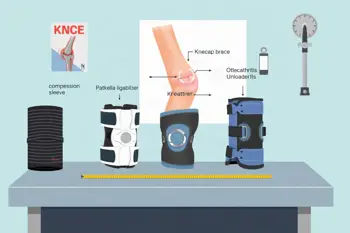
Choosing the best knee brace for knee pain requires matching the brace design to the source of discomfort rather than treating all supports as interchangeable. Compression sleeves, patellar stabilizers, hinged braces, and osteoarthritis offloaders serve different purposes, and physical therapy may still be needed to strengthen the muscles surrounding the joint. 1
Start with the type of knee problem
A compression sleeve is generally associated with mild pain, swelling, fatigue, or limited patellar support, while a hinged brace is designed to address greater instability and restrict unwanted side-to-side movement. Patellofemoral designs commonly use a ring-shaped or J-shaped pad to help guide the kneecap during bending and straightening. A diagnosis, injury history, and activity level should therefore guide selection before appearance or thickness becomes a deciding factor. 2
| Primary concern | Brace category to evaluate |
|---|---|
| Mild swelling or fatigue | Compression sleeve |
| Kneecap tracking discomfort | Patellar stabilizer |
| Ligament instability | Hinged brace |
| Single-compartment osteoarthritis | Unloader brace |
Compression sleeves for everyday support
Knit or neoprene compression supports are often considered for mild knee pain, swelling, and general activity support. Bauerfeind’s Sports Knee Support, for example, uses breathable, moisture-wicking AirKnit fabric, an Omega Pad intended to redistribute pressure around the knee, and targeted compression listed at 20 to 30 mmHg. Its design is lightweight and permits freedom of movement, making this category more relevant to fatigue or mild symptoms than to major mechanical instability. 11
- Breathable fabric can be relevant for prolonged wear.
- Compression should feel supportive, not painfully tight.
- A sleeve does not replace stabilization for a confirmed ligament injury.
Patellar braces for kneecap tracking pain
Patellofemoral pain and kneecap instability are commonly addressed with a brace that applies targeted pressure around the patella. The Bauerfeind GenuTrain P3 is described as using a ring-shaped pad and corrective strap to help center the kneecap, while a muscle-relaxation pad is intended to reduce pull from the outer thigh and iliotibial band. Advanced compression knit is also described as supporting circulation and swelling control. 12
Another compression design, the Pro Tec Athletics 7100, is described for patellar tracking problems, tendinitis, moderate instability, and soft-tissue recovery. Its stated construction includes medical-grade compression fabric and an integrated gel oval pad around the patella. These features may help explain why patellar supports feel different from plain sleeves, but they do not establish that one design is suitable for every cause of front-of-knee pain. 13
Hinged braces for instability and injury recovery
Hinged braces are typically considered when the knee needs mechanical support against lateral movement, hyperextension, or instability associated with ligament injury. Mueller’s Hinged Knee Brace uses a triaxial hinge intended to track natural knee movement and help prevent medio-lateral movement. The manufacturer states that it is intended for weak, injured, or arthritic joints, fits either knee, and contains neoprene and natural rubber latex that may cause allergic reactions. 14
More structured orthoses provide additional adjustment. The Bauerfeind SofTec Genu is described with a four-point stabilization system, lateral aluminum sidebars, and hinges that can be locked in 10-degree intervals. The Breg CrossRunner is described as a wraparound brace with adjustable range-of-motion controls and sizes based on thigh circumference. Such features may be relevant during rehabilitation, but post-surgical or ligament cases require professional guidance about permitted movement. 15
Unloader braces for osteoarthritis
Unloader braces are designed for unicompartmental osteoarthritis, where one side of the knee bears more damage or pressure than the other. The Breg Freestyle OA is described as placing the hinge on the opposite side of the painful compartment: outside for medial, or inner-knee, pain and inside for lateral, or outer-knee, pain. Its tool-free thumbwheel is intended to adjust varus or valgus unloading, but correct side, leg, and compartment selection remain essential. 16
| Osteoarthritis pattern | Design consideration |
|---|---|
| Medial compartment pain | Brace configured to unload the inner compartment |
| Lateral compartment pain | Brace configured to unload the outer compartment |
| Unclear pain location | Clinical assessment before choosing an unloader |
Fit, materials, risks, and maintenance
Accurate measurement is a central safety issue because an incorrectly sized brace can slip, irritate skin, restrict circulation, or fail to provide meaningful support. Measurement methods vary: Breg lists thigh and calf circumference six inches above and below the mid-patella for one model, while Bauerfeind’s GenuTrain guidance uses upper and lower circumference points measured at different distances. The manufacturer’s specific chart should therefore be followed rather than relying on a generic size label. 17
Maintenance and material compatibility also affect real-world use. Mueller instructs users to hand wash its brace in cold water with mild detergent, avoid bleach, and line dry it. The same product carries latex and neoprene allergy warnings. Breathable, moisture-wicking textiles may improve comfort during extended wear, but persistent redness, numbness, swelling below the brace, or worsening pain should prompt removal and professional assessment. 18
How clinical guidance changes the choice
A brace can provide stability or redistribute pressure, but it does not correct every underlying cause of knee pain. Clinical sources describe knee bracing as one element of osteoarthritis and injury management, with physical therapy often used to strengthen supporting muscles and improve movement. A brace may also be inappropriate if pain is undiagnosed, rapidly worsening, associated with major swelling, or accompanied by inability to bear weight. 3
- Identify whether pain is medial, lateral, front-of-knee, or diffuse.
- Match the support level to symptoms and diagnosed instability.
- Measure the leg at the locations specified for the chosen design.
- Check allergies, skin tolerance, hinge settings, and washing instructions.
- Seek clinical assessment for post-operative use or suspected ligament injury.
Sources
- American Academy of Orthopaedic Surgeons, https://orthoinfo.aaos.org/en/treatment/braces-for-the-knee/
- Hospital for Special Surgery, https://www.hss.edu/conditions_patellofemoral-pain-syndrome.asp
- Cleveland Clinic, https://my.clevelandclinic.org/health/treatments/23301-knee-brace
- Mayo Clinic, https://www.mayoclinic.org/diseases-conditions/osteoarthritis/diagnosis-treatment/drc-20352035
- Healthline, https://www.healthline.com/health/best-knee-brace
- Verywell Health, https://www.verywellhealth.com/best-knee-braces-4177651
- WebMD, https://www.webmd.com/pain-management/knee-braces
- Forbes, https://www.forbes.com/health/body/best-knee-braces/
- Runner’s World, https://www.runnersworld.com/gear/a34015849/best-knee-braces/
- New York Times Wirecutter, https://www.nytimes.com/wirecutter/reviews/best-knee-braces/
- Bauerfeind Sports Knee Support, https://www.bauerfeind.us/knee-brace-sports-knee-support-rivera-l/
- Bauerfeind GenuTrain P3, https://bracedirect.com/products/bauerfeind-genutrain-p3-knee-brace-patella-stabilizer-for-tracking-instability-jumpers-knee-support
- Pro Tec Athletics 7100, https://medidepot.com/products/pro-tec-athletics-7100
- Mueller Hinged Knee Brace, https://www.muellersportsmed.com/b2c-us/en/Open-Catalogue/By-Body-Part/Knee-Braces-%26-Sleeves/Hinged-Knee-Brace/p/2333XXL
- Bauerfeind SofTec Genu and Breg CrossRunner, https://bracedirect.com/products/bauerfeind-softec-genu-knee-brace-multifunctional-knee-brace-for-acl-and-ligament-instability
- Breg Freestyle OA, https://bracedirect.com/products/breg-freestyle-oa-unloader-knee-brace-medial-and-lateral-offloading-for-unicompartmental-osteoarthritis-and-arthritis-pain-l1843-l1851
- Breg Freestyle Plus sizing, https://www.breg.com/products/knee-bracing/functional-oa/freestyle-plus-oa-knee-brace/
- Bauerfeind GenuTrain and Mueller care guidance, https://bauerfeind.co.uk/products/genutrain-knee-support
Authored by MyTrendSpot team