How to Buy New Televisions with an Installment Plan: A Consumer's Analytical Guide
Buying a new television through an installment plan allows consumers to take ownership of a set immediately while distributing the purchase cost across fixed monthly payments. According to market projections, over 50 million television units are expected to be sold in the United States alone by the end of 2025, with flexible payment options cited as a key factor reducing the perceived barrier of upfront costs. 1 Understanding the structural differences between each plan type is essential before selecting one, since terms, fees, and total cost obligations can vary significantly depending on the retailer and the financing provider involved.
The Core Types of Television Installment Plans
Most television payment arrangements fall into several distinct categories, each governed by different terms. True 0% APR installment financing waives interest entirely during the stated promotional term, typically with fixed monthly payments and a defined payoff date. 2 Deferred-interest promotions present differently: no interest appears to accrue during the promotional window, but if the balance is not fully cleared by the deadline, interest may be charged retroactively based on the original purchase amount. 3 This distinction is critical and is often embedded in fine print rather than prominently disclosed at the point of sale.
Buy-now-pay-later (BNPL) services, such as those offered by Affirm and Klarna, represent a separate category. These platforms are accepted by major electronics retailers and typically break a TV purchase into 3 to 36 monthly installments, with interest rates varying according to the applicant's creditworthiness and the specific plan selected. 4 Store credit cards linked to retailers like Best Buy, Walmart, and Target form another category, often unlocking promotional financing periods but tying consumers into a branded credit ecosystem with its own terms and ongoing credit obligations.
Where Television Installment Plans Are Commonly Available
Major electronics retailers have broadly integrated installment financing into their checkout processes. Best Buy offers 0% APR financing on purchases over $399 through its credit card or special financing promotions, with specific terms displayed during the purchase flow. 5 Walmart's credit card provides comparable promotional 0% APR periods on purchases of $398 or more, while also accommodating third-party BNPL providers at checkout. 6 Amazon enables eligible customers to split television purchases into monthly installments through its own pay-later infrastructure, with available terms shown to the customer before the order is confirmed. 7
Target's RedCard financing and Costco's Anywhere Visa Card by Citi represent retail-affiliated options that extend promotional financing to cardholders for qualifying television purchases. 8 Outside the United States, markets such as India and the UAE show comparable structures. In India, financing platforms like Bajaj Finserv allow consumers to purchase televisions through an Easy EMI Loan of up to Rs. 5 lakh, with tenure options ranging from 3 to 60 months and select models available with zero down payment. 9 In the UAE, electronics retailers offer installment plans through 15 or more banks, with processing fees and tenure structures varying by institution. 10
Eligibility Criteria and Approval Processes
Eligibility requirements differ meaningfully across plan types. Traditional retail credit cards and promotional financing offers generally require a formal credit application, and most providers expect a minimum credit score of approximately 600 or above to qualify for promotional 0% APR terms. 11 Denial results in ineligibility for the promotional rate, often meaning the consumer would face standard purchase APR if the balance carries beyond the statement period. The Consumer Financial Protection Bureau notes that financing terms including APR, monthly payment amounts, and promotion length must be disclosed to the consumer before completing a credit agreement. 12
BNPL platforms typically apply a softer approval model. Most BNPL applications use soft credit inquiries, meaning that applying does not affect the applicant's credit score in most cases. 1 However, the absence of a hard credit check does not eliminate underwriting: platforms assess affordability and repayment likelihood using proprietary criteria. For consumers with limited or imperfect credit histories, some specialist finance providers extend installment options based on broader affordability indicators rather than traditional credit scores alone. 13
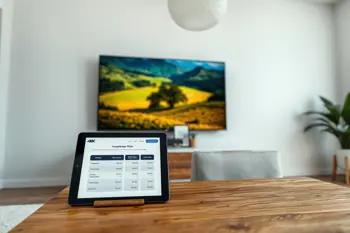
Comparing Plan Structures: A Reference Overview
The table below summarizes the primary installment plan categories available for television purchases, their typical terms, and key risk factors consumers should review before selecting a plan.
| Plan Type | Typical Term | Interest Structure | Key Risk Factor |
|---|---|---|---|
| Retailer 0% APR (e.g., Best Buy, Walmart) | 6 to 24 months | No interest if paid in full within promo period | Retroactive interest if balance remains at term end |
| BNPL (e.g., Affirm, Klarna) | 3 to 36 months | Varies; can be 0% or interest-bearing | Interest rates vary by credit profile; late fees may apply |
| Store Credit Card Financing | 12 to 24 months | Promotional 0% or standard purchase APR | Ties consumer to store credit ecosystem |
| Rent-to-Own (e.g., Aaron's) | Weekly or monthly | No traditional interest, but higher total cost | Total cost substantially exceeds retail price |
| Personal Loan (bank or credit union) | 12 to 60 months | Fixed APR disclosed at origination | Requires separate application; credit score dependent |
Rent-to-own retailers such as Aaron's and Rent-A-Center provide access to televisions without credit qualification requirements, but the total amount paid over the contract period is typically significantly higher than the television's standard retail price. 14 Credit unions frequently offer personal loans with more competitive fixed rates than retail credit cards, and these loans can be applied toward any television purchase regardless of retailer. 11
Hidden Costs and Risks to Evaluate
A monthly payment figure alone does not represent the full cost of a financed television purchase. Consumers should calculate the total amount payable across all installments and compare it against the upfront retail price. BNPL platforms and retailer financing offers frequently bundle accessories, extended warranties, and delivery costs into the financed balance, inflating the total amount subject to interest or fees. 1 Processing fees charged by banks in installment arrangements can range from a flat fee, such as AED 35 to AED 98 per tenure in UAE bank plans, to percentage-based charges of 1% to 4.8% of the financed amount, depending on the institution and term selected. 10
Missed or late payments carry consequences across all plan types. On deferred-interest plans, a single missed payment before the promotional deadline may trigger the full retroactive interest charge on the original balance. 3 On BNPL arrangements, late fees can accumulate and, depending on the provider, payment history may be reported to credit bureaus, affecting the consumer's credit profile. Consumers should also be aware that opting for a longer installment term to reduce the monthly payment amount typically increases the total interest paid over the life of the plan, even when the headline rate appears low.
Practical Steps Before Committing to a Television Installment Plan
Before selecting a plan, consumers should identify the full retail price of the television as the baseline comparison figure. Evaluating the APR, total repayment amount, fee schedule, and any conditions that could alter the promotional rate provides a more accurate picture than focusing solely on the monthly payment. For Amazon's monthly payment plan, for example, the platform allows customers to select installment periods typically between 3 and 12 months, with a soft credit check completed during the process, and full cost details including interest and fees are disclosed before confirmation. 15
Comparing offers across at least two or three channels, such as a store credit card plan, a BNPL provider, and a personal loan from a credit union, allows for objective cost comparison. Checking whether the retailer offers any additional value, such as extended warranties or delivery inclusion within a financed bundle, can also affect the net cost calculation. Consumers should confirm repayment schedules in writing and understand what triggers any penalty clauses before agreeing to terms. Regulatory guidance consistently emphasizes that all material terms must be disclosed before a financing agreement is executed, giving consumers the right to review and decline if conditions are not suitable. 12
Sources
- Miami Herald / Bryce Welker: Buy Now, Pay Later TV: Watch Now, Pay Later (miamiherald.com, September 2025)
- TVDeals.link: TV Financing Deals Explained (tvdeals.link)
- EatHealthy365: Understanding Interest-Free TV Finance Deals / A Guide to 0% APR TV Finance Offers in 2026 (eathealthy365.com)
- Affirm: How It Works (affirm.com); Klarna: How It Works (klarna.com)
- Best Buy: Financing Help Topics (bestbuy.com)
- Walmart: Credit Card Financing Options (walmart.com)
- Amazon: Customer Financing Help (amazon.com)
- Target: Credit Offers (target.com); Costco: Anywhere Visa Card by Citi (costco.com)
- GainFocus News / Bajaj Finserv: Bring Home a Stunning New TV This Festive Season with Easy EMIs (news.gainfocuspr.com, October 2025)
- Ecity Electronics UAE: Samsung Installment Options (ecityuae.ae)
- The Detroit Bureau / Mike Levine: TV Financing: Everything You Need To Know (thedetroitbureau.com, January 2026)
- Consumer Financial Protection Bureau: What is APR and Why Is It Important? (consumerfinance.gov)
- Snap Finance UK: TVs on Finance | Pay Monthly TV Options (snapfinance.co.uk, July 2026)
- Aaron's: Electronics / Televisions (aarons.com)
- GetAmazonCoupons: Using Amazon's Monthly Payment Plan (getamazoncoupons.com, January 2026)
Authored by MyTrendSpot team