Warning Signs of Migraine: A Clinical Guide to Early Symptoms and Emergency Red Flags
How Migraine Attacks Develop
Migraine is a neurological disorder rather than simply a severe headache. An attack may progress through four phases: prodrome, aura, headache, and postdrome, although many people do not experience every phase. Symptoms can vary between individuals and between separate attacks. The headache stage commonly lasts 4 to 72 hours in adults, while some people experience migraine only occasionally and others have attacks several times each month. 1
Recognizing a personal sequence can help distinguish an established migraine pattern from an unfamiliar medical problem. A migraine headache is often throbbing, moderate or severe, one-sided, and worsened by movement. Nausea, vomiting, and sensitivity to light, sound, or smells may occur alongside the pain. Some people experience aura without a subsequent headache, a pattern also called silent migraine. 2
Early Prodrome Warning Signs
Prodrome is the earliest warning phase and may begin one or two days before head pain. Possible signs include fatigue, frequent yawning, neck pain or stiffness, difficulty concentrating, dizziness, mood changes, food cravings, increased urination, and heightened sensitivity to light or sound. These symptoms are subtle and may be mistaken for stress, poor sleep, or an ordinary change in mood. 1
Prodrome symptoms do not appear in the same combination for everyone. One person may notice unusual tiredness and repeated yawning, while another may experience irritability, appetite changes, or difficulty focusing. Keeping a record of timing, sleep, meals, hormonal changes, weather, stress, and sensory exposure can reveal whether recurring early symptoms reliably precede head pain. Triggers vary, but they are not themselves the underlying cause of migraine. 3
- Fatigue or unusual sleepiness
- Frequent yawning
- Food cravings or appetite changes
- Neck stiffness or discomfort
- Mood or concentration changes
- Increased sensitivity to light or sound
Migraine Aura and Temporary Neurological Symptoms
Aura consists of reversible nervous-system symptoms that usually develop gradually before or during a migraine. Visual aura is most common and may involve flashing or flickering lights, zigzag lines, shimmering spots, stars, blind spots, or areas of blurred vision. Sensory aura can cause tingling or numbness that spreads from one area of the face or arm to another. 4
Aura may also affect language, causing difficulty speaking or finding words. Symptoms generally last between five and 60 minutes, and they often occur within an hour of headache pain, although aura can occur without a headache. Gradual development and complete reversibility are typical features, but a first aura, an unusually different aura, or persistent neurological symptoms should not automatically be assumed to be migraine. 2
| Aura type | Examples | Typical pattern |
|---|---|---|
| Visual | Flashing lights, zigzags, blind spots | Often spreads across the visual field |
| Sensory | Tingling or numbness | May move gradually across the face or arm |
| Language | Difficulty speaking or finding words | Usually temporary |
Headache-Phase Warning Signs
The headache phase commonly produces intense, throbbing or pulsing pain, often on one side of the head, though both sides or the face and neck can be affected. Pain may worsen with ordinary activity and interfere with work, sleep, or routine tasks. Nausea and vomiting are frequent associated symptoms, and many people seek a dark, quiet environment because light and sound become difficult to tolerate. 5
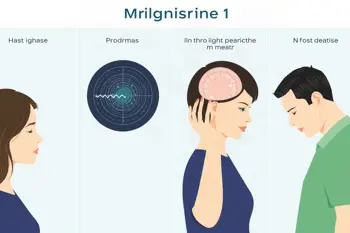
Migraine is identified by the overall symptom pattern rather than pain location alone. A headache can be bilateral, and not every migraine is described as throbbing. Sensitivity to smells, dizziness, brain fog, and visual changes may accompany the attack. Migraine attacks can occur rarely, several times monthly, or several times weekly, so frequency and severity are important details for clinical assessment. 2
- Moderate or severe head pain
- Throbbing or pulsing quality
- Worsening with movement
- Nausea or vomiting
- Light, sound, or smell sensitivity
- Difficulty completing ordinary activities
Postdrome and the Migraine “Hangover”
Postdrome follows the reduction of headache pain and may last long enough to affect normal functioning after the main attack appears to be over. Common descriptions include exhaustion, mental fog, confusion, weakness, mood changes, and sensitivity to movement. A person may feel depleted or cognitively slowed rather than immediately returning to baseline. 7
The end of head pain does not necessarily mark the end of the attack. Recording postdrome symptoms alongside prodrome, aura, pain intensity, duration, and possible triggers can help a clinician understand the complete pattern. Regular sleep and meal schedules, attention to known triggers, and prescribed treatment plans are commonly discussed as part of migraine management, but individual responses differ. 3
When Warning Signs May Signal an Emergency
A sudden headache that reaches maximum intensity within seconds or minutes is not a typical warning sign to monitor at home. Emergency assessment is also warranted when headache occurs with weakness or paralysis, numbness, trouble speaking, confusion, fainting, seizures, double vision, fever, stiff neck, or a rash. These combinations can indicate conditions such as stroke or meningitis rather than an ordinary migraine attack. 8
Prompt medical evaluation is also appropriate for a first or worst headache, a substantially changed pattern, a headache after head injury, or a new headache after age 50. Assessment is especially important during pregnancy or shortly after childbirth and for people with cancer or a weakened immune system. Familiar migraine symptoms do not rule out another cause when the timing, severity, or associated neurological signs are unusual. 8
- Sudden, extreme pain reaching peak intensity rapidly
- New weakness, numbness, speech difficulty, or vision loss
- Fever with stiff neck, rash, confusion, or seizures
- Headache after an injury
- A new or substantially different headache pattern
Sources
- Mayo Clinic, Migraine: Symptoms, Causes, Triggers and Treatment, https://store.mayoclinic.com/education/migraine-symptoms-causes-triggers-and-treatment/
- NHS inform, Migraine, https://www.nhsinform.scot/illnesses-and-conditions/brain-nerves-and-spinal-cord/migraine/
- American Migraine Foundation, Migraine Phases, https://americanmigrainefoundation.org/resource-library/migraine-phases/
- Cleveland Clinic, Migraine With Aura, https://my.clevelandclinic.org/health/diseases/5005-migraine-with-aura
- Johns Hopkins Medicine, Migraine Headaches, https://www.hopkinsmedicine.org/health/conditions-and-diseases/migraine-headaches
- MedlinePlus, Migraine, https://medlineplus.gov/ency/article/000709.htm
- National Institute of Neurological Disorders and Stroke, Migraine, https://www.ninds.nih.gov/health-information/disorders/migraine
- American Headache Society, Diagnosing and Managing Headache, https://americanheadachesociety.org/resources/primary-care/diagnosing-and-managing-headache
Authored by MyTrendSpot team