Warning signs of gallbladder disease: A clinical overview of symptoms and complications
Gallbladder disease encompasses a range of conditions, primarily centered on the formation of gallstones and the subsequent inflammation of the organ, known as cholecystitis 6. Because the gallbladder is positioned deep within the abdomen, its initial symptoms are frequently subtle, often mirroring common digestive issues like indigestion or heartburn 4. Understanding the clinical presentation of gallbladder dysfunction is essential for distinguishing between transient digestive discomfort and serious biliary pathology that requires medical intervention 1.
Understanding Biliary Colic and Abdominal Pain
The most characteristic indicator of gallbladder disease is biliary colic, which presents as sudden, intense pain located in the upper right quadrant of the abdomen 3. This discomfort typically occurs when a gallstone obstructs the cystic duct, causing pressure to build within the gallbladder 3, 6. Clinical reports indicate that this pain frequently radiates to the back, the area between the shoulder blades, or specifically toward the right shoulder 3, 4. The pain can be sharp or stabbing in nature and often lasts between 30 minutes and four hours 3, 5.
While episodic pain is a hallmark of symptomatic cholelithiasis, the timing of these incidents is often predictive 5. Many patients experience an exacerbation of symptoms approximately 15 to 20 minutes following the consumption of a fatty or greasy meal, as the gallbladder contracts to release bile to aid in digestion 3, 4. Furthermore, these attacks are commonly reported during the evening or overnight hours 1. If a patient has experienced one such episode, clinical data suggests that subsequent occurrences are highly probable without treatment 1.
Identifying Systemic Symptoms of Infection
When gallbladder issues progress to acute cholecystitis, the inflammation of the organ lining can trigger systemic responses beyond localized pain 3, 6. Patients may develop a fever, even a low-grade one, or experience chills, which are often indicative of an active infection or severe inflammation 1, 6. Nausea and vomiting are also common accompanying symptoms during these acute phases 1, 8. When these symptoms manifest, it indicates that the issue may no longer be a simple mechanical blockage and that medical evaluation is urgently required to prevent complications 1.
Physical examination findings often reveal significant tenderness in the right upper abdominal quadrant, which may intensify during deep inspiration 7. Unlike simple indigestion, which may resolve with over-the-counter interventions, the pain associated with cholecystitis is frequently steady and severe rather than intermittent or crampy 6, 7. Persistent, worsening pain that does not subside as expected is a critical warning sign that the gallbladder wall may be thickening or that the organ is undergoing significant physiological stress 6.
Indicators of Bile Duct Obstruction
In cases where gallstones move from the gallbladder into the common bile duct, the condition becomes more complex, potentially leading to choledocholithiasis or bile duct obstruction 7, 8. The primary clinical sign of this obstruction is jaundice, characterized by a yellowish discoloration of the skin and the whites of the eyes 1. This occurs because the bile, which is no longer able to flow into the small intestine, backs up into the bloodstream, increasing levels of bilirubin 9.
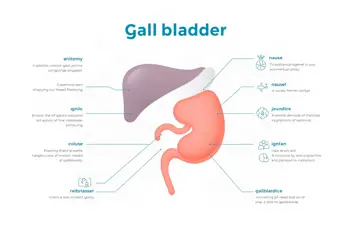
Additional diagnostic indicators of a blocked bile duct include changes in excretory habits 1. Patients may observe that their urine takes on a dark, tea-like color, while stools become uncharacteristically light or clay-colored 1, 3. These specific markers are significant because they suggest that the blockage is affecting the broader biliary system, including the liver and pancreas, which carries a risk of life-threatening complications like cholangitis or gallstone pancreatitis 1, 5, 9.
Silent Gallstones and Asymptomatic Carriers
It is important to note that a significant portion of the population carries gallstones without ever experiencing a clinical symptom 5. These are clinically referred to as silent gallstones and are typically identified incidentally during abdominal imaging performed for other reasons 1. Because silent stones do not impede the function of the gallbladder, liver, or pancreas, they generally do not require surgical intervention or pharmacological treatment 1.
However, the prevalence of these stones is notable. In the United States, approximately 14% of the population over the age of 20 is estimated to have gallstones 7, 9. Prevalence rates are influenced by a variety of factors, including age, biological sex, metabolic health, and physical activity levels 7. While these stones may remain silent for many years, the presence of the stones alone provides the biological potential for future symptomatic obstruction or inflammatory episodes 9.
Differential Diagnosis and Clinical Evaluation
Because the symptoms of gallbladder disease can mimic other acute abdominal conditions, clinical evaluation is vital 1. The differential diagnosis for upper quadrant pain includes conditions such as peptic ulcers, pancreatitis, gastroesophageal reflux disease, and appendicitis 1. Diagnostic accuracy relies heavily on imaging, with ultrasonography serving as the primary modality for evaluating potential gallbladder pathology due to its high accuracy in detecting stones and wall thickness 5, 7.
The following table summarizes common symptom associations observed in gallbladder pathology:
| Symptom Category | Common Clinical Indicators |
|---|---|
| Pain Patterns | Upper right quadrant, radiation to back/shoulder |
| Digestive Issues | Nausea, vomiting, fatty food intolerance |
| Systemic Signs | Fever, chills, persistent abdominal tenderness |
| Obstructive Signs | Jaundice, dark urine, pale stools |
The Role of Medical Intervention
When symptoms become persistent or severe, surgical intervention-typically a cholecystectomy-is often the established standard of care for symptomatic cholelithiasis and recurrent attacks 4, 7. The procedure involves the removal of the gallbladder, which is highly common, with over 1.2 million such surgeries performed annually in the United States 4. Early detection of warning signs allows for planned intervention rather than emergent surgery, which can reduce the risk of complications associated with acute infections or tissue damage 6.
Patients experiencing symptoms such as prolonged abdominal pain, jaundice, high fever, or significant nausea are encouraged to seek medical assessment promptly 1, 6. Delaying care when these specific warning signs exist can lead to more intensive clinical scenarios, including the need for specialized procedures to clear the bile ducts or manage systemic infection 6, 9.
Sources
- National Institute of Diabetes and Digestive and Kidney Diseases, Symptoms & Causes of Gallstones.
- Verywell Health, 5 Early Signs of a Gallbladder Problem.
- Cleveland Clinic, Gallbladder Attack: Symptoms and How To Stop It.
- WakeMed Health & Hospitals, Gallbladder Health: What You Should Know.
- American Academy of Family Physicians, Gallstone Disease.
- MSD Manuals, Cholecystitis.
- MSD Manuals, Gallstones (Cholelithiasis).
- Harvard Health Publishing, Cholecystitis.
- Merck Manual Professional Edition, Cholelithiasis.
- Cedars-Sinai, Gallstones Explained.
Authored by MyTrendSpot team