Best hospitals in the world for treating aneurysms: A Clinical Perspective on Specialized Care
When navigating the complexities of an aneurysm diagnosis, identifying a facility with robust neurovascular capabilities is critical for patient outcomes. There is no singular, universally accepted global ranking specifically for aneurysm treatment 1. Instead, healthcare professionals and patients often look toward institutions with high-volume specialized neurology and neurosurgery departments 2. Determining the appropriate hospital requires an evaluation of the team's ability to offer both surgical and endovascular interventions, as well as the availability of emergency neurocritical care support 3.
Defining Excellence in Neurovascular Care
The standard of care for cerebral aneurysms has evolved to include both open microsurgical clipping and minimally invasive endovascular techniques, such as coiling and flow diversion 4. Leading global hospitals, such as the Mayo Clinic in Rochester and Massachusetts General Hospital, are frequently recognized for their specialized cerebrovascular programs 5. These institutions typically house multidisciplinary teams including neurosurgeons, interventional neuroradiologists, and neurointensivists who work in tandem to customize treatment strategies based on the size, shape, and location of the aneurysm 6.
Clinical excellence is also marked by the presence of advanced imaging technology, such as biplane catheterization labs, which allow for real-time 3D visualization during procedures 7. Institutions like Liv Hospital and the Acibadem Hospitals Group highlight the importance of these state-of-the-art facilities in ensuring the precise placement of stents and coils 8. High patient volume at these specialized centers often correlates with increased surgical experience and refined internal protocols for managing both routine cases and critical ruptures 9.
Global Leaders in Neurology and Neurosurgery
Several institutions consistently appear in international rankings for their dedication to complex neurological conditions. According to the 2026 World's Best Specialized Hospitals report, centers such as Charité - Universitätsmedizin Berlin, The Johns Hopkins Hospital, and the Cleveland Clinic are ranked among the top facilities for neurology 10. While these rankings focus on broad neurology metrics, these hospitals are also recognized for hosting dedicated cerebrovascular departments that specifically address intracranial aneurysms and arteriovenous malformations 11.
| Hospital Name | Location | Focus Area |
|---|---|---|
| Mayo Clinic | Rochester, USA | Multidisciplinary Neurosurgery |
| Massachusetts General Hospital | Boston, USA | Cerebrovascular Care |
| The Johns Hopkins Hospital | Baltimore, USA | Cerebrovascular Specialty |
| Asan Medical Center | Seoul, South Korea | Neurological Excellence |
| National Hospital for Neurology and Neurosurgery | London, UK | Complex Neurosurgical Services |
Treatment Modalities and Surgical Approaches
The choice between surgical clipping and endovascular coiling remains a foundational decision in aneurysm care. Surgical clipping involves placing a metal clip across the aneurysm neck to isolate it from blood flow, while endovascular coiling uses platinum coils to induce thrombosis within the sac 12. Advanced flow-diverter stents and intrasaccular devices, such as the Woven EndoBridge, represent further refinements in treating wide-neck or giant aneurysms that may be difficult to manage with traditional methods 13.
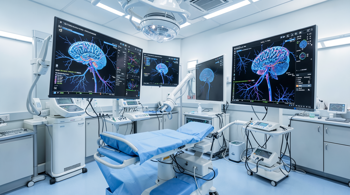
Hospitals that are best equipped for these procedures maintain 24/7 emergency readiness, as the rupture of an intracranial aneurysm constitutes a life-threatening neurological emergency requiring immediate intervention 14. Institutions such as UCSF Medical Center and Stanford Health Care provide comprehensive evaluations that consider the patient's individual anatomical profile and risk tolerance before selecting a path between invasive surgery or interventional neurology 15.
Factors Influencing Hospital Selection
Beyond technical capability, patients and families are encouraged to consider the logistical and supportive aspects of their care. A key factor in selecting a facility is the availability of coordinated care that extends from the initial diagnostic phase through long-term follow-up imaging 16. For international patients, factors such as language support, travel coordination, and the ability to conduct remote records reviews are essential components of the treatment journey 17.
Accreditations from organizations such as the Joint Commission International (JCI) or equivalent national quality bodies serve as objective markers of a hospital's commitment to safety and standardized clinical outcomes 18. Before selecting a provider, it is standard practice to inquire about the specific number of aneurysm procedures the neurovascular team performs annually, as experience is a primary indicator of clinical proficiency 19.
Managing Risk and Regulatory Oversight
It is important to recognize that all neurovascular procedures carry inherent risks, including the potential for vessel injury, stroke, or post-procedural complications. Rigorous institutional oversight is necessary to ensure that patients are appropriately selected for intervention versus conservative observation 20. Many specialized hospitals, such as those within the University Health Network in Toronto or University College London Hospitals, emphasize the use of second-opinion services to help patients understand the necessity and urgency of recommended procedures 21.
Patients should also be aware that neurointervention is a rapidly changing field. The introduction of new endovascular devices necessitates ongoing training and institutional commitment to technology adoption 22. When researching potential hospitals, focusing on institutions that contribute to medical research and participate in international scientific events can provide insight into the hospital's dedication to implementing current, evidence-based practices for aneurysm management 23.
Conclusion on Specialized Medical Environments
Selecting the right hospital for aneurysm treatment is a process that balances technical requirements with a need for comprehensive patient support. While global lists can provide a starting point for identifying institutions with high levels of expertise in neurology, the specific needs of a patient-whether they require emergency care for a ruptured aneurysm or elective management for an unruptured one-should guide the final evaluation 24. By prioritizing hospitals with integrated cerebrovascular teams, advanced imaging, and a proven track record in both endovascular and surgical domains, patients can better align their care with their specific clinical objectives 25.
Sources
- U.S. News & World Report, Best Hospitals Rankings
- Booking Health, Best 10 Hospitals in the World 2026
- Acibadem Hospitals Group, Choosing a Hospital for Brain Aneurysm Treatment
- Dr. Gaurav Goel, Intracranial Aneurysms Treatment Options
- Mayo Clinic, Brain Aneurysm Care
- Massachusetts General Hospital, Cerebrovascular Program
- Liv Hospital, Interventional Neurology Services
- Acibadem Healthpoint, Brain Aneurysm Surgery Overview
- Booking Health, Global Healthcare Quality Assessment
- Newsweek and Statista, World's Best Specialized Hospitals 2026: Neurology
- Johns Hopkins Medicine, Cerebrovascular Specialty Program
- Brain and Spine BCN, Aneurysm Treatment Techniques
- Dr. Gaurav Goel, Flow-diverter and Intrasaccular Devices
- Acibadem International, Neurointervention in Turkey
- UCSF Department of Neurological Surgery, Vascular Disorders
- Stanford Medicine, Vascular Neurosurgery Services
- Acibadem International, International Patient Care Coordination
- Booking Health, Understanding JCI and ISO Accreditations
- Booking Health, Clinical Experience and Patient Volume Metrics
- Aaron Cohen-Gadol, MD, Neurosurgical Second Opinion
- University Health Network, Vascular Neurosurgery Program
- Liv Hospital, Advances in Endovascular Care
- Booking Health, The Importance of Scientific Research in Hospitals
- NYU Langone Health, Brain Aneurysm Diagnosis and Treatment
- University College London Hospitals, Cerebrovascular Service
Authored by MyTrendSpot team