Top rated cameras under $500: An evidence-based guide to current options
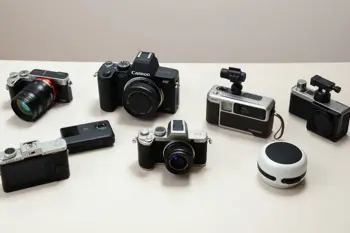
Top rated cameras under $500 now cover several distinct categories rather than one universal camera type. The available choices include interchangeable-lens models for still photography, fixed-lens compacts for travel and vlogging, stabilized pocket cameras for moving video, and rugged action or 360-degree cameras for outdoor capture. Ratings and suitability depend heavily on the intended use, because a camera optimized for handheld video may not be the strongest tool for portraits or lens-based learning.
What the under-$500 category includes
The $500 threshold generally includes entry-level equipment and models whose specifications prioritize accessibility, portability, or a specialized workflow. The Canon EOS R100, for example, combines a 24.1-megapixel APS-C sensor with an RF-S 18-45mm kit lens, while the Sony ZV-1F uses a 20.1-megapixel 1-inch sensor and a fixed 20mm-equivalent F2 lens. These designs address different needs: the Canon supports interchangeable lenses, while the Sony keeps the camera compact and video-oriented. 2 3
Historical and current pricing should be treated cautiously because kit configurations and regional prices vary. The EOS R100 had a $499.99 launch price, the Sony ZV-1F also launched at $499.99, and the DJI Osmo Pocket 3 Standard Combo has been positioned at $499. Such figures describe market context rather than a guarantee that every configuration remains below the threshold. 2 7
Interchangeable-lens cameras for still photography
The Canon EOS R100 is among the most direct routes into a modern interchangeable-lens system at this price level. Its APS-C sensor provides a larger imaging surface than the 1-inch sensor used by the Sony ZV-1F, and the RF-S mount permits lens changes as photographic requirements develop. The included 18-45mm lens is suitable for general framing, but a complete system can become more expensive and less compact when additional lenses, batteries, memory cards, and support equipment are considered. 3 4
The Panasonic Lumix G100D offers a different approach through a 20.3-megapixel Micro Four Thirds sensor, a built-in electronic viewfinder, 4K recording, and a compact body. Its Micro Four Thirds mount provides access to interchangeable lenses, while the integrated viewfinder can help when bright surroundings make a screen harder to see. The G100D is therefore positioned between a travel compact and a more traditional mirrorless camera, although its smaller sensor is not equivalent to the APS-C format in the EOS R100. 5 6
Compact cameras for travel and vlogging
The Sony ZV-1F is designed around straightforward video composition rather than lens selection. Its 20.1-megapixel 1-inch sensor, fixed 20mm-equivalent F2 lens, 4K recording, and compact construction make it relevant to self-facing video and wide environmental framing. The fixed lens reduces setup complexity, but it also limits flexibility for distant subjects, close facial framing, or scenes requiring a narrower field of view. 1 2
Fixed-lens compacts can offer a simpler carrying experience, but their value depends on how far they exceed a modern phone in the intended situation. Amateur Photographer notes that cameras in this category need to provide a meaningful advantage, such as stronger image quality, a broader lens range, or physical features such as weather protection. The Sony ZV-1F addresses portability and video control, but its fixed focal length remains an important limitation for still photographers seeking multiple perspectives. 1 5
Pocket gimbal cameras and moving video
The DJI Osmo Pocket 3 occupies a specialized position under $500. It uses a 1-inch CMOS sensor, a rotating 2-inch touchscreen, and an integrated three-axis gimbal. The mechanical stabilization system is designed to keep footage level and smooth while the camera is being carried, making it technically different from a conventional compact camera that relies primarily on electronic or optical stabilization. 7 8
Its video specification includes 4K recording at up to 120 frames per second for slow-motion work, while the rotating screen supports several filming orientations and self-facing operation. These features make the Pocket 3 particularly relevant to mobile video, but the gimbal introduces a moving mechanical assembly that requires more careful handling than a sealed action camera. It is also less suited to situations where waterproofing, impact resistance, or a highly discreet fixed setup is the priority. 7 8
Action and 360-degree camera choices
The GoPro HERO13 Black is oriented toward outdoor video. GoPro lists 5.3K recording at up to 60 frames per second, HyperSmooth stabilization, and waterproofing to 33 feet without a housing. These specifications address movement, vibration, and exposure to water, conditions that are outside the normal operating assumptions of entry-level mirrorless cameras. Independent coverage also discusses its battery changes and accessory ecosystem as important parts of the overall experience. 9 10
The Insta360 X4 records 8K 360-degree video and can also operate in a single-lens action-camera mode. Its primary distinction is reframing: a 360-degree recording can be composed after capture, rather than requiring the operator to select one final direction during filming. That flexibility comes with a specialized editing workflow and different expectations for image detail, storage, and framing compared with a standard forward-facing camera. Its listed starting price is $499.99. 11 12
How to compare the cameras objectively
Sensor size is a central comparison point, but it is not the only one. The EOS R100 uses APS-C, the G100D uses Micro Four Thirds, and the ZV-1F and Pocket 3 use 1-inch sensors. Lens flexibility separates the interchangeable-lens cameras from the fixed-lens and integrated-gimbal models, while waterproofing and stabilization distinguish the HERO13 Black and X4 from cameras primarily intended for conventional photography. 2 5 7 9 11
Video requirements also produce different rankings. The ZV-1F emphasizes a wide fixed lens and 4K capture, the Pocket 3 adds a mechanical gimbal and 4K/120p recording, the HERO13 Black provides 5.3K60 capture with waterproof construction, and the X4 adds 8K 360-degree recording. Still photographers may place greater weight on sensor format, viewfinder access, and lenses, whereas creators filming movement may prioritize stabilization, screen design, weather resistance, or reframing options. 1 7 9 12
Ownership limits and practical risks
The main market friction is that a camera body rarely represents the entire ownership requirement. Interchangeable-lens systems can require further spending on lenses, and independent buying guidance recommends checking lens availability and future system costs before choosing a mount. Fixed-lens cameras avoid that specific issue but cannot change focal length beyond their built-in optical design. Action and 360-degree cameras may require suitable mounts, protective handling, and editing software or workflows that differ from ordinary still-image use. 5
Maintenance and operating conditions also matter. Waterproof ratings do not remove the need for careful treatment of ports, seals, batteries, and storage media, while a gimbal camera contains a delicate moving stabilizer. The Kodak PixPro C1 review illustrates the broader risk of judging compact cameras only by headline specifications: that model has a digital-only 4x zoom, a non-removable battery, slow shutter response, and fluorescent-light banding issues. A technically attractive specification sheet should therefore be weighed against handling limitations and documented review findings. 6
Sources
- RTINGS
- Sony
- Canon USA
- Tom's Guide
- Panasonic
- Digital Camera World
- DJI
- PCMag
- GoPro
- TechRadar
- Insta360
- The Verge
Authored by MyTrendSpot team