Home recovery for herniated disc: A Clinical Guide to Conservative Care
Home recovery for herniated disc generally involves managing pain while maintaining safe movement rather than remaining in bed for extended periods. Most people with a herniated disk improve without surgery over several weeks or months, although recovery varies according to nerve involvement, symptom severity, and general health. 1
What a herniated disc means
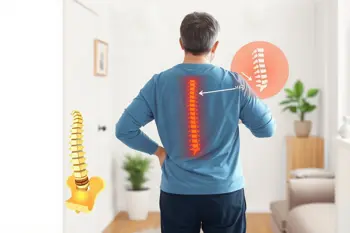
A herniated disk occurs when the soft, jelly-like center of a spinal disk pushes through a tear or weakened area in its tougher outer ring. The displaced material may irritate or compress nearby nerves, producing back pain, leg pain known as sciatica, numbness, tingling, or weakness. The lower back is the most common location, although herniation can also occur in the neck or upper back. 2
Diagnosis usually begins with a medical history and physical examination. A clinician may assess reflexes, muscle strength, walking ability, sensation, and leg movements. Many people do not need imaging immediately, while MRI, CT, or nerve testing may be considered when symptoms are unusual, persistent, severe, or suggest a different problem. 1
Early home care and activity modification
During a painful flare, reducing aggravating activity can help, but prolonged immobilization is generally not the objective. Research-based guidance commonly describes limiting activities for a short period, often one to two days, followed by a gradual return to movement. Light walking may be better tolerated than extended sitting or lying down, provided it does not increase leg pain, numbness, or weakness. 6
Heavy lifting, repeated bending, twisting, jogging, jumping, and other high-impact activities can place additional stress on the spine during the acute phase. Daily tasks should be divided into manageable steps, with neutral spinal alignment maintained as much as possible. A movement that sharply worsens radiating symptoms should be stopped rather than repeatedly tested. 3
Pain relief measures
Over-the-counter nonsteroidal anti-inflammatory drugs, including ibuprofen or naproxen, are commonly used for short-term pain and inflammation management when medically appropriate. These medicines are not suitable for everyone, and risks can relate to stomach, kidney, cardiovascular, pregnancy, or medication conditions. A pharmacist or clinician can help determine whether a particular medicine is appropriate and how it should be used. 3
Cold and heat are commonly used as comfort measures, but their effects differ. An ice pack may help reduce discomfort during the early period after a flare, while heat may relax tight muscles later. Both should be wrapped to protect the skin, used for limited periods, and discontinued if symptoms worsen. These measures address comfort and do not remove pressure from a nerve. 4
Gentle movement and exercises
Exercise selection should depend on whether symptoms are located mainly in the back, travel into a limb, or include neurological changes. Gentle stretching involving the neck, hamstrings, back, or knees may be included in rehabilitation plans, while walking, swimming, or cycling may provide lower-impact movement for some people. A physical therapist can adjust intensity and technique when symptoms change. 3
Pelvic tilts, controlled mobility work, and nerve-gliding exercises are sometimes used to maintain movement and reduce sensitivity around an irritated nerve. These exercises should be slow and comfortable, without forcing range of motion or reproducing strong shooting pain. Physical therapy may also progress toward strengthening muscles around the spine and improving flexibility, which can support function during recovery. 4
Posture, sleep, and daily ergonomics
Prolonged sitting can aggravate symptoms for some people, particularly when the lower back rounds or the body remains in one position. A supportive chair, lumbar support, regular position changes, and brief walking intervals can reduce sustained mechanical strain. Work surfaces should allow the head, shoulders, and pelvis to remain reasonably aligned, while lifting should be performed without sudden twisting. 7
Sleep positioning is primarily a matter of symptom tolerance. Some people are more comfortable on the side with support between the knees, while others prefer lying on the back with support under the knees. The useful position is the one that allows sleep without increasing radiating pain. Rest supports recovery, but daytime inactivity should not become complete immobilization because deconditioning can make normal activity harder. 6
Expected recovery and ongoing rehabilitation
Orthopedic guidance indicates that most people with a herniated disk feel better within weeks or months without surgery. Conservative care may include activity modification, medication, physical therapy, and progressive strengthening. Improvement is not always linear: pain may settle before numbness or weakness, and a temporary increase in symptoms can occur after doing more than the body currently tolerates. 2
Longer-term rehabilitation focuses on restoring ordinary activities rather than protecting the back from every movement. Core strengthening, flexibility work, posture practice, and gradual exposure to daily loads can help support function and reduce fear of movement. Smoking cessation has also been recommended in health guidance because smoking may impair blood flow and disc health. 5
When home recovery is not enough
Medical assessment is appropriate when pain is severe, persistent, worsening, or accompanied by progressive numbness or weakness. A clinician can distinguish nerve-related symptoms from other causes of back pain and decide whether imaging, prescription treatment, injections, or specialist referral is warranted. Surgery is not required for most cases, but worsening neurological impairment changes the risk assessment. 1
Emergency evaluation is needed for new loss of bladder or bowel control, numbness around the inner thighs or buttocks, or sudden significant leg weakness. These symptoms can indicate serious compression of spinal nerves and should not be managed solely with home exercises. Fever, major trauma, or symptoms that suggest infection or another serious condition also require professional evaluation rather than continued self-treatment. 2
Sources
- Mayo Clinic, “Herniated disk: Diagnosis and treatment,” https://www.mayoclinic.org/diseases-conditions/herniated-disk/diagnosis-treatment/drc-20354101
- American Academy of Orthopaedic Surgeons OrthoInfo, “Herniated Disk in the Lower Back,” https://www.orthoinfo.org/diseases--conditions/herniated-disk-in-the-lower-back/
- Medical News Today, “Herniated disk: 6 safe exercises, FAQ, and what to avoid,” https://www.medicalnewstoday.com/articles/324311
- Cleveland Clinic, “Herniated Disk,” https://my.clevelandclinic.org/health/diseases/12768-herniated-disk
- Johns Hopkins Medicine, “Herniated Disk,” https://www.hopkinsmedicine.org/health/conditions-and-diseases/herniated-disk
- Harvard Health Publishing, “Herniated disc,” https://www.health.harvard.edu/back-pain/herniated-disc
- WebMD, “Herniated Disk,” https://www.webmd.com/back-pain/ss/slideshow-herniated-disk
Authored by MyTrendSpot team