14 days Japan packages: A journalistic overview of what two-week Japan packages typically include and how itineraries tend to be structured
Planning for “14 days Japan packages” usually begins with a recognizable itinerary rhythm: starting in Tokyo, then working through key central and western destinations such as Kyoto, Osaka, and frequently Hiroshima, with scenic add-ons like Mount Fuji or nearby lake areas. Several published examples explicitly describe a 14-day arc across Tokyo and landmark regions, including package formats that also mention 13 nights of accommodation and guided days with expert local context. 1
14 days Japan packages
Two-week Japan packages are best understood as structured route templates rather than a single uniform product. The available research shows recurring inclusions such as Tokyo city exploration, Mount Fuji area viewpoints or Hakone-style hot spring stops, cultural time in Kyoto and Nara, and historical reflection in Hiroshima, sometimes paired with Miyajima. 2 7
How 14-day Japan packages are commonly structured
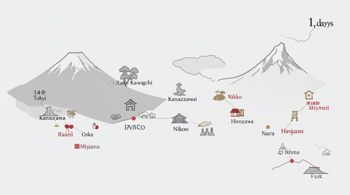
Multiple itinerary descriptions converge on a “Golden Route” style workflow. One example explicitly states that a 14-day tour visits Tokyo, Mount Fuji, Lake Kawaguchi, Nikko, Shirakawa-go, Kanazawa, Kyoto, Nara, Osaka, Hiroshima, and concludes in Osaka, all within a single 14-day package frame. 1 Another two-week tour example highlights a customizable 14-day itinerary with stops across Osaka, Hiroshima, Kyoto, Takayama, Toyama, Tokyo, and Kobe, showing how the same duration can be used for different geographic emphasis. 2
Route planning also shows up in first-timer itinerary guides that emphasize transit efficiency and pacing. A 14-day guide notes that the “golden route at a glance” typically involves four days in Tokyo, a Hakone or Mount Fuji night for onsen and views, then shinkansen access toward Kyoto and Nara, followed by Hiroshima and Miyajima, and finally a return loop. 18 Budget-oriented research for US travelers similarly describes a classic Tokyo to Kyoto to Hiroshima to Osaka adjacency pattern, with a focus on avoiding “suitcase relay race” pacing. 10
| Common structural element | What the research examples emphasize |
|---|---|
| Duration rhythm | 14 days / 13 nights appears in tour overview text across multiple sources. 3 18 |
| Geographic backbone | Tokyo as the entry base, Kyoto and Osaka as the cultural and food anchor, and Hiroshima as the history anchor, frequently paired with Miyajima. 18 7 |
| Scenic add-on | Mount Fuji region or Hakone style onsen and viewpoints are recurring additions to bridge major-city segments. 3 18 |
Typical destination coverage within a two-week window
Research descriptions repeatedly list Tokyo neighborhoods and iconic temples as an early trip anchor. One package overview includes Imperial Palace Gardens and Senso-ji Temple, then layers Tsukiji Fish Market before shifting west toward Mount Fuji area stops and later cultural centers. 1 Another two-week itinerary explicitly includes experiences such as Meiji Jingu and Harajuku, alongside Senso-ji Temple and Nakamise Street, indicating that major shrine visits and classic sightseeing streets are often early building blocks. 4
After Tokyo, package templates frequently add one nature or viewpoint day plus a heritage sequence. A 14-day example with private guided cultural framing covers Mount Fuji scenery and Nikko shrines, and then moves toward Kyoto and Nara with Osaka food culture as the concluding focus. 3 A route template from a structured itinerary guide places Hakone as a day trip from Tokyo, then dedicates a multi-day span to Kyoto temples and neighborhoods, followed by Osaka and Hiroshima and Miyajima. 9
Western Japan history appears as a separate emphasis in many package formats. For example, a highlighted Japan itinerary describes reflection at Peace Memorial Park before visiting the floating torii gate at Itsukushima Shrine on Miyajima Island. 4 Another planning framework similarly includes Hiroshima and Miyajima as a dedicated segment in a 14-day plan. 9
What is usually included, and what commonly is not
Several packaged itinerary descriptions include components beyond pure lodging, such as air-conditioned transport and guided touring with expert local guides. One 14-day package explicitly lists “Air Conditioned Transport” and “Expert Tour Guide,” along with an English tour language tag and “13 nights” of hotels across the country. 1 Other 14-day examples also list transfer and accommodation in an itinerary “What’s Included” structure for early days. 2
However, inclusion varies widely by operator model. A destination guide notes that Japan rail pass coverage is “a standard inclusion in most 14-day package deals” to facilitate inter-city travel on Shinkansen services. 16 Yet, other materials show that rail pass economics and activation strategies depend on the exact route and on whether the itinerary includes long-distance segments that exceed per-ticket costs. 17 This creates planning friction: two itineraries with the same headline duration may have different rail pass value outcomes.
Flights are another major variability point. General research indicates that most packages rarely include round-trip flights from the US, meaning travelers often budget for international airfare outside the package structure. 16 A realistic route planning guide also provides the structure of costs and logistics, implicitly treating intercity movement and local transport as separate from long-haul airfare. 10
- Often included elements: accommodation across multiple nights, guided sightseeing days, inter-city transport components, and sometimes rail pass facilitation. 1 16
- Common exclusions or uncertainties: round-trip international flights, and pass economics dependent on whether Nozomi and Mizuho are used or avoided in practice. 16 17
Pricing expectations and the range between itinerary styles
The research set supports a wide range of pricing expectations tied to itinerary style. General gathered information states that mid-range 14-day Japan tour packages for US travelers typically range from about $4,000 to $7,000 per person, excluding international airfare. 16 Another published pricing structure for a 14-day Japan tour highlights a starting point “from $10,290 per person,” which signals how luxury-level inclusions and broader customization can push price upward. 4
Price is not only a function of destinations but of how the itinerary is packaged: group size norms, the degree of customization, and the number and type of guided experiences. The general research indicates group tour sizes typically range from 12 to 20 participants. 16 Other itinerary examples emphasize private and customizable approaches, including fully customizable 14-day tours with multiple heritage and scenic elements. 2
For travelers planning rail-heavy routes, a key friction point is that pass value depends on how the route is arranged. Research on maximizing rail passes describes that the 14-day Japan Rail Pass provides unlimited travel on most JR-operated trains for 14 consecutive days, but it does not cover the fastest shinkansen services such as Nozomi and Mizuho. 17 That limitation can affect timing and route selection even when an itinerary headline appears similar.
Seasonality and themed two-week package variants
Seasonality shapes both destination selection and on-the-ground crowd patterns. A dedicated “Golden Route” style package in one example is described as available every day with seasonal variation. 1 Separately, a themed cherry blossom tour framework explicitly restricts the concept to late March through mid-April and frames the route as focused on sakura viewing across Tokyo, Kyoto, and Osaka river and garden landscapes. 5
Autumn foliage is also explicitly used as a theme in a 14-day itinerary description that notes the journey is crafted around “autumn in Japan,” with highlights including Mt. Fuji scenery and Nikko shrines, along with Kyoto temples and Osaka food culture. 3 Another long-form destination guide identifies best time windows for first-timer planning as spring (cherry blossoms) or autumn (foliage), reinforcing that season is not a background detail but a planning variable that can change the day-to-day experience. 13
| Season or theme | Research evidence |
|---|---|
| Cherry blossoms | Late March to mid-April timing is stated for a 14-day “Sakura Trip” tour concept. 5 |
| Autumn foliage | A 14-day route is described as an autumn-focused journey across Tokyo, Nikko, Mt. Fuji, Hakone, Kyoto, Nara, and Osaka. 3 |
| General “Golden Route” framing | Tokyo to Kyoto or Osaka as the typical backbone is described in general research guidance and reflected in itinerary samples. 16 18 |
Risks, eligibility, and operational friction points to account for
Eligibility and entry conditions create non-itinerary risk. General research collected for planning notes that entry requirements for US citizens traveling to Japan for 14-day tourism include a valid passport, with visa-free entry permitted for up to 90 days for many nationalities, subject to rules varying by country. 16 This highlights a planning constraint: the itinerary length alone is not the only factor, and travelers must verify visa and passport validity at the time of booking and departure.
Operational friction points appear in how itineraries balance sightseeing and transit time. A two-week itinerary guide stresses that the goal is not to see everything, but to avoid spending a holiday on trains, queues, or exhaustion, and also recommends fewer places with more time in each area plus unscheduled afternoon flexibility in each city. 12 Another route planning framework notes the importance of transit geography, emphasizing a route that travels roughly west from Tokyo to Osaka to reduce backtracking. 11
Rail and booking mechanics also introduce practical uncertainty. Rail pass coverage exclusions for Nozomi and Mizuho can shift route choices even when a plan includes Shinkansen. 17 Accommodations and popular highlights can sell out in peak periods, which can force itinerary adjustments, particularly for structured private or themed versions where specialized hotels and ryokan nights are central to the experience. 19 Budget planning materials similarly present that costs for accommodation and local tickets must be considered as part of a realistic total, since excluding international airfare can significantly change what “package price” actually means. 16 10
Sources
- https://www.touristjapan.com/tours/golden-route-japan-14-day-tour-package/
- https://www.zicasso.com/i/japan/fantastic-highlights-japan-complete-two-week-itinerary
- https://jatravi.com/trip/japan-grand-itinerary-14-days/
- https://www.saexpeditions.com/expeditions/highlights-of-japan
- https://royalairtrip.com/tour/japan-cherry-blossom-tour-14-days/
- https://planjapansmart.com/japan-itinerary-14-days/
- https://travo.me/blog/japan-itinerary-14-days
- https://japanrealguide.com/2-weeks-japan-itinerary/
- https://multiday.tours/guides/the-perfect-14-day-japan-itinerary
- https://distratech.com/japan-14-day-itinerary-budget/
- https://genztravel.co.uk/two-weeks-in-japan/
- https://japambience.com/article/14-day-jr-pass-itinerary/
- https://savvyjetsetter.ca/guides/japan
- https://fireflyhive.io/digital-nomad-life/how-to-spend-14-days-in-japan-a-japan-travel-itinerary/
- https://www.cityunscripted.com/travel-magazine/14-day-japan-itinerary
- General research informations gathered from LLM (provided payload)
Authored by MyTrendSpot team