Affordable flooring near me: A comprehensive guide to market options and professional installation considerations
When exploring the market for affordable flooring near me, homeowners often encounter a diverse range of retail and service models that influence the overall cost of a flooring project. Research indicates that average national costs for professional flooring installation typically range between $1,500 and $4,500, though this figure fluctuates based on the selected material, total square footage, and specific regional labor rates 1. Navigating this sector requires an understanding of both material procurement and the logistics of professional installation, as the two components often necessitate separate planning phases.
Evaluating Common Flooring Materials and Price Points
Laminate and vinyl flooring are frequently identified as the most accessible options for projects with specific financial constraints, generally falling into the price range of $2 to $8 per square foot when including installation labor 1. Luxury Vinyl Plank (LVP) has become a common choice for its balance of durability and aesthetic variety; technical specifications often include wear layers ranging from 12 to 20 mil to protect against daily wear in residential settings 2. For those seeking a wood-like appearance at a different price tier, engineered wood provides a mid-range alternative, offering a traditional look at a lower price point than solid hardwood 1.
- Carpet: Often the lowest material cost per square foot, though longevity varies by fiber quality.
- Laminate: Offers high scratch resistance and is frequently utilized in high-traffic residential areas.
- Vinyl Plank: Provides waterproof properties and resilient performance in kitchens and bathrooms.
- Bamboo: Positioned as an eco-friendly option with varying price points based on construction, such as rigid core or solid tongue-and-groove 3.
National Retailers and Specialized Flooring Providers
Large-scale retailers, including national home improvement chains, maintain extensive inventory and often provide standardized installation services that streamline the process for homeowners 1. These organizations frequently offer online estimators to assist with initial budget development, allowing users to calculate rough costs based on square footage 4. Conversely, specialized flooring companies may provide more high-volume inventory options and wholesale-style pricing, which can be advantageous for large-scale renovations where material consistency is a primary requirement 1.
Role of Local Independent Contractors
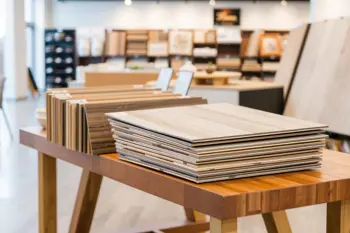
Beyond national retailers, local independent flooring contractors serve as a significant source for both project execution and regional market guidance. Utilizing digital platforms that aggregate reviews and competitive bids allows homeowners to compare professional credentials and historical pricing for projects within specific zip codes 4. Many independent businesses emphasize personalized service, such as offering free in-home measurements or providing physical samples to assess how material colors interact with natural lighting in a home environment 5.
Technical Considerations for Professional Installation
The installation of flooring is a technical process that often involves specific site preparation requirements. For instance, installations over concrete subfloors typically necessitate the inclusion of a moisture barrier to maintain product warranties and structural integrity, an addition that should be accounted for during the planning stage 2. Furthermore, professional installers often recommend adding approximately 10% to the total square footage of a project to account for material wastage during cutting and fitting, which is a standard industry practice to ensure sufficient supplies are available 6.
Assessing Long-Term Value and Maintenance
Affordability in flooring is not defined solely by the upfront price of materials; it also encompasses long-term durability and maintenance requirements. While certain materials may present a lower initial cost, the frequency of replacement or the intensity of required care can impact the total cost of ownership over a 10 to 15-year period 1. Consumers are encouraged to review material-specific warranties and testing data provided by manufacturers, such as wear layer thickness or resistance to water damage, to ensure that the chosen flooring aligns with the specific activity levels of their household 3.
Framework for Project Planning
To approach a flooring project systematically, homeowners typically follow a series of established steps. This process begins with identifying the functional needs of the space-such as moisture resistance for bathrooms or acoustic qualities for bedrooms-followed by the procurement of samples to verify texture and color 5. Establishing a budget that separates material costs from labor, delivery fees, and potential subfloor preparation is essential for project completion. By utilizing available tools such as room visualizers and consulting with professionals, homeowners can achieve a result that balances aesthetic goals with practical financial expectations 5.
Sources
- General Industry Analysis: Residential Flooring Market Standards and Pricing (2026).
- Sam's Flooring: Technical Specifications for Rigid Core LVP Products.
- Ambient Bamboo Flooring: Market Data on Engineered and Solid Flooring Prices.
- Lowe's Home Improvement: Installation Budgeting and Estimator Services.
- The Statesman: Analysis of Best Practices for Sourcing Flooring Installation Services.
- Industry Guidelines for Material Estimation and Subfloor Preparation.
Authored by MyTrendSpot team