Warning signs of pancreatic cancer: Clinical context and symptom guidance
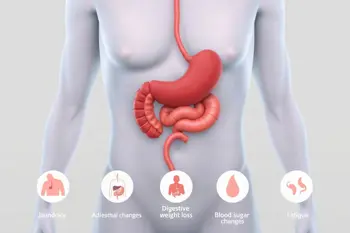
The warning signs of pancreatic cancer are often vague, and early-stage disease rarely causes noticeable symptoms. As tumors grow, changes such as jaundice, abdominal or back pain, digestive problems, unexplained weight loss, appetite loss, and altered blood sugar may develop. These findings can also result from many noncancerous conditions, so symptoms alone cannot establish a diagnosis. 1
Why early symptoms can be difficult to recognize
The pancreas lies deep in the upper abdomen and produces digestive enzymes and hormones involved in blood sugar regulation. Because of its location, a developing tumor may not create a visible or easily felt lump. Pancreatic cancer therefore often spreads before symptoms become clear, and the symptoms that eventually appear may resemble ordinary digestive or metabolic problems. 1
Most pancreatic cancers begin in cells lining ducts that produce digestive fluids, although a smaller group develops in hormone-producing cells and is classified as a neuroendocrine tumor. The type matters because these cancers can have different treatments and symptom patterns. No single symptom confirms pancreatic cancer, but a new, persistent, or unexplained combination deserves clinical evaluation. 2
Jaundice and changes linked to bile flow
Jaundice is yellowing of the skin or whites of the eyes and is one of the most recognizable warning signs. It can occur when a tumor obstructs the bile duct, preventing normal movement of bile. Associated changes may include dark urine, pale stools, and generalized itching. Jaundice can have causes unrelated to cancer, but it represents a clinically important change that should be assessed by a healthcare professional. 3
Jaundice may be more noticeable when a tumor develops in the head of the pancreas, near the bile duct. The change may appear with or without abdominal discomfort, and itching may occur even when there is no visible rash. Yellowing that develops alongside dark urine or unusually pale stool provides additional information for a clinician investigating possible obstruction or liver and gallbladder disease. 4
Abdominal and back pain
Pancreatic cancer can cause pain in the upper abdomen, the back, or both. People may describe it as dull, gnawing, persistent, or intermittent. Pain can begin in the upper abdomen and spread toward the sides or mid-back, reflecting the pancreas’s position in front of the spine and the involvement of nearby nerves or organs. Some people with pancreatic cancer do not experience pain at all. 4
In some cases, discomfort becomes more noticeable after eating or when lying down. Pain patterns vary according to the tumor’s location, with cancers in the body or tail of the pancreas more often associated with abdominal or back pain. Persistent pain is not specific to pancreatic cancer and may reflect gastrointestinal, spinal, muscular, or other conditions, but unexplained progression warrants medical review. 6
Weight loss and appetite changes
Unintentional weight loss is a significant warning sign when it occurs without a deliberate change in diet or physical activity. Pancreatic cancer may interfere with digestion, alter how the body uses calories and protein, or reduce appetite. Muscle loss can accompany declining weight, making weakness more apparent. The meaning of weight loss depends on its amount, duration, associated symptoms, and the person’s overall health. 2
Loss of appetite may occur with nausea, indigestion, abdominal discomfort, or a sensation of becoming full quickly. These symptoms can reduce food intake before a person recognizes a major change in weight. Pancreatic disease is only one possible explanation, so evaluation commonly requires consideration of other digestive, endocrine, inflammatory, and systemic causes rather than assuming that cancer is responsible. 3
Digestive and bowel changes
Pancreatic tumors can affect the supply or movement of digestive enzymes, leading to bloating, excess gas, burping, indigestion, nausea, vomiting, or early fullness. Stool changes may include diarrhea, constipation, or pale, oily, foul-smelling stools that are difficult to flush. Greasy stools, known as steatorrhea, can indicate that dietary fat is not being digested or absorbed normally. 3
Changes in bowel habits are not uniquely associated with pancreatic cancer and may have many other explanations. Their significance increases when they persist or occur together with weight loss, jaundice, abdominal pain, or appetite loss. Pale stools and dark urine are particularly relevant when they appear with yellow skin or eyes because the combination may suggest impaired bile flow. 4
Blood sugar changes, clots, and fatigue
Newly diagnosed diabetes or a sudden change in blood sugar control can occur among the symptoms associated with pancreatic cancer. The pancreas produces insulin, so disease affecting pancreatic tissue may influence blood sugar regulation. A new diabetes diagnosis does not mean cancer is present, and most diabetes cases are not caused by pancreatic cancer, but an unusual metabolic change can add context when other symptoms are present. 5
Less common signs include blood clots in a vein, such as deep vein thrombosis, persistent fatigue, weakness, fever, chills, or a general feeling of illness. Anxiety or depression without an obvious cause has also been reported among less common symptoms. These findings are highly nonspecific, but a clot accompanied by swelling, pain, or tenderness in a limb requires medical attention because clots can have serious complications. 3
When symptoms need medical assessment
There is no universal symptom checklist that identifies pancreatic cancer, and an individual may have only one symptom or several. New jaundice, unexplained weight loss, persistent upper-abdominal or back pain, recurring vomiting, ongoing digestive changes, or an unexpected diabetes diagnosis should be discussed with a healthcare provider. Clinical assessment may involve reviewing the timing and pattern of symptoms, medical history, medications, risk factors, and relevant examination findings. 1
Diagnosis cannot be made from symptoms alone. Depending on the situation, clinicians may use abdominal imaging such as computed tomography, ultrasound, magnetic resonance imaging, or endoscopic ultrasound. Tissue sampling may be performed through an endoscopic ultrasound procedure, while blood tests and molecular or genetic testing can contribute to diagnosis and treatment planning. Persistent symptoms merit evaluation, but they should not be interpreted as proof of malignancy without appropriate testing. 7
Risk context and interpretation
Risk factors can influence how clinicians interpret symptoms. Reported associations include smoking, obesity, diabetes, chronic pancreatitis, older age, and a strong family history of pancreatic cancer or inherited genetic traits. Some pancreatic cysts may also have the potential to become cancerous. Risk factors do not establish a diagnosis, and people without known risk factors can still develop pancreatic cancer. 8
Pancreatic cancer is aggressive and difficult to detect early, but symptoms remain more commonly caused by conditions other than cancer. The most useful pattern is often a change from a person’s usual health that is persistent, progressive, or unexplained, especially when several signs occur together. Accurate interpretation requires professional assessment rather than online symptom matching or waiting for every listed warning sign to appear. 1
Sources
- Cleveland Clinic, Pancreatic Cancer: Symptoms, Causes & Treatment
- Harvard Health, Pancreatic Cancer
- Pancreatic Cancer UK, Signs and symptoms of pancreatic cancer
- Cancer Research UK, Symptoms of pancreatic cancer
- American Medical Association, What doctors want patients to know about pancreatic cancer
- Cleveland Clinic Health Essentials, Signs of Pancreatic Cancer You Should Know
- WebMD, Pancreatic Cancer Progression Timeline: How Symptoms and Treatment Change
- Roswell Park Comprehensive Cancer Center, What are the warning signs of pancreatic cancer?
Authored by MyTrendSpot team