Best hospitals for stroke care: Analyzing clinical standards and institutional designations
When evaluating the best hospitals for stroke care, patients and providers look to standardized designations that verify a facility's ability to handle complex cerebrovascular events. The highest level of specialized certification, known as a Comprehensive Stroke Center (CSC), is granted by The Joint Commission in collaboration with the American Heart Association and the American Stroke Association 2. These centers are equipped to manage the most intricate medical scenarios, providing 24/7 access to neurosurgery, neuro-intervention services, and advanced imaging technologies 5.
Understanding Stroke Center Designations
Hospitals are categorized based on their technical capabilities and staffing resources. While Primary Stroke Centers provide 24/7 specialized stabilization and medication, such as IV tPA, they may transfer patients to a CSC if the clinical presentation requires complex surgical procedures like endovascular mechanical thrombectomy 10. The CSC designation ensures that a hospital maintains specialized staff, neuro-intensive care units, and a standardized medical management approach that adheres to rigorous evidence-based guidelines 7.
Data indicates that access to a facility with a CSC designation is statistically linked to lower mortality rates, particularly for patients experiencing large vessel occlusions 9. Facilities such as Stony Brook University Hospital have demonstrated these high clinical standards, achieving recognition as one of the top 5% of hospitals in the nation for stroke care for over a decade 1.
Clinical Performance and National Recognition
Accreditation bodies use risk-adjusted mortality and complication rates to evaluate performance across thousands of hospitals annually 1. Organizations such as UCSF Health and Montefiore Einstein utilize multidisciplinary teams that include neurologists, neurosurgeons, and radiologists to provide care from the initial emergency triage to long-term neuro-recovery 2, 3. These institutions prioritize rapid treatment timelines, often setting internal goals to administer critical therapies like endovascular thrombectomy within 60 minutes of patient arrival 4.
Performance metrics are frequently validated through programs like the American Heart Association’s Get With The Guidelines-Stroke, which rewards institutions for consistent adherence to research-based clinical protocols 6. UofL Hospital, for example, maintains its Comprehensive Stroke Certification by undergoing periodic, rigorous on-site reviews that ensure clinical processes are designed to minimize variation and enhance patient safety 5.
Technological Integration in Stroke Systems
Modern stroke care relies heavily on the integration of advanced diagnostic tools and AI-enabled triage systems. Facilities like Sutter Health employ mobile stroke units equipped with CT imaging and telestroke consults that allow board-certified specialists to connect with emergency teams in minutes 9. These technologies are essential for determining treatment eligibility, especially for patients who may fall outside of traditional treatment time windows 7. Such systems prioritize speed, which is a critical factor in saving brain tissue during ischemic events 6.
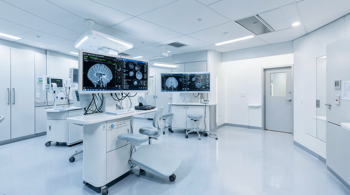
Advanced imaging is not merely for initial diagnosis but also for ongoing monitoring. Comprehensive centers integrate hybrid surgical approaches, allowing for both minimally invasive endovascular procedures and open neurosurgery as needed 3. The presence of a dedicated neuro-ICU is another hallmark of high-tier stroke programs, ensuring that patients receive continuous physiological monitoring during the critical hours following a stroke 7.
The Hub-and-Spoke Model of Care
Many health systems operate under a hub-and-spoke model to ensure equitable access to care across diverse geographic regions. In this framework, peripheral hospitals act as spokes, providing initial stabilization before rapidly transferring patients to a central hub, which is typically a Comprehensive Stroke Center 10. Trinity Health Michigan utilizes this model, with facilities certified as Acute Stroke Ready Hospitals or Primary Stroke Centers feeding into a central hub in Grand Rapids 10.
This structured approach minimizes delays and ensures that patients receive the appropriate level of intervention based on the severity of their condition. By organizing resources in this manner, healthcare systems can deploy specialized talent and equipment efficiently across a wider population, thereby reducing the reliance on a single geographic location for advanced neuro-interventional procedures 10.
Verification of Institutional Quality
Patients and healthcare consumers can verify institutional quality through multiple public-facing databases. The Centers for Medicare & Medicaid Services (CMS) maintains the Care Compare tool, which provides objective quality metrics for hospitals across the United States 8. Additionally, the U.S. News & World Report provides annual rankings for neurology and neurosurgery, using criteria such as patient outcomes, nurse staffing levels, and the breadth of clinical resources available at each institution 2.
Checking these databases allows individuals to understand the specific strengths of their local health systems. While the designation of a Comprehensive Stroke Center is the most critical factor for acute intervention, these comparative resources provide further insight into the long-term rehabilitation and support services offered by the institution 3.
The Importance of Rapid Intervention
The core philosophy of modern stroke systems remains the concept that time is brain. Every second delayed in treatment results in the death of brain cells, which makes the proximity to a certified stroke center and the utilization of emergency transport systems vital 4, 6. Public health initiatives emphasize the importance of recognizing stroke symptoms and calling emergency services rather than relying on personal transport, as ambulance arrival often triggers the pre-notification of the hospital's stroke team 4, 10.
Effective stroke systems integrate education, outreach, and standardized clinical pathways to ensure that every step from the initial 911 call to rehabilitation is optimized for recovery 4, 5. By adhering to nationally recognized guidelines, top-tier hospitals minimize the long-term impact of strokes and improve the overall quality of life for survivors through sustained clinical attention and multidisciplinary rehabilitation support 6.
Sources
- Stony Brook University Hospital Newsroom
- UCSF Health Comprehensive Stroke Center
- Montefiore Einstein Neurovascular Disorders & Stroke
- OU Health Stroke Care
- UofL Health Stroke Certification
- University Hospitals News Release
- Cleveland Clinic Akron General Stroke Designation
- Sarasota Memorial Health Care System
- Sutter Health Stroke Care Outcomes
- Trinity Health Michigan Stroke Programs
Authored by MyTrendSpot team