Warning signs of prostate cancer: A clinical guide to symptoms, screening, and evaluation
Warning signs of prostate cancer can be difficult to recognize because early-stage disease often causes no noticeable symptoms. When changes do appear, they may resemble benign prostate enlargement, infection, kidney stones, or other noncancerous conditions, so symptoms require medical interpretation rather than self-diagnosis. 1
Why early prostate cancer may be silent
Most people diagnosed with prostate cancer, including some with advanced disease, have no symptoms when the cancer is first found. Screening with a prostate-specific antigen, or PSA, blood test can identify some cancers while they remain asymptomatic. This silent pattern is one reason symptoms alone cannot determine whether prostate cancer is present or absent. 2
Prostate cancer begins when cells in the prostate grow out of control and form a tumor. The prostate is located below the bladder and in front of the rectum, while the urethra passes through it. As a tumor grows, it can affect urine flow, but many urinary symptoms are also caused by benign prostatic hyperplasia, commonly called BPH. 1
Urinary changes to recognize
Possible urinary warning signs include difficulty starting or stopping urination, a weak or interrupted stream, increased frequency, especially at night, and a sensation that the bladder has not emptied completely. Pain or burning during urination can also occur. These changes are clinically important when persistent, although none specifically identifies cancer. 4
Reduced force in the urine stream and trouble urinating can occur when the prostate affects the urethra. The same pattern is common with age-related prostate enlargement and may also result from prostatitis or a urinary infection. A clinician may review the timing and progression of symptoms, medications, prior conditions, and examination findings before deciding whether PSA testing or additional assessment is appropriate. 5
| Change | Why evaluation matters |
|---|---|
| Weak or interrupted flow | May reflect obstruction from prostate conditions |
| Frequent nighttime urination | Can occur with several urinary and prostate disorders |
| Incomplete emptying | May indicate altered bladder outlet function |
Blood in urine or semen
Blood in the urine or semen is a warning sign that should be medically assessed. Prostate cancer is one possible cause, but blood may also be associated with BPH, kidney stones, infection, inflammation, or other urinary tract conditions. The appearance of blood does not establish the source, and evaluation may be needed even when the bleeding is limited or intermittent. 3
The prostate contributes fluid to semen, and conditions affecting the prostate or nearby organs can alter semen appearance. Blood in semen is therefore not specific to malignancy, but it is still relevant clinical information, particularly when it recurs or appears with urinary symptoms, pelvic discomfort, or abnormal test results. A healthcare professional determines which examinations or diagnostic tests are warranted. 6
Sexual and ejaculation-related changes
Erectile dysfunction and painful ejaculation are among the possible symptoms associated with prostate cancer. However, these problems have many other potential causes, including benign prostate disorders and unrelated medical conditions. Their presence should be reported in a medical history, but they cannot independently confirm that a tumor exists or indicate how advanced a disease might be. 7
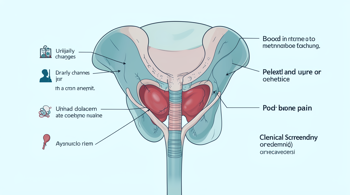
Sexual symptoms may occur alongside urinary changes or blood in semen, but prostate cancer can also remain symptom-free. Clinical assessment therefore considers the complete pattern rather than treating one sexual symptom as definitive evidence. Depending on the circumstances, evaluation can include a physical examination, PSA testing, imaging, and sometimes a biopsy. 8
Pain and signs of advanced disease
Persistent pain in the back, hips, pelvis, or other bones can occur when prostate cancer has spread beyond the prostate. Bone pain is not specific to cancer and has numerous possible causes, but ongoing or unexplained pain should be discussed with a healthcare professional, especially when it accompanies urinary or sexual changes. 3
Cancer that spreads to the spine can affect nerves and may lead to leg weakness or numbness, as well as loss of bladder or bowel control. These neurological changes require urgent medical attention because they can indicate serious spinal involvement. They are not typical explanations for ordinary urinary frequency or mild age-related changes. 6
Risk factors and screening context
Age, family history, and race are associated with different levels of prostate cancer risk. The disease is particularly common in people over age 50, and risk rises with age. Close relatives with prostate cancer, or with breast or ovarian cancer, may also be relevant to risk assessment. Anyone with a prostate, including some transgender women, may need an individualized screening discussion. 1
Screening decisions are individualized because prostate cancers vary widely: some grow slowly and may never cause problems, while others are more aggressive. Doctors may discuss PSA testing and, in some circumstances, a digital rectal examination. An abnormal screening result does not by itself prove cancer, and diagnosis may require imaging and tissue sampling through biopsy. 5
How symptoms are evaluated
Symptoms alone cannot establish a prostate cancer diagnosis. A healthcare professional may begin with a medical history and physical examination, then consider a PSA blood test and other tests according to symptoms, age, risk factors, and overall health. The purpose is to distinguish possible cancer from common noncancerous causes and determine whether further investigation is justified. 8
Medical evaluation is particularly relevant for persistent urinary difficulty, blood in urine or semen, unexplained erectile or ejaculation changes, or continuing pain in the back, hips, pelvis, or bones. The absence of symptoms does not rule out prostate cancer, while the presence of symptoms does not prove it. Screening and diagnostic choices are best made through an individualized discussion with a qualified clinician. 2
Sources
- Memorial Sloan Kettering Cancer Center, Prostate cancer symptoms, causes, PSA tests, and screening guidelines
- Harvard Health, Symptoms of early-stage prostate cancer
- American Cancer Society, Signs and symptoms of prostate cancer
- University of Iowa Health Care, Early warning signs of prostate cancer
- Centers for Disease Control and Prevention, Prostate cancer symptoms
- National Cancer Institute, Prostate cancer treatment information
- Johns Hopkins Medicine, Prostate cancer symptoms
- Urology Care Foundation, Prostate cancer
Authored by MyTrendSpot team