What to Look Out For: Menstrual Cycle Changes: Clinical Warning Signs and Tracking Guidance
What to look out for with menstrual cycle changes includes shifts in timing, bleeding, pain, and associated symptoms. Most adult cycles occur about every 21 to 35 days, while bleeding commonly lasts up to seven days, although individual patterns vary. 1
What a typical cycle can look like
The menstrual cycle is counted from the first day of one period to the first day of the next. A cycle near 28 days is common, but shorter or longer cycles can still fall within the usual adult range. Periods often last three to seven days and may be light or heavy. During the first years after menstruation begins, regularity can take time to develop. 2
Common menstrual symptoms include lower abdominal or pelvic cramps, lower back pain, bloating, breast tenderness, food cravings, mood changes, headaches, and fatigue. Premenstrual symptoms generally occur before bleeding and often improve once the period begins. A person’s usual pattern is an important comparison point, because a sudden change may be more meaningful than a cycle that has always been somewhat irregular. 3
Timing changes that deserve attention
Cycles that repeatedly occur less than 21 days apart or more than 35 days apart in adulthood should be discussed with a healthcare professional. A period that disappears for three months without pregnancy, breastfeeding, menopause, or another known explanation also warrants assessment. In adolescents, cycles may be irregular during the first several years, but periods occurring less often than every 45 days or disappearing for 90 days should be evaluated. 4
Possible contributors to changed timing include pregnancy, hormonal contraception, polycystic ovary syndrome, thyroid disorders, major weight changes, excessive exercise, stress, illness, medications, and the hormonal transition called perimenopause. These factors can affect ovulation and the uterine lining in different ways, so cycle timing alone cannot establish a diagnosis. Testing or examination may be needed when changes persist or occur with other symptoms. 5
Bleeding patterns and flow changes
Heavy menstrual bleeding may involve bleeding for longer than seven days, saturating a pad or tampon nearly every hour, flooding through clothing or bedding, or disrupting normal activities. Heavy bleeding can contribute to iron deficiency anemia, particularly when it continues over multiple cycles. New or progressively heavier flow should be documented rather than dismissed as an ordinary variation. 4
Bleeding between periods, bleeding after sex, and bleeding after menopause are distinct warning patterns. Causes can include hormonal problems, pregnancy-related conditions, fibroids, polyps, or other uterine conditions. Any vaginal bleeding after menopause should be reported to a healthcare provider because it can reflect several conditions, including endometrial cancer. 6
Pain and symptoms outside bleeding
Mild to moderate cramping is common, but new or worsening severe pain is different from a person’s established pattern. Pain that prevents work, school, sleep, exercise, or ordinary activities should receive medical attention. Pain with sex, urination, or bowel movements, or persistent pelvic pain, can occur with conditions such as endometriosis, fibroids, or other gynecologic disorders. 7
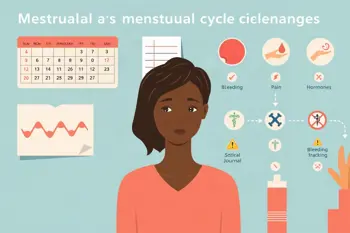
Menstrual pain is common, and nonsteroidal anti-inflammatory medicines such as ibuprofen or naproxen may relieve pain for many people when used as directed. However, repeated dependence on medication, pain that is worsening, or symptoms that do not respond should prompt clinical review. Severe pain is not automatically a normal feature of menstruation simply because it recurs each month. 1
Associated signs that add clinical context
Cycle changes accompanied by acne, excess facial or body hair, unexplained weight change, or absent periods may indicate a hormonal condition such as polycystic ovary syndrome. Breast milk discharge outside breastfeeding, hot flashes, sleep problems, and mood changes can also provide context about endocrine changes or perimenopause. These symptoms do not identify a single cause, but they can help guide evaluation. 8
Pregnancy should be considered when a period is unexpectedly late or absent, including when contraception is being used. A clinician may assess pregnancy status, anemia risk, medication use, endocrine causes, and structural causes such as fibroids or polyps. The appropriate evaluation depends on age, reproductive status, bleeding pattern, medical history, and the severity of symptoms. 9
When symptoms require urgent care
Very heavy bleeding accompanied by dizziness, fainting, shortness of breath, chest pain, or severe weakness requires urgent medical care. These symptoms may indicate substantial blood loss or anemia and should not be managed solely through cycle tracking. Heavy bleeding that saturates a pad or tampon within an hour is especially concerning when it continues or occurs with lightheadedness. 4
Postmenopausal bleeding also requires medical evaluation, even when the amount is small. Persistent irregularity, bleeding between periods, bleeding after sex, or severe pelvic pain should be assessed promptly rather than attributed automatically to stress or aging. A healthcare professional can determine whether examination, laboratory testing, imaging, or other assessment is appropriate. 10
What to record before an appointment
A cycle record can make changes easier to describe accurately. Useful entries include the first day of each period, the number of bleeding days, unusually heavy days, flooding, clots, spotting, pain severity, pain location, missed activities, and symptoms such as fatigue or dizziness. Recording contraception, medicines, major stress, weight changes, exercise changes, and pregnancy possibility can add relevant context. 2
Tracking should identify patterns rather than encourage self-diagnosis. Occasional variation may occur, but a consistent shift from the established pattern, worsening pain, unusually heavy bleeding, or absent periods merits professional discussion. A concise record can help distinguish timing changes from flow changes and can support decisions about pregnancy testing, anemia evaluation, hormone assessment, or imaging when clinically indicated. 9
Sources
- American College of Obstetricians and Gynecologists
- MedlinePlus
- NewYork-Presbyterian Health Matters
- World Health Organization
- Mayo Clinic
- National Cancer Institute
- National Health Service
- National Institute of Diabetes and Digestive and Kidney Diseases
- American Academy of Family Physicians
- Centers for Disease Control and Prevention
Authored by MyTrendSpot team