Plan your 7-day trip to all-inclusive Japan resorts to match real resort patterns: itinerary planning, costs, eligibility, and friction points
Planning a “7-day trip to all-inclusive Japan resorts” starts with validating that the all-inclusive pattern in Japan is not evenly distributed. Resort-style packages with meal and activity structures are most commonly centered in Okinawa, especially where beachfront access aligns with snorkeling and on-site cultural programming 1. The 7-day planning question then becomes how to pair Okinawa locations with realistic transit time from major US departure hubs, and how to model total trip cost under seasonal demand 42.
All-inclusive formats in Japan are also operationally variable. Research summaries describe packages that typically bundle accommodation, multiple meals daily, non-alcoholic beverages, and organized activities such as water sports and cultural experiences 89. At the same time, “all-inclusive” may still require attention to activity operating schedules, room capacity constraints, and eligibility rules that determine whether specific experiences are available during the stay window 8.
H2: Where 7-day all-inclusive Japan resorts actually cluster (and why Okinawa dominates)
Within Japan, the all-inclusive resort concept is described as primarily concentrated in Okinawa, where resorts can offer beachfront access alongside package-driven meals and activities 1. For itinerary design, that means a 7-day plan is usually a “single region, multiple bases” model rather than an intercity multi-day loop across mainland cities 1.
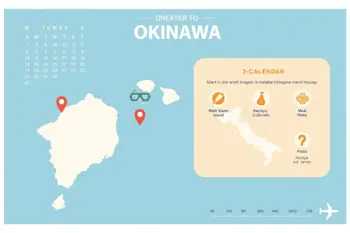
Okinawa’s ecosystem is commonly discussed through Okinawa Main Island and nearby islands such as Ishigaki and the Kerama Islands. Research notes that Okinawa destinations are accessible via domestic flights from Tokyo and Osaka, which matters when a 7-day schedule includes an arrival day in Japan followed by onward regional hopping 3. Kerama Islands are repeatedly described as a snorkeling and diving focus area that can be paired with Okinawa resort programming 9.
H2: A 7-day itinerary framework that matches package schedules, not just sightseeing lists
A workable 7-day framework for all-inclusive Japan resort travel is built around time blocks that match how package resorts typically structure days. Research summaries describe multi-meal inclusion and on-site activities, often including water sports and cultural experiences 89. The planning logic is therefore to allocate most “must-do” moments inside resort days, then treat off-site excursions as scheduled extensions rather than replacements.
One way to operationalize this is to allocate the week as: arrival and orientation day, two to three days for core resort activities, one day for an island day-trip style excursion, and a final couple of days for lower-friction experiences such as cultural programming and resort-based leisure. This aligns with research descriptions that Okinawa resort packages commonly include snorkeling and access to nearby Kerama Islands experiences 19. It also reduces the risk of “rushing between bases,” which tends to break the all-inclusive rhythm described by package models 8.
H3: Example day-to-day pacing model (using only destination logic from research)
| Trip Day | Primary planning assumption |
|---|---|
| Day 1 | Use the first day for settling and matching activities to the resort schedule described in package structures (meals and organized experiences) |
| Days 2-3 | Prioritize included activities such as water sports and cultural experiences that are commonly mentioned for Okinawa all-inclusive packages |
| Day 4 | Plan an excursion day that mirrors research pairing of Okinawa with Kerama Islands snorkeling or diving access |
| Day 5 | Return to on-site relaxation plus any cultural programming repeatedly referenced as part of resort bundles |
| Day 6 | Buffer day to accommodate variability in activity operating conditions and guest schedule alignment |
| Day 7 | Finalize with lighter resort activities and plan departure logistics based on Japan to regional transport timing |
H2: Cost modeling for a 7-day all-inclusive Japan week, including what can change totals
Research estimates place a 7-day Japan all-inclusive trip in a range of about $2,500 to $5,500 per person including flights from the US, resort accommodations, and meals 2. For planning, that range is best treated as a category average rather than a promise of identical outcomes for every traveler, because all-inclusive structures and included activity selections can differ by resort and season 8.
Seasonal timing is one of the strongest drivers in the available research context. Peak seasons for Japan travel and associated resort demand are summarized as April to May and July to August, with shoulder seasons described as offering better rates in March and September to October 3. Cost planning should therefore pair the itinerary framework with a seasonal calendar, then apply the all-inclusive category cost range to the specific timing window.
H3: Practical budget friction points to account for
- Flight routings can concentrate around major hubs, which affects total time budgeting more than the headline nightly cost model 10.
- International flights into Japan are commonly described as 11 to 17 hours from major US hubs, with connecting flights adding 2 to 4 hours, which can shift the “effective resort days” count 5.
- Low season patterns are described for December to January as fewer tourists, with cooler temperatures in northern regions, while Okinawa remains warm enough for water activities 7.
H2: Timing and weather planning for resort activity reliability (what research implies)
Japan travel seasonality matters for all-inclusive resort planning because the activities bundled into packages often depend on weather and sea conditions, especially when snorkeling and diving are part of the resort experience. Research notes that Okinawa resort packages can include traditional Ryukyu cultural experiences and snorkeling, and that Kerama Islands are a major pairing area 169. That structure makes activity reliability a planning variable rather than an automatic certainty 6.
Beyond Okinawa, general Japan seasonal signals show why schedule planning should not be purely location-agnostic. Peak season is described for April to May and July to August 3, while shoulder periods like March and September to October are suggested for better pricing 3. December to January is described as a low season for Japan overall, where cooler conditions apply more outside Okinawa, while Okinawa can remain suitable for water activities 7. For a 7-day plan, that implies a more stable “water-activity expectation” in Okinawa year-round compared to mainland options.
H2: Eligibility, entry rules, and travel documentation risks that affect a 7-day plan
Entry rules are a key eligibility constraint that can affect whether a 7-day resort plan is feasible for a specific traveler. Research states that US citizens are visa-exempt for tourism in Japan for up to 90 days, with no advance visa application required 4. This reduces administrative lead-time risk compared with destinations requiring pre-arranged visas, but it does not remove the need to confirm passport validity and trip purpose consistency with tourism criteria.
Regulatory friction points in a resort context often show up in “last-mile travel logistics” rather than in visa paperwork. Airport routing and domestic flight connections can change the arrival day and departure day experience, especially because resort packages in Okinawa are commonly accessed through domestic flights from Tokyo or Osaka 3. The sequential trip timing then affects whether all planned included activities fall inside the stay window described by resort packages 8.
H2: Transport and “effective days” planning for an all-inclusive Okinawa-focused week
Transport planning is central to calculating what the week actually delivers. Research indicates that flights from major US hubs to Japan are about 11 to 17 hours, and connecting flights may add 2 to 4 hours 5. Even if resort programs are inclusive, the arrival and departure travel blocks can compress the number of usable resort days, shifting the practical balance between relaxation and excursions.
Routing is also described as concentrated around Tokyo (Narita or Haneda), Osaka (Kansai), or Nagoya airports 10. Since Okinawa resort access is described as possible via domestic flights from Tokyo and Osaka 3, the planning implication is that a realistic itinerary should treat the domestic hop as part of the 7-day structure. That reduces the risk of building an itinerary that appears correct on paper but misallocates the resort time that is necessary for an all-inclusive style experience.
H2: Associated risks and market friction points in “all-inclusive” Japan trip planning
All-inclusive framing can reduce decision workload, but it does not eliminate operational risk. Research describes that packages typically include accommodations, three meals daily, non-alcoholic beverages, and activities such as water sports and cultural experiences 8. However, operational realities like activity operating days, capacity constraints, and day-to-day scheduling variability can still matter, especially for travel during peak demand periods such as April to May and July to August 3. For a 7-day plan, that means building a small buffer in the day structure rather than relying on a rigid list.
Market friction points also include the mismatch between mainland sightseeing expectations and Okinawa-centric all-inclusive concentration. Since the all-inclusive resort model is described as primarily concentrated in Okinawa 1, travelers expecting a nationwide all-inclusive circuit may face limited options. A second friction point is timing sensitivity to sea-based activities. Kerama Islands are repeatedly described as snorkeling and diving areas 9, so any week plan should be sensitive to weather variability even during otherwise favorable seasons.
Sources
- Japan National Tourism Organization (Okinawa destination context): https://www.japan.travel/en/destinations/regions/okinawa/
- Costco Travel (7-day all-inclusive category cost range): https://www.costcotravel.com/
- Travel.com (peak and shoulder season framing): https://www.travel.com/guide/japan/
- US Department of State (US tourism visa exemption overview): https://travel.state.gov/content/travel/en/international-travel/International-Travel-Country-Information-Pages/Japan.html
- Google Flights (flight duration ranges reference): https://www.google.com/flights
- Viator (Okinawa snorkeling and Ryukyu cultural experience mentions): https://www.viator.com/Okinawa-tours/d665-ttd.html
- World Travel Guide (low-season context for December to January): https://www.worldtravelguide.net/guides/asia/japan/
- Expedia (typical all-inclusive inclusions phrasing): https://www.expedia.com/Okinawa-Hotels.d6063262.Travel-Guide-Hotels
- ToursByLocals (Kerama Islands access and activity focus): https://www.toursbylocals.com/okinawa-tours
- Kayak (airport routing and regional access context): https://www.kayak.com/
Authored by MyTrendSpot team