Top 5 Vein Treatment Clinics: A Comparative Consumer Health Report
The phrase “Top 5 Vein Treatment Clinics” can refer to practices distinguished by physician training, treatment scope, location, technology, and documented patient-care information. The five clinics reviewed here represent different regional models, from independent specialty offices to larger networks and physician-led centers.
How the Five Clinics Were Selected
The comparison uses information supplied directly by the clinics and related publications, rather than a universal national ranking. Selection reflects the presence of identifiable vein-care services, named clinicians or treatment teams, stated procedural capabilities, and specific information about conditions such as spider veins, varicose veins, venous reflux, or chronic venous insufficiency. The available evidence varies considerably in detail, so the list should be read as a structured comparison, not as a clinical recommendation.
Modern vein practices commonly describe office-based, minimally invasive care. The Advanced Vein Center, for example, states that procedures are performed in its office without hospitals, sedation, or downtime, while Denver Vein Doc reports treatment times of 15 to 45 minutes and emphasizes rapid return to normal activities. These statements describe practice approaches, not outcomes that apply to every patient or procedure. 15
1. Advanced Vein Center
Advanced Vein Center provides treatment information for spider veins, varicose veins, venous ulcers, hand veins, and related conditions. Its description of spider veins notes that they are dilated small veins beneath the skin that may appear red, blue, or purple, commonly on the thighs, ankles, and calves. The clinic also explains that varicose veins can produce swelling, throbbing, burning, itching, cramping, or a heavy, achy sensation. 1
The center’s educational material highlights that venous disease may exist beneath the skin even when large surface veins are not visible. It also describes venous ulcers as open sores associated with pressure buildup, swelling, and poor tissue nutrition. This breadth matters when comparing clinics because cosmetic spider-vein treatment and care for ulcers or symptomatic venous disease may involve different assessments, specialties, and follow-up requirements.
2. Vascular Surgeons of Houston
Vascular Surgeons of Houston identifies Neil Desai, DO, as a board-certified vascular and endovascular surgeon serving the greater Houston area from Cypress and affiliated with HCA Houston Healthcare. The supplied profile describes expertise in arterial and venous disease management, including varicose veins, spider veins, deep vein thrombosis, and chronic venous insufficiency. 2
Listed minimally invasive procedures include endovenous laser therapy, radiofrequency ablation, and sclerotherapy. The clinic’s stated model combines advanced technology with individualized treatment planning and detailed patient explanations. For comparison purposes, the profile provides more information about physician specialization than some clinic pages, but it does not establish that one procedure is appropriate for every condition. Suitability depends on the underlying vein problem and clinical evaluation.
3. Center for Vein Restoration in Alexandria
The Alexandria location of Center for Vein Restoration is listed at 1500 North Beauregard Street, Suite 210, Alexandria, Virginia, with patient-care hours Monday through Friday and separate vein-center hours Tuesday through Thursday. The clinic reports care for varicose veins, spider veins, deep vein thrombosis, and other conditions associated with chronic venous insufficiency. 3
The location identifies Priya Thirumlai, MD, FACS, as its provider and describes a team with collective experience in venous disease. The broader Center for Vein Restoration network is described in the supplied research as operating more than 100 clinics across the United States. A large network may provide geographic access, but patients still need to examine the specific physician, diagnostic process, procedure availability, and follow-up structure at the individual location.
4. Vein Treatment Clinic in New York City
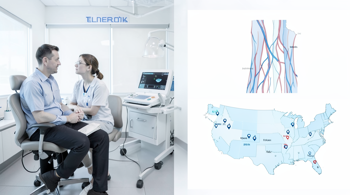
Vein Treatment Clinic lists a Midtown Manhattan address at 290 Madison Avenue, Suite 202, and describes its location as accessible from major transportation hubs. Its published material presents the practice as focused on minimally invasive varicose-vein treatment and identifies Dr. Michael Nguyen as a triple board-certified venous medicine specialist with advanced training from Harvard Medical School. 4
The clinic’s own article reports five-star patient ratings and describes a process involving vein physicians and follow-up after procedures. Such statements are practice-reported information rather than independently audited performance data. A separate Cedar Park, Texas location under the same clinic brand lists treatment for spider and varicose veins, a weekday schedule, and Dr. Shane Volney, described as a Harvard University-trained vein doctor. 6
5. Denver Vein Doc
Denver Vein Doc reports two vein clinics, more than 2,500 successful treatments, and more than 1,000 happy patients. The practice lists symptoms including leg pain, aching, cramping, skin discoloration, swelling, heaviness, ulcers, restlessness, tingling, burning, varicose veins, and spider veins. It also states that it accepts most major insurance and many other plans, although coverage must be confirmed for the particular service. 5
The practice identifies Kaitlyn Clure, AGACNP-C, as a board-certified nurse practitioner with orthopedic and vascular surgery experience, and Shera Brandvold, MSN, APRN, FNP-C, as a board-certified family nurse practitioner specializing in chronic venous insufficiency and vascular disease. Its procedures are described as minimally invasive and typically involving short recovery periods, but patient experiences can differ according to disease severity and treatment type.
What Patients Should Compare Before Treatment
Credentials are one useful comparison point. Vein911 describes Christopher Pittman, MD, FAVLS, FACR, FACP (Hon), as triple board-certified in diagnostic radiology, vascular and interventional radiology, and venous and lymphatic medicine, with more than 30 years of medical experience. The practice also reports an American Board of Venous and Lymphatic Medicine-accredited fellowship program. 7
Patients can also compare diagnostic methods, treatment alternatives, anesthesia or sedation policies, recovery expectations, and the management of complications. The Vein Clinic of Dallas describes Husein Poonawala, MD, DABVLM, as Harvard-trained and dual board certified, while The Vein Clinic of Washington identifies Samir Neimat, MD, and reports more than 7,000 open-heart surgeries and use of a single-use gold-tipped laser fiber. These credentials provide context, but they do not replace an individualized assessment. 810
Insurance, Eligibility, and Ongoing Care
Eligibility may depend on whether symptoms indicate medical venous disease or whether treatment is primarily cosmetic. Research supplied for this comparison states that many leading clinics accept Medicare and major private insurers for medically necessary procedures, while Denver Vein Doc reports acceptance of most major insurance plans. Coverage, authorization requirements, deductibles, and exclusions can vary by insurer, clinic, procedure, and diagnosis. 5
Technology is another area requiring careful comparison. Metro Vein Centers describes radiofrequency ablation, VenaSeal, and ultrasound-guided sclerotherapy as modern minimally invasive options and reports two Austin-area locations, a 98% patient satisfaction rate, and acceptance of more than 200 insurance plans. These are provider-reported figures, not a universal benchmark. Vein disease can also involve recurrent symptoms, skin changes, ulcers, or clot risk, making follow-up and long-term monitoring relevant beyond the initial procedure. 9
Sources
- Advanced Vein Center, ocveinmd.com
- Vascular Surgeons of Houston, vshouston.com
- Center for Vein Restoration, Alexandria, centerforvein.com
- Vein Treatment Clinic, veintreatmentclinic.com
- Denver Vein Doc, denverveindoc.com
- Vein Treatment Clinic, Cedar Park, veintreatmentclinic.com
- Vein911, vein911.com
- The Vein Clinic of Dallas, livingmagazine.net
- Metro Vein Centers, metroveincenters.com
- The Vein Clinic of Washington, veinclinicofwashington.com
Authored by MyTrendSpot team