Warning signs of kidney disease: What symptoms may indicate and how testing helps
Warning signs of kidney disease may include foamy urine, blood in the urine, swelling, fatigue, changes in urination, nausea, itching, and muscle cramps. However, early chronic kidney disease often causes no noticeable symptoms, so symptoms alone cannot confirm or exclude kidney problems. Blood and urine testing is particularly important for people with diabetes, high blood pressure, cardiovascular disease, obesity, or a family history of kidney disease. 2
Why kidney disease can be difficult to recognize
Chronic kidney disease occurs when the kidneys are damaged or structurally abnormal and cannot filter blood normally. Waste and excess fluid can then accumulate in the body. The condition commonly develops slowly, and many people remain unaware of it until kidney function has substantially declined. U.S. estimates indicate that more than 35 million adults, or more than one in seven, have chronic kidney disease. 3
The absence of symptoms does not necessarily mean the kidneys are healthy. NIH reporting notes that people with chronic kidney disease generally have no symptoms until they are near kidney failure, while Mayo Clinic describes progressive damage and loss of kidney function as the defining process. This silent progression is why routine evaluation can identify kidney damage earlier than a person’s general sense of wellbeing. 5
Urine changes that may be warning signs
Foamy or persistently bubbly urine can indicate protein in the urine, particularly when the appearance occurs repeatedly rather than after a single forceful stream. Protein leakage may be an early sign of damage to the kidney’s filtering structures. Pink, red, or cola-colored urine may indicate blood, although urinary bleeding can have causes outside the kidneys. Repeated or unexplained changes should be discussed with a healthcare professional. 2
Kidney disease may also change how often a person urinates. Possible patterns include urinating more often, waking during the night to urinate, producing less urine, or experiencing difficulty urinating. These changes are not specific to kidney disease and may also result from other urinary or medical conditions. Their significance depends on persistence, accompanying symptoms, medical history, and laboratory findings. 1
Swelling, breathlessness, and blood pressure
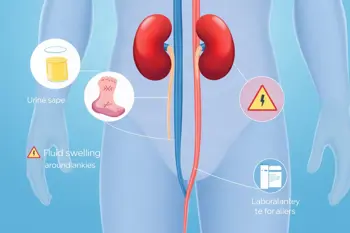
Swelling in the ankles, feet, legs, hands, face, or around the eyes can occur when impaired kidney function allows excess fluid and salt to remain in the body. Puffy eyes and lower-limb swelling are listed among recognized signs of kidney disease, especially when they are persistent or unexplained. Swelling alone does not establish a diagnosis, because heart, liver, medication, and circulation problems can produce similar findings. 2
Fluid accumulation and kidney-related high blood pressure may contribute to shortness of breath or chest discomfort. These symptoms can also signal serious heart or lung conditions, so they should not be attributed to kidney disease without assessment. Severe swelling, breathing difficulty, chest discomfort, or a marked reduction in urine output represents a reason for prompt medical attention rather than home observation. 6
Fatigue and other whole-body symptoms
Persistent tiredness, weakness, reduced energy, and trouble concentrating may develop as kidney function declines. The kidneys support hormone production involved in red blood cell production, and impaired kidney function can affect several systems at once. Sleep problems may also occur. These symptoms are common in many conditions, including anemia, infection, mood disorders, and sleep disorders, so their presence requires clinical context rather than self-diagnosis. 1
Advanced kidney disease may be associated with poor appetite, nausea, vomiting, dry or itchy skin, and muscle cramps. Such symptoms can reflect the buildup of waste or disruption of fluid and mineral balance, but they may also arise from gastrointestinal, dermatological, medication-related, or metabolic causes. A cluster of persistent symptoms is more concerning than an isolated brief episode and should be evaluated with medical history and testing. 1
Who has a higher risk of kidney disease
Diabetes and high blood pressure are the two most common causes of chronic kidney disease because long-term injury can affect the kidney’s small blood vessels and filtering units. Other recognized risk factors include cardiovascular disease, heart failure, obesity, older age, family history of kidney disease, inherited conditions, autoimmune disease, and previous acute kidney injury. Risk does not mean disease is present, but it increases the value of regular screening. 3
Family history can be relevant when relatives have conditions such as polycystic kidney disease or certain immune-related kidney disorders. Kidney risk can also be influenced by structural abnormalities, urinary blockage, infections, and medicines that injure the kidneys. Managing diabetes and blood pressure, maintaining a healthy weight, staying physically active, and reviewing potentially harmful medicines with a clinician are described as ways to protect kidney health. 4
How kidney disease is evaluated
Symptoms cannot reliably diagnose kidney disease, and early disease may be detected only through laboratory testing. A blood test is used to estimate glomerular filtration rate, or eGFR, which reflects how effectively the kidneys filter. A urine albumin-to-creatinine assessment, commonly called uACR, checks for albumin leakage. Blood pressure measurement and, when indicated, imaging can add information about kidney structure and related conditions. 2
People with diabetes, high blood pressure, heart disease or heart failure, obesity, or a family history of kidney disease are specifically identified as groups that should consider kidney testing. Results may need to be interpreted over time because a single abnormal value does not describe every aspect of kidney health. Medical evaluation is particularly important when urine changes, swelling, fatigue, nausea, itching, or reduced urine output persist. 2
When symptoms require prompt medical care
Blood visible in the urine, very low urine output, rapidly worsening swelling, shortness of breath, chest discomfort, persistent vomiting, or severe confusion can accompany serious kidney or other medical problems. Cleveland Clinic lists fatigue, nausea, vomiting, swelling, reduced urination, and mental fog among symptoms of kidney failure. The seriousness depends on onset, severity, other illnesses, and test results, so urgent symptoms should be assessed by a qualified healthcare service. 6
A practical distinction is that chronic kidney disease often progresses quietly, while acute kidney injury can develop suddenly after an event or illness. Either pattern can require evaluation, particularly when urination changes rapidly or multiple symptoms appear together. Early identification may allow treatment of contributing conditions, slow further damage, and address complications before kidney failure develops. No single warning sign should be used as a substitute for blood, urine, and clinical assessment. 4
Sources
- Mayo Clinic, Chronic kidney disease: Symptoms and causes, https://www.mayoclinic.org/diseases-conditions/chronic-kidney-disease/symptoms-causes/syc-20354521
- National Kidney Foundation, Signs and Symptoms of Kidney Disease, https://www.kidney.org/kidney-topics/signs-and-symptoms-kidney-disease
- National Institute of Diabetes and Digestive and Kidney Diseases, What Is Chronic Kidney Disease in Adults?, https://www.niddk.nih.gov/health-information/kidney-disease/chronic-kidney-disease-ckd/what-is-chronic-kidney-disease
- Centers for Disease Control and Prevention, About Chronic Kidney Disease, https://www.cdc.gov/kidney-disease/about/index.html
- NIH News in Health, Curbing Chronic Kidney Disease, https://newsinhealth.nih.gov/2026/01/curbing-chronic-kidney-disease
- NHS, Kidney disease, https://www.nhs.uk/conditions/kidney-disease/
Authored by MyTrendSpot team