Warning Signs of Fibromyalgia: Clinical Patterns, Symptoms, and Evaluation
Warning signs of fibromyalgia are often dismissed as normal pain, stress, aging, or poor sleep. The condition is associated with widespread musculoskeletal pain, extreme fatigue, unrefreshing sleep, mood symptoms, headaches, and problems with memory or concentration, although these features can also occur in other medical conditions. 1
Widespread pain and tenderness
The most recognizable warning sign is persistent pain affecting multiple areas of the body. Fibromyalgia pain may begin in the neck, shoulders, back, or another region and later involve both sides of the body, including areas above and below the waist. The discomfort can be described as aching, stiffness, burning, or deep muscular soreness, and its intensity may change over time. 2
Tenderness is another important feature. Ordinary pressure, such as clothing, a hand placed on the skin, or contact with a tender area, may feel unusually painful. Fibromyalgia differs from a localized muscle strain because symptoms are generally more widespread and are accompanied by fatigue, sleep disruption, or mental cloudiness rather than being confined to one injured structure. 3
Fatigue and unrefreshing sleep
Persistent fatigue can be more disabling than pain for some people. A person may have reduced stamina, difficulty completing familiar activities, or a sense of exhaustion that does not match the amount of physical effort performed. This fatigue is not simply ordinary tiredness after a demanding day and may continue even when daily responsibilities are reduced. 1
Sleep problems are commonly linked with this symptom pattern. People may spend enough time in bed yet wake feeling unrefreshed, experience poor-quality sleep, or notice that pain and tiredness reinforce one another. Merck Manual identifies poor sleep, fatigue, widespread aching, and stiffness as central characteristics, while also noting that sleep disorders may need separate evaluation. 3
Fibro fog and concentration changes
Problems with memory, concentration, and thinking are often called “fibro fog.” Possible experiences include losing track of conversations, forgetting appointments, struggling to find words, or finding routine mental tasks unusually demanding. These cognitive symptoms commonly occur alongside pain and fatigue, rather than appearing as an isolated memory disorder. 4
Cognitive difficulties can affect work, school, household planning, and communication. Their severity may fluctuate with sleep quality, stress, illness, or a broader symptom flare. Because concentration problems have many possible causes, including mood conditions and sleep disorders, they do not establish fibromyalgia by themselves. Clinicians consider them as part of the overall symptom history. 6
Sensory sensitivity and associated symptoms
Some people with fibromyalgia report heightened sensitivity to touch, temperature, sound, or light. This pattern is consistent with altered pain processing in the central nervous system, in which ordinary sensations may be interpreted as more intense. Increased sensitivity does not mean symptoms are imagined; the pain experience is real even when blood tests or imaging do not show tissue damage. 2
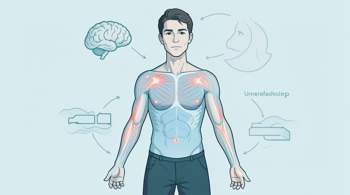
Other symptoms may accompany the core pattern, but they are not specific to fibromyalgia. Reported associations include headaches, digestive or irritable bowel symptoms, anxiety, depression, and jaw or facial pain. These complaints can have separate explanations, so each should be considered in its own clinical context instead of being automatically attributed to fibromyalgia. 7
Fluctuating symptoms and possible triggers
Fibromyalgia symptoms commonly vary in intensity. Periods of worsening are often described as flares, during which pain, fatigue, sleep problems, and cognitive symptoms become more disruptive. Symptoms may also move between body regions or change in character. Such variability can make the condition difficult to recognize, particularly when individual appointments capture only a short period of the illness. 1
Stress, poor sleep, illness, injury, and overexertion may coincide with worsening symptoms. These associations do not prove that a particular event caused fibromyalgia, because the underlying cause remains uncertain. Research descriptions instead emphasize heightened sensitivity to pain signals and possible triggers involving physical or emotional stress. Keeping a symptom record can help clinicians compare timing, severity, sleep, and daily function. 2
How clinicians assess warning signs
There is no single blood test, X-ray, or scan that confirms fibromyalgia. Diagnosis is clinical and relies on the pattern, duration, distribution, and impact of symptoms, while clinicians assess whether another condition better explains them. Blood tests or other investigations may be used to evaluate alternative explanations, because normal results do not invalidate a person’s symptoms. 8
Current diagnostic approaches focus on widespread pain lasting at least three months together with fatigue, sleep problems, or cognitive symptoms. Fibromyalgia can occur alongside rheumatoid arthritis, lupus, or other chronic pain conditions, so an existing diagnosis does not automatically exclude it. However, new or severe chest pain, weakness, sudden numbness, unexplained weight loss, or persistent fever should receive medical assessment rather than being presumed to be fibromyalgia. 3
What the symptom pattern means
Fibromyalgia is a chronic pain syndrome and is not considered an autoimmune disorder, although autoimmune diseases and other chronic pain conditions may occur at the same time. It is not generally life-threatening and does not cause progressive damage to muscles or organs, but persistent symptoms can substantially disrupt sleep, movement, employment, mood, and memory. 4
Symptoms can occur in adults of any age and may also affect children and adolescents, although diagnoses are more common among women and often arise during young or middle adulthood. Because symptoms overlap with arthritis, autoimmune disease, sleep disorders, depression, and other conditions, a careful medical history and examination are more informative than self-diagnosis based on one warning sign. 2
Sources
- Harvard Health, Fibromyalgia: https://www.health.harvard.edu/topics/fibromyalgia
- Arthritis Foundation, Fibromyalgia: https://www.arthritis.org/diseases/fibromyalgia
- Merck Manual Consumer Version, Fibromyalgia: https://www.merckmanuals.com/home/bone-joint-and-muscle-disorders/muscle-bursa-and-tendon-disorders/fibromyalgia
- FamilyDoctor.org, Fibromyalgia: https://familydoctor.org/condition/fibromyalgia/
- National Institute of Arthritis and Musculoskeletal and Skin Diseases, Fibromyalgia: https://www.niams.nih.gov/health-topics/fibromyalgia
- Mayo Clinic, Fibromyalgia Symptoms and Causes: https://www.mayoclinic.org/diseases-conditions/fibromyalgia/symptoms-causes/syc-20354780
- NHS, Fibromyalgia: https://www.nhs.uk/conditions/fibromyalgia/
- American College of Rheumatology, Fibromyalgia: https://rheumatology.org/patients/fibromyalgia
Authored by MyTrendSpot team