Where Musical Instruments May Appear in Public Auction Listings: An Analytical Guide to Market Channels
Musical instruments frequently surface in public auction listings across a wide spectrum of platforms, ranging from high-end specialized houses to government surplus portals 1. Understanding the specific venues where these items appear is essential for those seeking to monitor availability, whether for rare historic pieces, vintage gear, or standard equipment from estate liquidations 2. Public auctions serve as a primary clearinghouse for instruments originating from private collections, bankruptcy proceedings, and institutional divestments 3.
Specialized Auction Houses and High-Value Collections
Prestige auction houses, such as Christie’s, maintain dedicated departments for musical instruments, often focusing on rare, historic, or celebrity-provenance items 4. These venues cater to a global market of collectors and investors, frequently offering instruments crafted by world-renowned makers, such as Antonio Stradivari or Giuseppe Guarneri del Gesù 5. Sales in these environments may occur through single-owner auctions or as part of larger, mixed-category fine art events 6.
Similarly, regional specialized houses often curate themed sales that feature diverse categories of instruments, including vintage guitars, saxophones, and rare keyboards 7. For instance, Stockholms Auktionsverk has historically organized specific sales for items such as 19th-century maple harps, vintage synthesizers like the Prophet 5, and specialized electric basses 8. Prospective buyers in these high-value categories should prioritize verifying provenance and historical documentation, as these factors significantly influence market valuation 9.
Estate and Public Administrator Auctions
Public administrator and estate auctions represent a significant source of musical instruments, often emerging when property is managed following a lack of heirs or during the settlement of an estate 10. Agencies, such as the Riverside County Sheriff’s Department in California, coordinate with external auction services to list items including musical instruments, cars, and electronics through online portals 11. These listings can be highly eclectic, featuring everything from amateur student instruments to high-quality professional gear 12.
Local and regional auction houses frequently group these items under household or specialty categories 13. Unlike specialist dealers, these entities may provide limited information regarding the functional condition of an instrument, necessitating a diligent review of any available photographs or condition reports before bidding 14. In many instances, the opportunity for in-person inspection is limited to a brief window prior to the close of the auction, making local logistical coordination critical for potential participants 15.
Government and Institutional Surplus Platforms
Public agencies, school districts, and military organizations frequently utilize government-surplus platforms to divest of redundant or unused musical equipment 16. Platforms like GovDeals and GSA Auctions serve as centralized marketplaces where institutions list surplus assets for public bidding 17. These inventories often consist of orchestral instruments, band equipment, and audio-visual gear that has reached the end of its institutional lifecycle 18.
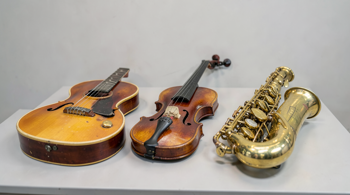
Acquiring instruments through these government channels requires an understanding of institutional procurement processes, as listings are typically managed by the respective selling agency rather than a centralized retail entity 19. Buyers should account for potential administrative fees, specific removal requirements, and the necessity of verifying the operational status of equipment that may have been in long-term storage within educational or municipal facilities 20.
Aggregator Services and Online Auction Marketplaces
Digital aggregators play a pivotal role in the modern auction ecosystem by consolidating listings from hundreds of independent auction houses into single, searchable interfaces 21. Platforms such as LiveAuctioneers, Invaluable, Proxibid, and HiBid allow users to filter for musical instruments across a vast array of global sales 22. These tools provide a macro view of the market, enabling researchers to track historical sale data and upcoming lots from diverse sources concurrently 23.
| Platform Category | Primary Focus |
|---|---|
| Specialist Houses | Rare, historic, celebrity-owned, fine art instruments |
| Estate/Administrator | General household, diverse musical equipment, unverified condition |
| Government Surplus | Institutional, school band gear, industrial audio equipment |
| Aggregator Portals | Broad search across multiple independent auction houses |
Due Diligence and Market Risk Factors
Participating in public auctions for musical instruments involves inherent risks related to the condition and authenticity of the items 24. Vintage instruments, such as early 20th-century violins or 1960s electric guitars, often require professional restoration to return to playing condition, a cost that must be factored into the bidding strategy 25. Buyers are encouraged to consult independent experts or verify serial numbers and manufacturer marks when documentation is provided 26.
Market friction points-such as shipping costs for fragile instruments, buyer’s premiums added to the final hammer price, and sales tax-are standard in the auction industry 27. Before placing a bid, users should consult the specific terms and conditions of the hosting platform to ensure they understand their liability regarding item condition, as many public auctions operate on an as-is, where-is basis without warranty or return policies 28.
Sources
- eBay: Musical Instruments & Gear Category
- Potteries Auctions: Discover Rare Musical Instruments
- Joseph Finn Co., Inc.: Bankruptcy Estate Auctions
- Christie’s: Musical Instruments Department
- Sotheby’s: Musical Instruments Specialists
- Piano Auctions Ltd: The Donald Adcock Collection
- Stockholms Auktionsverk: Musical Instruments
- 1818 Auctioneers: James Burton Fender Telecaster
- Unique Auctions: 1912 Marenghi Street Organ
- Patch: RivCo Sheriff’s Estate Auction
- Crédit Municipal de Paris: Vente Musique, Art & Décoration
- Heritage Auctions: Music Instruments Category
- Proxibid: Musical Instruments Auction Category
- Invaluable: Musical Instruments Auctions
- HiBid: Local and Regional Auctions Search
- GovDeals: Public Auction Marketplace
- GSA Auctions: Federal Surplus Portal
- ShopGoodwill: Nonprofit Online Auctions
- LiveAuctioneers: Aggregated Auction Lots
- General Market Research on Auction Platforms
- Industry Analysis: Auction Aggregator Functionality
- Market Research: Asset Divestment Channels
- Global Auction Data Aggregators Overview
- Expert Valuation and Condition Reporting Standards
- Vintage Instrument Restoration Cost Analysis
- Provenance and Historical Authentication Guidelines
- Auction Industry Fee Structure Standards
- Standard Auction Legal Terms and Conditions
Authored by MyTrendSpot team