Best hospitals for proton beam therapy: An evidence-based guide to choosing a center
Best hospitals for proton beam therapy are not identified by reputation alone. The appropriate center depends on the tumor’s location and type, the treatment evidence, pediatric or adult expertise, available technology, clinical research, insurance requirements, and the practical demands of travel and treatment. Proton therapy can reduce radiation exposure to healthy tissue beyond a tumor, but its clinical value varies by diagnosis and individual anatomy. 10 11
Why proton therapy is considered
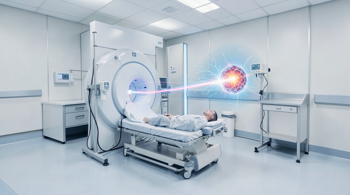
Proton therapy is an external-beam radiation treatment that uses accelerated protons rather than X-rays. The physical advantage is that protons can deposit most of their energy at a selected depth, known as the Bragg peak, with little dose beyond that point. Penn Medicine describes the difference by noting that X-rays have an entry and exit dose, while a proton beam can be designed to stop near the tumor, potentially limiting exposure to normal tissue. 1 11
- Potentially useful when a tumor is close to sensitive organs.
- Often considered for selected brain, spinal, skull-base, eye, and pediatric tumors.
- Not automatically superior to advanced photon techniques for every cancer.
How hospitals should be compared
A hospital’s overall cancer ranking does not establish that proton therapy is the most appropriate treatment. A meaningful comparison should examine the center’s experience with the specific diagnosis, radiation-planning capabilities, access to surgical and medical oncology, pediatric support when relevant, and willingness to compare proton therapy with modern photon treatment. The National Cancer Institute states that proton therapy is used for selected cancers and remains under study to determine when it produces better outcomes than other radiation approaches. 10
| Comparison factor | Question for the clinical team |
|---|---|
| Expertise | How often is this tumor type treated with protons? |
| Technology | Does planning use pencil beam scanning or other precision methods? |
| Multidisciplinary care | Are radiation, medical, and surgical oncologists involved? |
| Evidence | What outcome data or clinical trials apply to this diagnosis? |
Established U.S. programs in the research record
The supplied research identifies several major U.S. programs, including MD Anderson Cancer Center, Mayo Clinic, Massachusetts General Hospital, Penn Medicine, Loma Linda University Cancer Center, UF Health Proton Therapy Institute, Johns Hopkins, and Cleveland Clinic. These institutions represent academic, comprehensive cancer, and dedicated proton therapy models. Their inclusion does not create a universal ranking, because suitability depends on the patient’s diagnosis, treatment objectives, location, insurance arrangements, and need for related oncology services. 12 13 14 15 16 17 18 19
- Mayo Clinic in Rochester reported treating 10,000 patients during the first decade of its proton program and described pencil beam scanning for complex tumors. 8
- Penn Medicine reported treating more than 10,000 cancer patients across three regional proton centers. 1
- MD Anderson announced a planned modernization involving three ProteusONE systems for its Houston Proton Therapy Center. 5
Programs with notable technical or regional features
Technology and service design differ among centers. Mayo Clinic’s reported program uses pencil beam scanning and has developed tracking technology for eye melanoma, while its research account discusses approaches for managing motion and pediatric treatment requirements. Orlando Health describes a cyclotron and beam-shaping hardware used to customize treatment for each tumor. Stanford Medicine reported opening a facility using ultracompact proton equipment intended for pediatric and adult patients, although the supplied Stanford article is dated April 2026 and should be treated as future-dated research context relative to earlier sources. 8 9 6 3
- Dedicated pediatric capability can matter when anesthesia, motion control, or developmental support is required.
- Eye, brain, spine, and skull-base expertise may be more relevant than general facility size.
- Smaller equipment may improve geographic access, but clinical suitability still requires specialist review.
Regional options and international considerations
Regional centers can be clinically relevant when they combine proton delivery with broader oncology services. UAMS describes the Proton Center of Arkansas as a collaboration involving UAMS Health, Arkansas Children’s Hospital, Baptist Health, and Proton International, serving both children and adults. McLaren Proton Therapy Center in Flint, Michigan, identifies itself as part of the Karmanos Cancer Network and describes lodging support for patients traveling from outside the area. These examples illustrate how hospital selection includes continuity of care and logistics, not only equipment. 4 2
India has established proton programs, but the supplied international source specifically identifies two clinically operating programs in its 2026 comparison: Apollo Proton Cancer Centre in Chennai and a public-sector pathway in Navi Mumbai. That source reports an indicative range of about US$14,000 to US$58,000, with conventional courses commonly requiring five to nine weeks, while emphasizing that final treatment plans and costs depend on diagnosis, complexity, and physician review. These figures are not universal prices or guarantees. 7
Eligibility, evidence, and clinical uncertainty
Proton therapy is generally considered after radiation oncologists review imaging, pathology, prior treatment, tumor geometry, and the dose that nearby organs would receive from competing techniques. Patients should ask for a side-by-side plan comparing protons with intensity-modulated or other advanced photon therapy. The relevant question is not whether protons are newer, but whether the expected reduction in normal-tissue dose is likely to produce a meaningful clinical benefit for that individual. 10 20
- Potential benefits may include lower dose to selected surrounding tissues.
- Possible limitations include uncertain evidence for some diagnoses and the need for specialized planning.
- Clinical outcomes depend on cancer type, stage, biology, prior therapy, surgery, chemotherapy, and achievable radiation dose.
Costs, coverage, and practical friction
Insurance coverage varies by diagnosis and insurer, and prior authorization may be required. A consultation should clarify the expected number of treatment sessions, related imaging, anesthesia when applicable, travel, lodging, caregiver needs, and the patient’s total out-of-pocket responsibility. International comparisons may show substantially different figures, but those figures can reflect different billing categories and treatment pathways. A center’s willingness to provide written estimates and explain coverage criteria is therefore an important practical consideration. 7
Travel can create medical and financial strain, especially when treatment lasts several weeks or when children require repeated visits and anesthesia. Local availability may reduce disruption, but proximity should not replace diagnosis-specific expertise. Patients should also ask how treatment interruptions are handled, which clinicians manage side effects, whether follow-up can occur near home, and what happens if imaging or treatment planning changes after arrival. These operational details are part of evaluating a proton program responsibly.
Questions to take to a proton consultation
A high-quality consultation should explain why proton therapy is being considered, what evidence supports it for the specific cancer, and which normal tissues might be spared. The team should also describe expected side effects, alternatives, treatment duration, and whether a clinical trial is relevant. The American Society for Radiation Oncology emphasizes discussing treatment selection with a radiation oncologist, while Mayo Clinic describes evaluation as part of determining whether proton therapy is appropriate. 20 13
- How does the proton plan compare with the best available photon plan?
- What is the center’s experience with this exact tumor location and age group?
- Are medical, surgical, radiation, pediatric, and supportive-care specialists coordinated?
- What are the eligibility, authorization, scheduling, travel, and follow-up requirements?
Sources
- Penn Medicine
- McLaren Health Care
- Stanford Medicine
- UAMS Health
- BioSpace, reporting IBA and MD Anderson
- Orlando Health Cancer Institute
- Afiya India
- Mayo Clinic News Network
- Mayo Clinic Magazine
- National Cancer Institute
- RadiologyInfo.org
- The University of Texas MD Anderson Cancer Center
- Mayo Clinic
- Massachusetts General Hospital
- Penn Medicine Proton Therapy
- Loma Linda University Health
- UF Health Proton Therapy Institute
- Johns Hopkins Medicine
- Cleveland Clinic
- American Society for Radiation Oncology
Authored by MyTrendSpot team