Early symptoms of Ulcerative Colitis you should know: Clinical signs and evaluation guidance
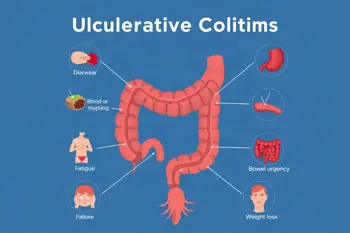
Early symptoms of ulcerative colitis you should know often begin with recurring diarrhea, blood or mucus in the stool, abdominal cramping, and an urgent need to use the bathroom. These symptoms may be mild, intermittent, or sudden, which can make them difficult to distinguish from other gastrointestinal conditions. Ulcerative colitis is a chronic inflammatory bowel disease involving inflammation and ulcers in the inner lining of the large intestine, including the rectum. 1
Changes in bowel habits
Diarrhea is one of the most recognizable early symptoms of ulcerative colitis. Stools may become loose or watery, and bowel movements may occur more often than usual. Mild disease may involve fewer than four bowel movements per day, while more active disease can produce more than six daily bowel movements. Symptoms may develop gradually or start suddenly, and they may disappear for periods of remission before returning during a flare. 1
Recurring changes are more concerning than a short-lived episode that resolves completely. Ulcerative colitis commonly follows a pattern of active symptoms and remission, with remission lasting weeks or years in some people. Increased frequency, persistent loose stools, or repeated episodes that interfere with sleep, work, eating, or normal activities should be documented and discussed with a clinician because symptoms alone cannot establish the diagnosis. 7
Blood, mucus, and rectal bleeding
Blood in the stool or rectal bleeding is a characteristic symptom that may appear early. Blood can be visible with stool, and mucus or pus may also be passed. Bloody diarrhea is frequently associated with active inflammation of the colon and rectum. The amount of blood can vary, so a small amount should not automatically be dismissed, particularly when it occurs repeatedly or alongside diarrhea, urgency, or abdominal pain. 1
Bleeding has several possible causes, including conditions other than ulcerative colitis, so its presence is not by itself diagnostic. However, persistent bloody stools, bleeding accompanied by weakness or dizziness, or a clear increase in bleeding requires medical assessment. Longer-term inflammation and blood loss can contribute to anemia, while severe disease may involve blood with most bowel movements and a substantially higher daily frequency. 5
Urgency and tenesmus
An urgent need to have a bowel movement is another important early sign. The urge may arrive suddenly and repeatedly, even when little stool is passed. Tenesmus describes the feeling that a bowel movement is still necessary after the bowel has been emptied, or the sensation of needing to go when the bowel may be empty. These symptoms can reflect inflammation affecting the rectum, where ulcerative colitis often begins. 1
Urgency and tenesmus can be particularly disruptive because they may cause repeated bathroom trips and difficulty postponing a bowel movement. Some people experience abdominal or rectal discomfort at the same time. A pattern of urgency, incomplete emptying, mucus, blood, and frequent stools provides more clinically relevant information than any single symptom, so noting when symptoms occur and whether they persist can help a clinician assess the pattern. 3
Abdominal pain and digestive discomfort
Cramping and pain in the abdomen commonly accompany ulcerative colitis. Discomfort may occur with diarrhea or before a bowel movement and can vary with the extent and activity of inflammation. Mild symptoms may involve intermittent cramping, while more active disease can produce severe cramps. Nausea and vomiting are also possible, especially when the disease is more extensive or severe, although they are not present in every person. 1
Abdominal pain is not specific to ulcerative colitis and may occur with infections, irritable bowel syndrome, medication effects, and other digestive disorders. The combination of recurring pain with bloody diarrhea, urgency, mucus, or tenesmus is more suggestive of an inflammatory bowel process than isolated short-term discomfort. Severe abdominal pain, marked swelling, fever, or rapidly worsening symptoms should be treated as warning signs requiring urgent medical evaluation. 5
Fatigue, fever, and weight changes
Whole-body symptoms may appear when inflammation is more active or affects a larger portion of the colon. Fatigue, fever, nausea, vomiting, reduced appetite, and unintentional weight loss are recognized possible features. Fatigue may also be related to anemia caused by intestinal blood loss or chronic inflammation. These symptoms can develop alongside bowel changes, rather than appearing as the first noticeable sign, and their presence may indicate more than a mild flare. 1
Children and teenagers may experience consequences beyond diarrhea and abdominal pain, including delayed growth or delayed puberty. Symptoms can range from mild to severe, and the number of bowel movements does not always fully describe their impact. Fever, significant weight loss, continuing fatigue, or reduced intake should be reported as part of the overall history. A first-degree relative with inflammatory bowel disease also increases the relevance of recurring symptoms. 3
Warning signs and the diagnostic process
Urgent medical evaluation is appropriate for severe or rapidly worsening symptoms, substantial rectal bleeding, dehydration, fever, intense abdominal pain, or more than 10 bloody bowel movements in a day. Extremely severe ulcerative colitis can involve this level of stool frequency. Dehydration may follow frequent diarrhea, while ongoing bleeding can contribute to anemia. These warning signs do not confirm ulcerative colitis, but they indicate that the illness may require timely clinical assessment. 1
Ulcerative colitis cannot be diagnosed from symptoms alone. Clinicians generally consider the symptom history, perform an examination, and use stool tests and blood tests to evaluate inflammation, infection, bleeding, or anemia. Diagnosis may require sigmoidoscopy or colonoscopy, sometimes with tissue assessment. Crohn disease, infection, microscopic colitis, and other gastrointestinal conditions can produce overlapping symptoms, so testing is used to identify the underlying condition and determine the affected area. 5
Sources
- National Institute of Diabetes and Digestive and Kidney Diseases, Symptoms & Causes of Ulcerative Colitis: https://www.niddk.nih.gov/health-information/digestive-diseases/ulcerative-colitis/symptoms-causes
- National Institute of Diabetes and Digestive and Kidney Diseases, Definition & Facts of Ulcerative Colitis: https://www.niddk.nih.gov/health-information/digestive-diseases/ulcerative-colitis/definition-facts
- Penn Medicine, Ulcerative Colitis: Symptoms and Causes: https://www.pennmedicine.org/conditions/ulcerative-colitis
- Mayo Clinic, Ulcerative Colitis: Symptoms and Causes: https://www.mayoclinic.org/diseases-conditions/ulcerative-colitis/symptoms-causes/syc-20353326
- Merck Manual Consumer Version, Ulcerative Colitis: https://www.merckmanuals.com/home/digestive-disorders/inflammatory-bowel-disease-ibd/ulcerative-colitis
- Crohn's & Colitis Foundation, What Is Ulcerative Colitis: https://www.crohnscolitisfoundation.org/what-is-ulcerative-colitis
- National Health Service, Ulcerative Colitis Symptoms: https://www.nhs.uk/conditions/ulcerative-colitis/symptoms/
Authored by MyTrendSpot team