Warning signs of rheumatoid arthritis: A clinical guide to early patterns
Warning signs of rheumatoid arthritis often resemble ordinary aches at first, but persistent swelling, prolonged morning stiffness, symmetrical joint symptoms, and unexplained fatigue can indicate inflammatory disease rather than simple overuse. The following guide summarizes recognized patterns and explains when clinical assessment becomes important.
Joint pain, swelling, and tenderness
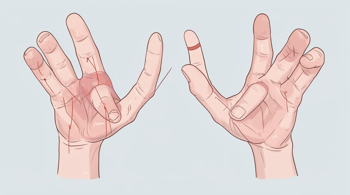
Rheumatoid arthritis commonly begins in smaller joints, particularly the fingers, wrists, toes, and feet. The affected areas may be painful, tender, warm, red, or visibly swollen because the immune system attacks the synovium, the tissue lining the joint. Unlike ordinary soreness that may follow a specific activity, inflammatory symptoms can persist or recur without a clear mechanical cause. RA often involves multiple joints and may eventually reduce range of motion or alter joint shape. 1 3
- Swelling may be noticeable around finger joints, wrists, or forefeet. 2
- Grip strength and the ability to perform everyday tasks may decline. 3
- Warmth and tenderness suggest active inflammation, although they do not establish a diagnosis. 4
- Persistent swelling in one or more joints merits professional assessment. 5
Morning stiffness lasting longer than usual
Morning stiffness is one of the more informative warning patterns. Merck Manual and Penn Medicine describe stiffness that persists for more than 60 minutes after waking or after inactivity, while broader clinical guidance commonly identifies stiffness lasting more than 30 minutes as a possible inflammatory sign. The duration matters because inflammatory stiffness tends to ease gradually with movement, rather than disappearing after only a few minutes. Stiffness can also return after sitting or resting. 2 3 7
- Record how long stiffness lasts after waking.
- Note whether symptoms return after prolonged sitting or inactivity. 2
- Report stiffness that continues repeatedly over several weeks.
- Morning stiffness alone cannot distinguish RA from every other inflammatory condition. 5
Symptoms affecting matching joints
RA frequently follows a symmetrical pattern, meaning matching joints on the left and right sides may become painful or swollen. The hands, wrists, feet, knees, elbows, ankles, hips, and shoulders can be involved, although early disease does not always appear in a perfectly mirrored pattern. Symmetry is therefore a useful clue, not a requirement. The lower spine is usually not the principal site of RA, which can help distinguish its typical distribution from some other back-related conditions. 1 3 6
- Compare symptoms in the same finger, wrist, toe, or foot on both sides.
- Small-joint involvement is common early in the disease. 2
- Asymmetrical symptoms do not automatically rule out RA.
- Progressive loss of motion or deformity indicates a need for medical evaluation. 3
Fatigue and whole-body changes
Rheumatoid arthritis is systemic, so symptoms may extend beyond the joints. Unusual fatigue, weakness, low-grade fever, reduced appetite, and unintentional weight loss have been reported alongside inflammatory joint symptoms. Fatigue may persist despite sleep and can interfere with work, household activities, or concentration. These features are nonspecific and can occur with infections, endocrine disorders, anemia, or other illnesses, but their combination with swollen joints or prolonged stiffness strengthens the case for a clinical review. 4 5 6
- Persistent tiredness is different from temporary fatigue after exertion.
- Document fever, appetite changes, or unexplained weight changes for a clinician. 7
- Symptoms may fluctuate through flares and periods of improvement. 8
- Whole-body symptoms should not be attributed to RA without assessment.
Possible signs beyond the joints
Because RA can affect connective tissues and organs, some people develop signs outside the joints. Possible findings include firm rheumatoid nodules under the skin, dry or irritated eyes and mouth, numbness or tingling in the hands or feet, and chest discomfort or shortness of breath related to inflammation around the lungs. Eye, lung, heart, skin, and blood-vessel involvement are recognized complications, although these manifestations are not present in every person with RA. 3 9 10
- Firm nodules are more often associated with more established or severe disease. 3
- Dry eyes or mouth may reflect associated autoimmune involvement. 3
- Numbness, burning, or tingling should be reported, especially when persistent. 9
- Breathing symptoms or chest pain require medical attention because several causes are possible. 3
Evaluation, uncertainty, and timing
No single symptom confirms rheumatoid arthritis. Diagnosis is based mainly on the pattern and duration of symptoms, physical examination, blood tests such as rheumatoid factor and anti-cyclic citrullinated peptide antibodies, and imaging when appropriate. Penn Medicine notes that pain and swelling lasting longer than six weeks may be part of the diagnostic picture, but a clinician must interpret results in context. Early evaluation matters because ongoing inflammation can damage cartilage, bone, tendons, and ligaments. 2 3 5
- Arrange assessment for persistent swollen joints or stiffness that does not improve. 4
- Keep a record of affected joints, stiffness duration, fatigue, fever, and functional changes.
- Understand that positive or negative antibody tests do not replace clinical judgment. 2
- Ongoing management may involve exercise, splinting, medication, monitoring, and sometimes surgery. 2
Sources
- Harvard Health, Rheumatoid Arthritis: https://www.health.harvard.edu/bones-and-joints/rheumatoid-arthritis-a-to-z
- Merck Manual Consumer Version, Rheumatoid Arthritis: https://www.merckmanuals.com/home/bone-joint-and-muscle-disorders/joint-disorders/rheumatoid-arthritis-ra
- Penn Medicine, Rheumatoid Arthritis: https://www.pennmedicine.org/conditions/rheumatoid-arthritis
- Centers for Disease Control and Prevention, Rheumatoid Arthritis: https://www.cdc.gov/arthritis/about-arthritis/types-of-arthritis/rheumatoid-arthritis.html
- National Institute of Arthritis and Musculoskeletal and Skin Diseases, Rheumatoid Arthritis: https://www.niams.nih.gov/health-topics/rheumatoid-arthritis
- Mayo Clinic, Rheumatoid Arthritis Symptoms and Causes: https://www.mayoclinic.org/diseases-conditions/rheumatoid-arthritis/symptoms-causes/syc-20353648
- National Health Service, Rheumatoid Arthritis Symptoms: https://www.nhs.uk/conditions/rheumatoid-arthritis/symptoms/
- Arthritis Foundation, Rheumatoid Arthritis Symptoms: https://www.arthritis.org/diseases/rheumatoid-arthritis/symptoms
- Cleveland Clinic, Rheumatoid Arthritis: https://my.clevelandclinic.org/health/diseases/4924-rheumatoid-arthritis
- American College of Rheumatology, Rheumatoid Arthritis: https://rheumatology.org/I-Am-A/Patient-Caregiver/Diseases-Conditions/Rheumatoid-Arthritis
Authored by MyTrendSpot team