Home Recovery for Muscle Strain: A Clinical Guide to Safe Self-Care
Home recovery for muscle strain begins with practical care for a pulled or overstretched muscle, including protection, relative rest, ice, compression, elevation, and a gradual return to movement. The appropriate approach depends on symptoms such as pain, swelling, bruising, weakness, and the ability to use the affected area safely. 1
Understanding the Injury and Its Severity
A muscle strain occurs when muscle fibers are stretched beyond their limits or torn. It may result from sudden movement, heavy lifting, sports, overuse, or a forceful contraction while the muscle is lengthened. Strains can affect the muscle itself or the tendon connecting muscle to bone, with common locations including the hamstrings, calves, groin, lower back, shoulders, and neck. 2
Clinical descriptions commonly divide strains into three grades. Grade I involves a small number of stretched or torn fibers with tenderness but generally preserved strength. Grade II involves more fiber damage, greater pain, swelling, bruising, and noticeable weakness. Grade III is a complete tear that can cause a popping sensation and major loss of function, requiring professional assessment rather than home treatment alone. 2
The First Steps: Protection and Relative Rest
Mayo Clinic recommends the P.R.I.C.E. method for immediate self-care: protect the injured area, rest from activities that cause pain or swelling, apply ice, use compression, and elevate the area. Protection can include a brace, splint, cane, or crutches when recommended, particularly if putting weight on an injured leg or foot increases symptoms. Light movement is acceptable when it does not worsen discomfort. 1
Rest should be relative rather than prolonged immobilization. NHS inform reports that too much rest can slow recovery, while a small amount of tolerable activity can help rebuild normal use. Activity can be paced by reducing repetitions, slowing the movement, or increasing rest periods when symptoms become excessive. The same guidance describes pain from 0 to 3 out of 10 as minimal, 4 to 5 as acceptable, and 6 to 10 as excessive during activity. 3
Ice, Compression, and Elevation
Ice should be applied as soon as possible using an ice pack or crushed ice wrapped in a towel. Mayo Clinic specifies 15 to 20 minutes per application, repeated every 2 to 3 hours while awake during the first few days. A thin cloth barrier protects the skin from cold injury. The purpose is symptom control and limiting swelling, not forcing the area numb for prolonged periods. 1
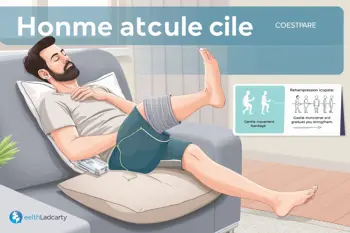
An elastic bandage can reduce swelling when wrapped from the point farthest from the heart toward the body. The wrap should feel snug but not tight. Pain, numbness, or swelling below the bandage indicates that it should be loosened immediately. Elevating an injured limb above heart level, especially at night, can also help reduce localized swelling. 1
Pain Relief and Heat Considerations
Over-the-counter pain medicines listed by Mayo Clinic for muscle strains include ibuprofen, naproxen sodium, and acetaminophen. These medicines address pain, while ibuprofen and naproxen are nonsteroidal anti-inflammatory drugs. Medication choice and duration can be affected by a person’s health conditions, other medicines, and product instructions, so label directions and professional advice remain important when uncertainty exists. 1
Heat is generally treated differently from ice during recovery. The supplied clinical summary identifies heat as more appropriate after the initial inflammatory period, typically once swelling has decreased, because warmth may improve blood flow and relax tight muscles. Applying heat while swelling is still prominent may be unsuitable, making symptom changes a more useful guide than a fixed schedule. 4
Progressive Movement and Rehabilitation
Gentle stretching should begin only after acute pain and inflammation have settled. Early movement should remain within an acceptable pain range rather than forcing a painful stretch. NHS inform advises increasing activity gradually, aiming to do a little more each day or every few days, while reducing the intensity if pain rises above the acceptable range or remains worse afterward. 3
Recovery later shifts from symptom control toward restoring range of motion, strength, and function. Gentle range-of-motion work can be followed by carefully progressed strengthening, with the load increased gradually to reduce reinjury risk. A physical therapist may help when weakness, persistent symptoms, or a more substantial tear makes independent progression difficult. 4
Warning Signs and Return to Activity
Severe pain, major swelling, significant bruising, marked weakness, inability to bear weight, inability to move the muscle, visible deformity, or a popping sensation can indicate a more serious injury. A complete tear may be visible or palpable during examination, and ultrasound can help distinguish among soft-tissue injuries. These findings warrant medical evaluation instead of relying exclusively on home care. 1
Returning to exercise should be gradual and based on function rather than a fixed calendar. A muscle should not be challenged with the activity that caused the injury while sharp pain, substantial weakness, or worsening swelling remains. Warm-up, conditioning, hydration, proper technique, and progressive exercise loads are identified as measures that may help reduce future strains, while returning too soon can delay recovery and raise reinjury risk. 4
Factors That Influence Recovery
Mild strains may improve within days to a few weeks, whereas moderate or severe injuries can take longer. The timeline depends on the injury’s severity, the muscle involved, and how early care is managed. Symptoms such as tenderness with preserved strength are more consistent with a mild injury, while swelling, bruising, loss of strength, or reduced function suggest a greater degree of tissue damage. 2
Home recovery also requires attention to daily activity. Avoiding sharp pain, using support when needed, and balancing protection with gradual movement can limit setbacks. Allied Health identifies proper nutrition, hydration, early care, and physiotherapy as factors that can support recovery, while persistent pain or limited function may require an individualized rehabilitation plan. 8
Sources
- Mayo Clinic: Muscle strains, diagnosis and treatment, https://www.mayoclinic.org/diseases-conditions/muscle-strains/diagnosis-treatment/drc-20450520
- Harvard Health Publishing: Muscle Strain, https://www.health.harvard.edu/bones-and-joints/muscle-strain-a-to-z
- NHS inform: Soft tissue injury advice, https://www.nhsinform.scot/illnesses-and-conditions/muscle-bone-and-joints/soft-tissue-injury-advice/
- Acibadem Hospitals Group: Muscle Strain Recovery, https://acibademinternational.com/health-library/how-to-speed-up-muscle-strain-recovery-safely/
- Nolla Health: How to Treat a Pulled Muscle, https://www.nollahealth.com/learning/how-to-treat-a-pulled-muscle
- MedAmerica Rehab: Muscle Strain Recovery, https://www.medamericarehab.com/muscle-strain-recovery/
- OrthoNJ: Muscle Strains, https://orthonj.org/april-muscle-strains-causes-symptoms-treatment-recovery-time/
- Allied Health: How to Recover Faster After a Muscle Strain, https://www.alliedhealth.com.au/blog/how-to-recover-faster-after-a-muscle-strain/
- Florida Medical Orthopedic and Spine Institute: Home Treatments for Pulled Muscles, https://www.fmosinstitute.com/effective-home-treatments-for-pulled-muscles-quick-relief-tips
Authored by MyTrendSpot team