Best myofascial release for fibromyalgia: An evidence-based clinical review
The question of the best myofascial release for fibromyalgia has no single definitive answer. Current evidence points toward gentle, individualized myofascial release as a potentially useful adjunct for pain and related symptoms, while also showing that study methods, treatment intensity, patient characteristics, and follow-up periods vary substantially.1
What the research currently shows
A 2025 systematic review and meta-analysis identified 10 studies examining connective tissue massage, therapist-delivered manual myofascial release, and foam-roller self-myofascial release. Under a random-effects model, myofascial release significantly reduced pain, with a standardized mean difference of -1.16 and a p-value of 0.0003. Connective tissue massage did not reach statistical significance, with p=0.29, although the review cautioned that heterogeneity affected interpretation.1
- Manual myofascial release showed the strongest overall signal in the cited meta-analysis.
- Foam-roller methods may require adaptation for age, tolerance, and physical capacity.
- No technique was established as universally superior for every person with fibromyalgia.
Gentle manual release versus other techniques
Myofascial release generally uses sustained, gentle pressure intended to address restricted or tense areas rather than forcefully compressing painful tissue. Cleveland Clinic describes the method as sustained pressure applied to restricted fascia and notes that temporary soreness can occur after treatment.11 This distinction is relevant because fibromyalgia commonly involves heightened pain sensitivity and symptoms that fluctuate over time, making aggressive pressure a potential source of worsening discomfort.12
- Therapist-delivered work allows pressure and positioning to be adjusted during a session.
- Self-myofascial release with a foam roller provides more control over timing and intensity but may be difficult over highly sensitive areas.
- Connective tissue massage and trigger-point approaches should not automatically be treated as interchangeable with myofascial release.
What treatment schedules have been studied
A randomized controlled trial in women with fibromyalgia reported benefits from a course of 20 myofascial-release sessions delivered over two months. Outcomes included pain, anxiety, sleep quality, depression, and quality of life, with the intervention compared with a placebo procedure.23 The study supports the possibility of broader symptom improvement, but it does not prove that the same schedule, technique, or response applies to all patients.
- A 2026 randomized trial studied 74 premenopausal women aged 30 to 45 with body mass indexes from 25 to 34.9.
- That trial compared myofascial release with muscle energy technique over four weeks, using three weekly sessions.
- Both groups showed significant improvements in pain, range of motion, and quality-of-life measures, so the findings do not identify one method as categorically best.
Expected benefits and evidence limitations
Massage-based therapies may provide short-term relief for some fibromyalgia symptoms, but a Cochrane review characterized the evidence as limited, with studies generally small or low certainty.4 The available findings therefore support cautious experimentation rather than claims of a cure or lasting correction of an underlying tissue problem. Fibromyalgia is understood as a chronic condition involving widespread pain and altered pain processing, not simply a collection of local muscle knots.5
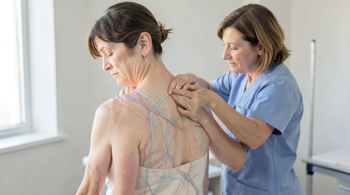
- Possible areas of improvement include pain intensity, sleep, mood, anxiety, mobility, and perceived quality of life.
- Benefits may be temporary and may differ according to symptom severity, sensitivity, age, and treatment design.
- A positive response should be judged by function and tolerability as well as by pain scores.
Safety, pressure, and post-treatment flares
People with fibromyalgia can be unusually sensitive to touch and pressure, so a treatment that feels therapeutic to one person may provoke a flare in another. Practical guidance from the supplied research favors low-pressure work, short sessions, gradual progression, and monitoring symptoms for 24 to 48 hours after treatment. Massage is generally considered safe when performed appropriately, but temporary soreness can occur and additional caution may be needed with certain medical situations.10
- Reduce or stop treatment if pain escalates substantially, bruising develops, or symptoms remain worse for an extended period.
- Seek clinical assessment for new numbness, weakness, or other concerning neurological symptoms.
- A therapist should know about fibromyalgia, central pain sensitization, medications, injuries, and relevant medical conditions before applying pressure.
How myofascial release fits broader care
Major clinical organizations describe fibromyalgia management as individualized and multimodal rather than dependent on one procedure. Physical activity, education, cognitive or behavioral approaches, symptom-management strategies, sleep-related care, and medication when clinically appropriate are all included in guidance from NIAMS, the American College of Rheumatology, the NHS, and Mayo Clinic.6789 Myofascial release is therefore best evaluated as one component of a broader plan.
- A physical therapist or massage therapist familiar with fibromyalgia can individualize positioning, duration, and pressure.
- Progress should be based on symptom response, sleep, daily activity, and recovery time between sessions.
- Manual treatment should complement, not replace, exercise planning, sleep improvement, education, psychological therapies, or prescribed care.
Practical conclusion
The most defensible answer to “best” is gentle, therapist-guided myofascial release that is adjusted to the individual and introduced gradually. The 2025 meta-analysis found a meaningful pain-reduction signal for myofascial release, while the broader evidence base remains limited by heterogeneity and small studies.14 Self-myofascial release may be considered when a person can control pressure safely, but painful or prolonged reactions indicate that the method, intensity, duration, or timing needs reassessment with a healthcare professional.
Sources
- Complementary Therapies in Medicine, systematic review and meta-analysis
- Evidence-Based Complementary and Alternative Medicine, randomized controlled trial
- PubMed clinical trial record
- Cochrane, Massage for Fibromyalgia
- Centers for Disease Control and Prevention, Fibromyalgia
- National Institute of Arthritis and Musculoskeletal and Skin Diseases
- NHS, Fibromyalgia Treatment
- American College of Rheumatology, Fibromyalgia
- Mayo Clinic, Fibromyalgia Diagnosis and Treatment
- National Center for Complementary and Integrative Health, Massage Therapy
- Cleveland Clinic, Myofascial Release
- Mount Sinai, Fibromyalgia
Authored by MyTrendSpot team