Top 15 gout treatment centers in the United States: A Comprehensive Guide to Leading Rheumatology Institutions
Gout, a painful inflammatory arthritis caused by monosodium urate crystal deposition in joints, affects approximately 9.2 million people in the United States. 1 For patients navigating this chronic condition, the quality and specialization of a treatment center can directly influence outcomes, flare frequency, and long-term joint health. U.S. News and World Report evaluates more than 4,400 hospitals annually using objective measures and data from over 800 million patient care records to produce its rheumatology rankings, providing one of the most rigorous benchmarks available. 2
Understanding Gout as a Medical Condition
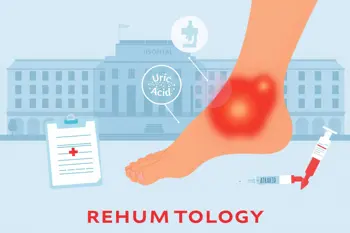
Gout develops when excess uric acid in the bloodstream forms sharp, needle-like urate crystals that deposit in joints and surrounding tissue, triggering intense inflammatory reactions. 3 Acute attacks typically begin at night, reaching peak intensity within 12 to 24 hours, and most commonly affect the first metatarsophalangeal joint at the base of the big toe, a presentation known as podagra. 4 Without sustained urate-lowering therapy targeting serum uric acid below 6 mg/dL, attacks become progressively more frequent, joints sustain permanent damage, and urate deposits called tophi form in soft tissue and tendons. 5
Risk factors for developing gout include genetics, obesity, hypertension, kidney disease, diabetes, and diets high in purines from red meat, shellfish, and alcohol. 6 Men over age 30 and postmenopausal women carry elevated risk, and certain diuretics and blood pressure medications can also raise uric acid levels. 7 Recent published research indicates the global prevalence and incidence of gout is increasing, reinforcing the importance of identifying centers with established expertise in managing the condition. 8
How Top Gout Treatment Centers Are Evaluated
U.S. News and World Report determines its best rheumatology hospitals through multiple data streams, including patient outcomes, nurse staffing ratios, advanced technologies, and specialist surveys. 2 The top 10 rheumatology hospitals in the 2025 rankings were recommended by at least 5% of rheumatology specialists responding to U.S. News surveys conducted in 2022, 2023, and 2024, while an additional 18 hospitals met a 1% recommendation threshold. 2 Additional evaluative frameworks include the Arthritis Foundation, which recognizes excellence in patient education and clinical program development, and the American College of Rheumatology, which tracks fellowship training quality, research grants, and collaborative networks. 9
Beyond rankings, leading centers are characterized by access to advanced diagnostics such as polarized light microscopy for joint aspiration analysis and musculoskeletal ultrasound for detecting urate deposits. 3 Institutions offering active clinical trials for gout therapies, including pegloticase-based regimens for refractory cases, represent the highest tier of specialized care. 10
Top 15 Gout Treatment Centers in the United States
The following institutions represent the leading centers for gout and rheumatologic care in the country, based on national rankings and documented clinical capabilities. Johns Hopkins Hospital in Baltimore has been named the top hospital for rheumatology by U.S. News and World Report for the eighth consecutive year as of the 2025-2026 edition, with Ami A. Shah, MD, MHS, serving as director of the rheumatology division. 11 The Cleveland Clinic ranks second nationally and operates a comprehensive rheumatology program treating gout and other inflammatory arthropathies. 2
| Rank | Institution | Location |
|---|---|---|
| 1 | Johns Hopkins Hospital | Baltimore, MD |
| 2 | Cleveland Clinic | Cleveland, OH |
| 3 | Hospital for Special Surgery (HSS) / New York-Presbyterian University Hospital of Columbia and Cornell | New York, NY |
| 4 | Brigham and Women's Hospital | Boston, MA |
| 5 | Mayo Clinic | Rochester, MN |
| 6 | Massachusetts General Hospital | Boston, MA |
| 7 | UCSF Health - UCSF Medical Center | San Francisco, CA |
| 8 | UCLA Medical Center | Los Angeles, CA |
| 9 | NYU Langone Hospitals | New York City, NY |
| 10 | University of Michigan Health | Ann Arbor, MI |
| 11 | University of Alabama at Birmingham Hospital | Birmingham, AL |
| 12 | Hospitals of the University of Pennsylvania - Penn Presbyterian | Philadelphia, PA |
| 13 | Duke University Hospital | Durham, NC |
| 14 | UPMC Presbyterian Shadyside | Pittsburgh, PA |
| 15 | Ohio State University Wexner Medical Center | Columbus, OH |
Notable Institutional Specializations
Several centers on this list maintain programs with specific relevance to gout management. NYU Langone Health operates a dedicated Gout Treatment Center, with Michael Toprover, MD, serving as clinical director and assistant professor in the rheumatology division. 12 The University of Alabama at Birmingham features Kenneth G. Saag, MD, MSc, as director of clinical immunology and rheumatology, a nationally recognized researcher in chronic refractory gout and its systemic comorbidities. 12 Mayo Clinic maintains campuses in Arizona, Florida, and Minnesota, with rheumatology staff skilled across dozens of subspecialties collaborating on complex cases. 13
Brigham and Women's Hospital and Massachusetts General Hospital, both affiliated with Harvard Medical School, offer specialized rheumatology care and active research programs addressing gout pathophysiology and novel therapeutic strategies. 14 Stanford Medicine operates rheumatology clinics in California focusing on gout diagnosis and urate-lowering therapies, while UCSF Health provides evidence-based gout management through its rheumatology department. 15 HSS in New York provides gout-focused care through one of the country's most recognized musculoskeletal institutions. 16
Treatment Approaches at Leading Centers
Across these institutions, gout management typically follows a two-phase protocol. Acute flares are addressed with colchicine, nonsteroidal anti-inflammatory drugs such as ibuprofen or naproxen, or corticosteroids administered orally or by injection. 10 Long-term control relies on urate-lowering therapy, most commonly allopurinol or febuxostat, targeting serum uric acid concentrations below 6 mg/dL to dissolve existing crystals and prevent new deposits. 5
For patients with chronic refractory gout who fail maximal oral urate-lowering therapy, specialty centers may offer pegloticase infusions or medications such as canakinumab and rilonacept for difficult-to-treat cases. 10 Advanced diagnostic tools deployed at these centers include joint aspiration with polarized light microscopy, the gold standard for confirming urate crystal presence, as well as musculoskeletal ultrasound for noninvasive detection of crystal deposits. 3 Multidisciplinary teams at leading programs often integrate rheumatologists, nephrologists, cardiologists, and dietitians to address the complex comorbidity burden commonly seen in gout patients. 8
Considerations and Limitations When Selecting a Center
Patients researching gout treatment centers should recognize that national rankings are primarily based on expert peer surveys for rheumatology, which may not fully capture an individual program's specific gout volume or subspecialty depth. 2 Access to top-ranked academic medical centers can be limited by geography, insurance network restrictions, referral requirements, and appointment availability, factors that can meaningfully affect practical care delivery. Patient eligibility for advanced therapies such as pegloticase infusions depends on documented failure of first-line agents and is subject to individual clinical assessment. 10
Patients with gout who cannot access major academic centers may find qualified care through community rheumatology practices, specialty infusion centers, or podiatric specialists experienced in inflammatory arthritis of the foot and ankle. 4 Regardless of setting, consistent monitoring of serum uric acid levels, adherence to prescribed urate-lowering therapy, and dietary modification remain the foundation of effective long-term gout management. Published clinical data consistently underscores that gout is frequently undertreated in outpatient settings, making ongoing specialist engagement critically important for preventing joint damage and systemic complications. 3
Sources
- Maryland Gout Institute - Maryland Gout Institute in Reisterstown, Maryland (spierfoot.com)
- RheumNow - Top 20 Best Rheumatology Hospitals 2025 (rheumnow.com)
- Dr. Adam Elisha, DO - Gout Treatment in Duluth, MN (dradamelisha.com)
- Balance Foot and Ankle - Gout Treatment Michigan 2026 (michiganfootdoctors.com)
- Balance Foot and Ankle - Gout Treatment Michigan 2026 (michiganfootdoctors.com)
- Rheumatology Care Associates - Gout Treatment Clermont Florida (rheumatologycareassociates.com)
- TwelveStone Health Partners - Gout Chronic Conditions (12stonehealth.com)
- PMC / Therapeutic Advances in Musculoskeletal Disease - Gout therapy updated (pmc.ncbi.nlm.nih.gov)
- iHealthBlogger - Top 10 Rheumatology Centers in the USA (ihealthblogger.com)
- Infusion Center DE - Gout Treatment: Relieve Pain, Prevent Flares and Lower Uric Acid (infusioncenterde.com)
- Healio - U.S. News names Johns Hopkins best rheumatology hospital for 2025-2026 (healio.com)
- Rheumatology Advisor - Episode 1: Recognizing Uncontrolled Gout as a Progressive Systemic Disease (rheumatologyadvisor.com)
- Mayo Clinic - Gout Doctors and Departments (mayoclinic.org)
- Brigham and Women's Hospital - Rheumatology Department (brighamandwomens.org)
- Stanford Health Care - Rheumatology Clinics (stanfordhealthcare.org)
- Hospital for Special Surgery - Gout Conditions (hss.edu)
Authored by MyTrendSpot team