Ways to manage muscle spasms at home: Evidence-based guidance and safety considerations
Ways to manage muscle spasms at home generally begin with gently stretching and massaging the affected muscle, followed by heat or cold chosen according to the likely trigger. Most uncomplicated cramps last seconds to minutes, but repeated, severe, prolonged, or unexplained spasms require attention to possible causes such as overuse, dehydration, injury, nerve irritation, medical conditions, or medication effects. 1
What to do while a spasm is active
Stop the activity that triggered the contraction and place the affected body part in a comfortable position. Gently lengthen the muscle without bouncing or forcing the joint. For a calf cramp, pulling the toes toward the shin can help; standing or walking slowly may also release a leg cramp when balance and pain permit. Stretching and massage are standard home measures described by medical guidance. 2
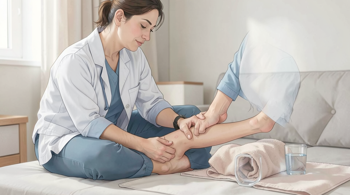
Massage the tightened area with the hands using steady, tolerable pressure rather than aggressive rubbing. Hold a gentle stretch while breathing normally, then release gradually when the muscle softens. Pain or soreness can remain after the contraction ends, so normal movement should resume gradually instead of immediately returning to strenuous exercise. Prolonged bed rest is generally less useful for uncomplicated spasms than gentle movement and a gradual return to activity. 3
Choosing heat, cold, or movement
Heat is commonly used for tightness that is not linked to a recent injury. A warm towel, heating pad, or warm bath may reduce stiffness and help a tense muscle relax. Heat should be applied for short periods with a protective layer between the skin and the heat source. If the spasm follows an acute sports injury or other recent trauma, a wrapped ice pack may help reduce soreness and inflammation during the first 24 to 48 hours. 4
Cold is mainly a comfort measure after injury, while warmth is often more suitable for non-injury-related tightness. Neither approach should cause skin pain, numbness, or discoloration. Once the strongest pain subsides, gentle range-of-motion exercises can prevent the area from becoming more guarded. A new injury accompanied by swelling, bruising, or substantial loss of movement may represent a strain or another problem rather than an isolated cramp. 5
Hydration and possible triggers
Drink fluids regularly, particularly when a spasm occurs after exercise, sweating, heat exposure, vomiting, or diarrhea. Dehydration can contribute to muscle cramps, but hydration alone is not a complete explanation or treatment for persistent symptoms. Electrolyte changes, overexertion, repetitive activity, prolonged sitting, poor posture, physical fatigue, and some medicines are also reported contributors. 6
Electrolyte supplements should not be treated as a universal solution because the cause of a recurring spasm may be muscular, neurological, medication-related, or associated with another condition. A clinician can review symptoms, health history, and medicines when episodes recur. Prescription muscle relaxants may be considered for selected patients, usually for short-term use, but drowsiness and other side effects make self-directed use inappropriate. 7
Preventing recurring cramps at home
Prevention depends on identifying the situation in which spasms appear. Before exercise, gradual preparation and gentle mobility may be useful; after prolonged sitting, changing position and moving regularly can reduce sustained muscle loading. For nighttime leg cramps, regular calf and hamstring stretching, particularly before bed, is commonly recommended. These measures may reduce episodes for some people, although recurrent cramps still deserve assessment rather than indefinite home treatment. 8
Keep a simple record of the location, timing, duration, activity, fluid intake, and any recent medication change. This information can help distinguish an occasional exertion-related cramp from a pattern requiring medical evaluation. Ongoing prevention may require maintaining regular movement, addressing posture or workload, and managing the underlying trigger. A recurring spasm can be a symptom rather than a diagnosis, so repeated stretching without investigating the cause may leave the main problem unresolved. 9
Remedies and approaches to avoid
Over-the-counter pain relievers generally do not stop an active cramp immediately because they do not directly interrupt the involuntary contraction. They may help lingering soreness after the muscle relaxes, but medication suitability depends on a person’s health conditions and other medicines. Quinine should not be used routinely for muscle cramps because its potential harms outweigh its limited benefits, according to the cited clinical review. 10
Pickle juice and mustard are sometimes discussed as rapid cramp remedies. The supplied research describes a possible mouth and throat nerve-reflex mechanism for pickle juice, rather than rapid electrolyte replacement, and reports an approximate one- to two-ounce amount in that context. Evidence and individual responses vary, so these remedies should not replace evaluation of frequent or severe spasms. Supplements and herbs also have limited or mixed clinical evidence and can interact with medicines or be unsuitable for pregnancy or certain conditions. 1
When home care is not enough
Medical assessment is appropriate when spasms are frequent, severe, prolonged, unusually painful, or unexplained, or when they do not improve with conservative care. Additional warning signs include weakness, numbness, swelling, skin changes, fever, or a recent medication change. Spasms associated with nerve irritation, injury, dehydration, or another medical condition may need treatment directed at the cause rather than repeated home remedies. 2
Urgent care is warranted for spasms accompanied by new or severe weakness, inability to move, breathing difficulty, chest pain, loss of bladder or bowel control, fever with severe pain, or major injury. These symptoms can indicate a problem requiring prompt evaluation. For mild, short-lived cramps without warning signs, stretching, massage, suitable heat or cold, hydration, and gradual movement remain the main home-care options. 3
Sources
- Mayo Clinic, Muscle cramp diagnosis and treatment, https://www.mayoclinic.org/diseases-conditions/muscle-cramp/diagnosis-treatment/drc-20350824
- Cleveland Clinic, Muscle spasms, https://my.clevelandclinic.org/health/diseases/15466-muscle-spasms
- MedlinePlus, Muscle cramps, https://medlineplus.gov/ency/article/003193.htm
- NHS, Leg cramps, https://www.nhs.uk/conditions/leg-cramps/
- Hope Quick Care, How to manage a muscle spasm until you see a doctor, https://www.hopequickcare.com/how-to-manage-a-muscle-spasm-until-you-see-a-doctor/
- American Academy of Orthopaedic Surgeons, Muscle cramps, https://orthoinfo.aaos.org/en/diseases--conditions/muscle-cramps/
- Healthdirect Australia, Muscle cramps, https://www.healthdirect.gov.au/muscle-cramps
- Merck Manual, Muscle cramps, https://www.merckmanuals.com/home/brain-spinal-cord-and-nerve-disorders/symptoms-of-brain-spinal-cord-and-nerve-disorders/muscle-cramps
- Mount Sinai, Muscle cramps, https://www.mountsinai.org/health-library/symptoms/muscle-cramps
- American Family Physician, Nocturnal leg cramps, https://www.aafp.org/pubs/afp/issues/2012/0815/p350.html
Authored by MyTrendSpot team