Best Vitamin C serums for dark spots and aging: An Evidence-Based Consumer Guide
Best Vitamin C serums for dark spots and aging generally fall into two groups: formulas built around pure L-ascorbic acid and gentler derivatives designed for improved stability or tolerance. Research presented by product manufacturers and independent reviewers indicates that topical vitamin C is more reliable for preventing discoloration, dullness, and visible environmental damage than for rapidly reversing established marks. 12
What vitamin C can realistically address
Topical vitamin C is an antioxidant used to help neutralize free radicals associated with ultraviolet exposure and pollution. Independent testing coverage describes its effects as measured rather than universal: regular use may support brighter tone, smoother-looking texture, and reduced visibility of fine lines, while existing hyperpigmentation may require longer-term care. Morning application beneath sunscreen is commonly recommended because vitamin C is positioned as an additional antioxidant layer, not a substitute for sun protection. 258
Anti-aging expectations should also remain proportionate to the evidence. Product descriptions commonly connect vitamin C with firmness, radiance, and fine-line improvement, but these are generally appearance claims rather than guarantees of collagen restoration. Skinfix describes its serum as combining 15% tetrahexyldecyl ascorbate with peptides for brightening and firming, while Counter describes two stable vitamin C forms for smoother, firmer-looking skin over time. 37
Pure vitamin C versus derivatives
L-ascorbic acid is the traditional high-potency form, but it can be difficult to formulate because exposure to light and oxygen affects stability. Obagi Professional-C Serum 20 uses L-ascorbic acid and is described for discoloration, normal-to-oily combination skin, fine lines, and wrinkles. Vivier Serum 30 combines L-ascorbic acid with 3-O-ethyl ascorbic acid at a stated 30% vitamin C level and is positioned for more pronounced hyperpigmentation. 46
Derivative-based products use forms intended to be more stable or less irritating. Skinfix lists 15% tetrahexyldecyl ascorbate, while Rose Ingleton MD lists 10% THD ascorbate with 2.5% tranexamic acid and describes the formula as suitable for melanin-rich skin as well as other skin types. Independent reporting also identifies lipid-soluble derivatives such as THD ascorbate as a consideration for sensitive, reactive, or rosacea-prone users who may not tolerate L-ascorbic acid easily. 3810
Concentration and supporting ingredients
Concentration alone does not determine suitability. Independent review research identifies a commonly assessed range from 15% to 20%, while products in the provided data range from 10% THD ascorbate to 30% vitamin C. Higher stated strength may appeal to people focused on stubborn discoloration, but a stronger formula can also increase the likelihood of stinging, dryness, or barrier discomfort, particularly when paired with exfoliating acids or other active products. 248
| Formula approach | Examples in the research | Relevant positioning |
|---|---|---|
| Pure L-ascorbic acid | Obagi 20; Vivier 30 | Brightening, discoloration, antioxidant and line concerns |
| THD ascorbate | Skinfix 15; Rose MD 10 | Derivative format with emphasis on tolerance, tone, or firmness |
| Vitamin C plus exfoliation | Murad Vita-C Glycolic | Gold-stabilized vitamin C combined with glycolic acid |
Supporting ingredients can change the practical profile of a serum. Ferulic acid and vitamin E are frequently used in antioxidant systems, while peptides, glycerin, tranexamic acid, and glycolic acid serve different roles related to firmness, hydration, pigmentation, or exfoliation. Murad specifically combines gold-stabilized vitamin C with glycolic acid, which may increase the need for cautious introduction because exfoliation can add to irritation. 3910
Products distinguished by skin concern
For discoloration with normal, oily, or combination skin, SkinCeuticals Phloretin CF with Ferulic Acid is described for discoloration, blemishes, and aging, with claims involving environmental protection and overall tone. Obagi Professional-C Serum 20 is also identified for normal-to-oily combination skin and lists sodium hyaluronate alongside L-ascorbic acid. These descriptions suggest a profile aimed at users who prioritize a lightweight antioxidant serum and are not especially concerned with rich moisturization. 16
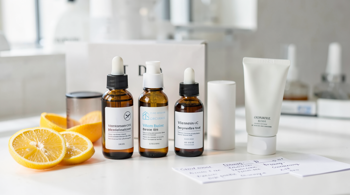
For dry or sensitive skin, the research points toward different selection criteria rather than a single universal formula. Wirecutter identifies Naturium Vitamin C Complex Serum for sensitive skin and Sunday Riley C.E.O. 15% Vitamin C Brightening Serum for dry skin. Guardian reporting cautions that reactive or rosacea-prone users should approach L-ascorbic acid carefully, making derivative formulas and barrier-supporting ingredients potentially more relevant than maximum concentration. 28
Stability, packaging, and daily maintenance
Vitamin C serum performance depends partly on maintaining formula stability after opening. The supplied research emphasizes that L-ascorbic acid is unstable and benefits from opaque, airtight packaging, while independent beauty coverage notes that light and oxygen can cause products to turn orange or brown. Color change is therefore a practical observation point, although appearance alone does not establish the exact potency remaining in a bottle. Storage away from direct sunlight is specifically advised for Rose MD FutureBright. 10
Routine consistency is another maintenance issue. Several product pages recommend application once or twice daily, while morning use is frequently paired with sunscreen in editorial guidance. Introducing a serum gradually can help identify intolerance, especially when the formula contains high-strength L-ascorbic acid, glycolic acid, fragrance, or citrus-derived ingredients. Murad includes glycolic acid, Vivier lists fragrance, and Counter identifies orange peel oil, all of which may matter to users with reactive skin. 479
Risks, limitations, and evaluation criteria
Potential risks include irritation, dryness, stinging, and worsening discomfort when an active serum is applied to a compromised barrier. The Guardian's cited expert commentary distinguishes sensitive or rosacea-prone skin from more tolerant skin, while the product data shows that formulas vary substantially in vitamin C type, concentration, fragrance content, and accompanying acids. A patch test and conservative introduction are reasonable risk-management measures, but persistent reactions warrant professional assessment rather than continued escalation. 89
A neutral comparison should therefore assess more than a product's percentage claim. Relevant criteria include the vitamin C form, packaging, intended skin type, supporting antioxidants or peptides, presence of exfoliating acids or fragrance, and whether the evidence is an independent test, a user survey, or a manufacturer statement. For example, Obagi reports that 91% of surveyed users said their skin appeared brighter and more hydrated, but also labels the result as survey analysis and company data, not an independent clinical comparison. 6
How to interpret the available evidence
Independent editorial reviews separate category-level evidence from brand-specific claims. Wirecutter's testing framework lists SkinCeuticals C E Ferulic as a splurge choice, Timeless 20% C + E Ferulic as a lower-cost category option, Naturium for sensitive skin, and La Roche-Posay Vitamin C12 for oily skin. Forbes similarly names SkinCeuticals C E Ferulic overall, TruSkin for beginners, and SkinMedica Vitamin C+E Complex for mature skin. These labels represent editorial assessments, not medical endorsements. 25
The most defensible conclusion is that vitamin C serum selection is a matching exercise. Pure L-ascorbic acid may suit users prioritizing a conventional high-potency approach, while THD ascorbate may be more practical for people concerned about sensitivity or formula stability. Dark spots also remain strongly influenced by continuing ultraviolet exposure, so expectations should focus on gradual tone improvement and prevention rather than instant correction. Product claims should be weighed against formulation details, independent testing, and individual tolerance. 138
Sources
- SkinCeuticals, Phloretin CF with Ferulic Acid
- The New York Times Wirecutter, The 6 Best Vitamin C Serums of 2026
- Skinfix, Brighten + Firm 15% Vitamin C Serum
- Vivier, Serum 30
- Forbes, Best Vitamin C Serums 2026
- Obagi, Professional-C Serum 20
- Counter, All Bright Vitamin C Serum
- The Guardian, The best vitamin C serums in the UK for every skin type
- Murad, Vita-C Glycolic Serum
- Rose Ingleton MD, FutureBright Dark Spot Vitamin C Serum
Authored by MyTrendSpot team