Comprehensive Guide: Top Spine Surgery Hospitals in the United States
When navigating chronic back or neck pain, finding the right surgical institution is a critical milestone for patients requiring complex clinical interventions. Top Spine Surgery Hospitals in the United States represent a select tier of medical centers characterized by exceptionally high surgical volumes, comprehensive multidisciplinary teams, and advanced technological integration 1. Navigating these options involves understanding the clinical metrics, specialized technologies, and regional availability of leading centers to ensure optimal recovery and long-term physical function.
The Landscape of National Spine Hospital Rankings
Hospital performance is meticulously evaluated by prominent national healthcare publications and consumer medical databases to help patients identify high-performing facilities. Major ranking organizations, such as Newsweek and U.S. News & World Report, evaluate thousands of medical facilities annually to determine their clinical efficacy 2. These rigorous scoring systems utilize risk-adjusted data from millions of patient records to assess critical performance metrics, including post-operative survival rates, readmission rates, and discharge-to-home statistics 3.
These structured evaluations also incorporate process measures, such as adherence to best-practice clinical protocols, structural resources like nursing care quality, and specialist reputation surveys within the medical community 3. While these aggregate rankings offer a reliable overview of institutional safety and general orthopedic quality, patients are encouraged to look deeper into department-specific volumes, clinical trial options, and the precise diagnostic tools utilized by each center's spinal team.
Premier Spine Surgery Centers on the West Coast
California hosts some of the largest and most technologically advanced spine programs in the nation. Cedars-Sinai Medical Center in Beverly Hills is widely recognized for its ambulatory and inpatient surgical excellence, achieving the top spot on several national surgery center lists 2 4. The facility specializes in minimally invasive outpatient procedures, cervical disc replacements, and lumbar disc replacements under the direction of fellowship-trained specialists 4. The program utilizes cutting-edge robotics and real-time navigation to minimize tissue trauma and expedite patient recovery 5.
Further north, the University of California, San Francisco (UCSF) Health operates the largest specialized spine center in California, managing approximately 10,000 patient visits annually 6. Co-directed by neurosurgeons like Dr. Christopher Ames and Dr. Praveen Mummaneni, the center is renowned for treating complex spinal deformities, pediatric scoliosis, and previously inoperable spinal tumors 6 7 8. The facility combines biomechanics research labs with computer-assisted navigation to tailor interventions for structural restoration 7 9.
Leading Clinical Institutions in the Midwest and East Coast
The Midwest is anchored by world-renowned research hospitals that pioneer novel spinal interventions. The Mayo Clinic in Rochester, Minnesota, is globally celebrated for its integrated, multidisciplinary approach to complex spinal conditions, oncology, and neurological reconstruction 10. Similarly, the Cleveland Clinic maintains an exceptionally high volume of complex spinal deformity surgeries 1. Led by figures like Dr. Thomas Mroz, the department conducts extensive clinical research into spinal cord injury rehabilitation and advanced cervical spine disorders 11.
On the East Coast, the Hospital for Special Surgery (HSS) in New York City consistently ranks as a premier national leader in dedicated orthopedic and spinal care 1 12. The institution houses dedicated spine specialists, such as Dr. Andrew Sama and Dr. Alexander Hughes, who focus on restoring movement and reducing pain through evidence-based surgical pathways 12. Additionally, the Montefiore Einstein Comprehensive Orthopedic & Spine Center in West Nyack provides advanced multidisciplinary musculoskeletal care, combining orthopedics, neurosurgery, and physical rehabilitation under a single outpatient structure 13.
Emerging Technological Advancements in Spinal Care
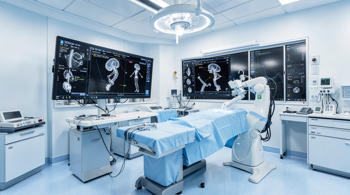
Modern spine surgery has transitioned from traditional open procedures to highly targeted, motion-preserving, and minimally invasive options. Centers of excellence are increasingly adopting real-time intraoperative imaging, augmented reality, and continuous surgical navigation systems 1 14. For example, Emory University Hospital Midtown recently performed a historic continuously navigated endoscopic transforaminal lumbar interbody fusion (TLIF), allowing surgeons to maintain millimeter-level navigation from the initial planning stages through to screw placement 14.
Motion preservation technologies are also transforming patient outcomes by serving as alternatives to standard fusion surgeries. The FDA-approved Total Posterior Spine System (TOPS) is utilized by advanced centers like Staten Island University Hospital to decompress spinal nerves while preserving natural lumbar movement for spinal stenosis patients 15. The following table outlines primary surgical categories and the corresponding modern technological approaches utilized at top-tier hospitals:
| Surgical Category | Primary Clinical Indication | Advanced Technological Integration |
|---|---|---|
| Minimally Invasive Fusion (e.g., TLIF) | Severe degenerative disc disease, instability | Continuous real-time navigation, robotic assistance |
| Motion Preservation Surgery | Lumbar spinal stenosis, disc herniation | TOPS motion-preserving system, cervical disc arthroplasty |
| Complex Deformity Reconstruction | Severe adult scoliosis, kyphosis | 3D biomechanical modeling, computer-guided instrumentation |
| Spinal Oncology Resection | Primary and metastatic spinal tumors | En bloc resection, intraoperative neuromonitoring |
Regional Specialization and Patient-Centered Facilities
Outside of major metropolitan academic centers, regional specialty hospitals offer highly specialized spine care tailored to localized communities. The Spine Hospital of Louisiana, a physician-owned facility founded in 2004, represents this highly focused model 16. Performing over 2,500 spine surgeries and 8,500 pain management procedures annually, the hospital has earned top national marks for patient satisfaction due to its targeted clinical design and low patient-to-nurse ratios 16 17.
State-level excellence lists also highlight the distribution of high-quality spine departments. In the 2026 Healthgrades Specialty Excellence Awards, Florida led the nation with 20 hospitals recognized on the list for superior clinical outcomes in spinal fusion and back surgeries 18. These regional assessments demonstrate that high-quality spinal care, which prioritizes safety and patient-centered recovery, is increasingly accessible to patients across various geographic sectors without requiring cross-country travel.
Important Patient Considerations and Care Verification
Undergoing spine surgery involves inherent clinical risks, making the selection of an appropriate hospital and surgeon a highly personalized decision. Patients should verify whether a hospital has been designated as a "Center of Excellence" by insurance providers, which indicates that the facility adheres to strict, evidence-based quality standards and cost-efficient care models 1. It is also critical to understand the distinction between board-certified orthopedic spine surgeons and neurosurgical spine specialists, as certain complex neurological conditions or spinal cord tumors are best addressed by teams with deep neurosurgical training 1.
To assist in the search process, several federal and national medical directories are publicly available. Patients can utilize the American Academy of Orthopaedic Surgeons (AAOS) directory to locate regional specialists 1. For verified performance metrics, Medicare's official Care Compare tool provides transparent data on participating clinical outcomes and physician performance ratings nationwide, helping patients make informed decisions before initiating care 1.
Sources
- Medicare.gov, American Academy of Orthopaedic Surgeons, and general medical directory databases.
- Saadat Spine: Analysis of Newsweek and U.S. News & World Report Hospital Rankings.
- Deuk Spine Institute: Patient Guide on Hospital Rankings and Methodology.
- Saadat Spine: Cedars-Sinai Best Surgery Center Ranking.
- Vitals: Dr. Corey T. Walker Clinical Profile and Minimally Invasive Fusions.
- UCSF Health: Spine Center Overview and Program Volume.
- UCSF Health: Dr. Christopher P. Ames Profile and Biomechanics Research.
- UCSF Health: Dr. Praveen V. Mummaneni Profile and Complex Care.
- UCSF Health: Dr. Shane Burch Profile and Robotic Technology.
- Mayo Clinic: Complex Spine Care and Neurosurgical Oncology.
- Cleveland Clinic: Dr. Thomas Mroz Profile and Spine Research.
- Newsweek: America's Leading Doctors 2025 – Spine Surgery.
- Montefiore Einstein: Comprehensive Orthopedic & Spine Center Overview.
- Emory Healthcare: Continuously Navigated Endoscopic Spine Fusion.
- Northwell Health: Staten Island University Hospital TOPS Procedure Announcement.
- Spine Hospital of Louisiana: Institutional History and Clinical Volume.
- Spine Hospital of Louisiana: General Patient Services and Facilities.
- Becker's Spine Review: Healthgrades' Top 100 Spine Hospitals.
Authored by MyTrendSpot team