Gout Warning Signs: Clinical Indicators and Progression Factors
Gout is a common form of inflammatory arthritis that results from the accumulation of monosodium urate crystals within joints and soft tissues 7. These crystals form when uric acid levels in the bloodstream remain elevated for extended periods, a state often linked to genetic factors and dietary purine metabolism 6. Understanding the clinical progression of the condition is essential for recognizing the physiological alerts that precede or accompany a flare-up. Medical professionals emphasize that while high uric acid levels alone are often asymptomatic, the formation of these crystals triggers an intense inflammatory cascade that requires appropriate clinical management 4, 9.
Initial Presentation and Acute Flare Characteristics
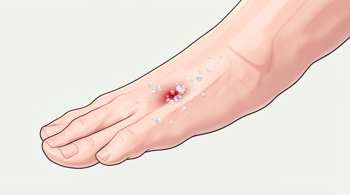
The hallmark of a gout attack is the sudden, intense onset of joint pain, which frequently manifests in the middle of the night 1. Patients often describe the affected area as feeling hot, swollen, and hypersensitive to the lightest touch, such as the weight of a bedsheet 1, 5. While the big toe is the most commonly affected joint, known as podagra, gout can also develop in the ankles, knees, wrists, elbows, and fingers 2, 9. The pain associated with these episodes typically reaches its peak intensity within the first 8 to 12 hours after the onset 1.
Physical markers of an acute flare include visible redness and significant swelling, though these signs may be more subtle in patients with darker skin tones 1. The duration of an untreated flare can span from several days to a few weeks, with residual discomfort lingering even after the primary intensity subsides 1. Clinical observations indicate that the sudden nature of this pain is a primary indicator, differentiating gout from gradual, degenerative wear-and-tear conditions 8. Given that many patients experience symptoms overnight, the rapid transition from a pain-free state to severe physical distress is a common characteristic of the disease 2.
The Four Stages of Gout Progression
Gout is generally categorized into four distinct stages, beginning with asymptomatic hyperuricemia, where uric acid levels are elevated but no symptoms are present 10. During this phase, the body may not yet have developed crystallized deposits. The second stage, known as acute gout, involves the sudden onset of painful flares triggered by crystal release into the synovial joint space 4, 9. Subsequent stages involve intercritical periods of remission followed by potential progression to chronic or tophaceous gout if left unmanaged 10.
Chronic tophaceous gout represents a more advanced stage where persistent high levels of uric acid lead to the formation of tophi 1. These are firm, often painless deposits of uric acid crystals that accumulate beneath the skin, commonly near joints, on the ears, or along the tendons of the hands and feet 1, 6. The presence of tophi is an indication of long-standing, poorly controlled disease and underscores the necessity of long-term uric acid management to prevent irreversible joint damage and physical impairment 1, 7.
Differential Diagnosis and Clinical Mimicry
Accurate diagnosis is critical because the symptoms of gout-specifically red, hot, and swollen joints-can be mimicked by other medical conditions 3. One significant concern is pseudogout, formally referred to as calcium pyrophosphate dihydrate (CPPD) crystal deposition disease, which also presents with sudden, intense joint inflammation 3. While gout and pseudogout share similar clinical presentations, they are caused by different types of crystals, requiring distinct therapeutic interventions 3. Differentiating between these conditions typically requires joint fluid aspiration and microscopic analysis 3, 7.
Furthermore, medical providers caution that the presence of fever along with joint inflammation requires immediate medical evaluation to rule out septic arthritis, or a joint infection 1, 6. Because a joint infection is a medical emergency that differs fundamentally from gout, clinicians often rely on blood tests, physical examinations, and imaging in addition to fluid analysis to reach a definitive diagnosis 3, 7.
Systemic Implications and Complications
Beyond localized joint pain, the underlying mechanisms of gout have systemic implications. Because uric acid is filtered by the kidneys, patients with gout are at an increased risk of developing kidney stones as uric acid crystals accumulate within the urinary tract 6, 7. Managing uric acid levels through prescribed pharmacotherapy and dietary modifications is a central component of clinical guidelines aimed at reducing both the frequency of flares and the risk of complications such as renal crystal deposition 2, 4.
Recent studies have also investigated the broader cardiovascular impact of chronic inflammation related to gout. Evidence suggests that uric acid-lowering medications, when utilized effectively to reach specific serum urate targets, may be associated with a reduced risk of cardiovascular events, including heart attack and stroke, in certain populations 4. Achieving and maintaining target uric acid levels below 300 micromol/L has been shown in some cohorts to correlate with both fewer flare-ups and improved long-term health outcomes 4.
Risk Factors and Preventive Considerations
Several factors contribute to the risk of developing gout, including genetic predisposition and lifestyle variables that influence purine metabolism 6. Purines are naturally occurring compounds found in body tissues and various foods, such as red meat, shellfish, and specific organ meats 5, 6. Alcoholic beverages, particularly beer, and drinks high in fructose are also recognized as dietary triggers that may exacerbate uric acid production or hinder its excretion 6, 10.
| Factor | Clinical Significance |
|---|---|
| Genetic Predisposition | Affects individual purine breakdown and excretion efficiency |
| Dietary Intake | High purine foods can elevate uric acid production |
| Kidney Function | Efficiency of filtration impacts serum urate levels |
| Serum Urate Levels | Targets often set below 300-400 micromol/L to reduce risk |
Management strategies frequently involve a multidisciplinary approach, combining pharmacological uric acid-lowering therapies with education on modifying intake of purine-rich substances 2, 7. Because genetics play a substantial role, two individuals with identical dietary habits may experience vastly different serum uric acid levels, highlighting why personalized clinical care is superior to generalized advice 6. Consistent monitoring by a healthcare provider allows for the adjustment of treatment protocols to minimize the occurrence of future attacks and protect joint integrity 2, 5.
Sources
- Mayo Clinic: Gout - Symptoms and causes
- Cleveland Clinic: Gout: What It Is, Symptoms & Treatment
- Arthritis Foundation: Gout or Pseudogout
- Medical Xpress: What is gout-and what are the early warning signs to look out for
- Princeton Orthopaedic Associates: Gout: Symptoms, Risks, Diagnosis, and Treatment Guide
- Arthritis Society Canada: Gout
- NCBI StatPearls: Gout
- My Family Podiatry: How to Recognise Early Warning Signs of Gout Flare-ups
- Radiopaedia: Acute gouty arthritis
- Arthritis Foundation: 4 Stages of Gout and the Early Signs to Watch Out For
Authored by MyTrendSpot team