Warning signs of polycystic ovary syndrome: A clinical guide to patterns, testing, and follow-up
Warning signs of polycystic ovary syndrome include irregular or absent periods, acne, unwanted facial or body hair, scalp hair thinning, weight changes, and difficulty becoming pregnant. Symptoms vary substantially, and a single sign does not establish a diagnosis because several other conditions can produce similar changes.
Menstrual changes and ovulation patterns
Irregular menstrual cycles are among the most recognizable warning signs. Periods may occur infrequently, become unpredictable, or stop for stretches of time when ovulation is not happening regularly. Penn Medicine identifies menstrual irregularity as a typical feature, while clinical references describe the syndrome as involving irregular or absent periods caused by disrupted ovulation. 1
Difficulty becoming pregnant may reveal the problem because inconsistent ovulation reduces opportunities for conception. PCOS is identified as a common cause of infertility, but infertility alone does not prove that PCOS is present. Persistent cycle changes should be assessed in context, including reproductive history, medications, other symptoms, and possible alternative explanations. 3
Excess androgen signs in skin and hair
Higher androgen activity may produce increased hair growth on the face, chin, chest, abdomen, or other areas where coarse hair is not usually prominent. Acne, particularly persistent or adult acne, can also be associated with androgen excess. The clinical term hyperandrogenism includes observable features such as hirsutism and acne, as well as hormone-test findings. 4
Hair changes may also involve the scalp. Thinning hair or a female-pattern distribution is listed among possible presentations, although hair loss has many potential causes. Oily skin, acne, excess facial or body hair, and scalp thinning can occur together or separately. Their presence should prompt medical review rather than self-diagnosis, especially when changes develop quickly or become progressively more pronounced. 5
Weight and insulin-resistance clues
Weight gain or difficulty managing weight is frequently reported in PCOS, but the condition can occur at any body size. Penn Medicine lists unexplained weight gain and obesity among possible concerns, while clinical sources connect PCOS with insulin resistance and elevated insulin levels. Weight alone is therefore neither required for diagnosis nor sufficient to explain menstrual or androgen-related symptoms. 1
Darkened, thickened, or velvety skin patches, particularly around the neck, groin, or underarms, can be associated with insulin resistance. PCOS is also linked with increased risks involving prediabetes or type 2 diabetes, high cholesterol, high blood pressure, fatty liver disease, and sleep apnea. These are health risks requiring monitoring, not diagnostic proof of PCOS. 3
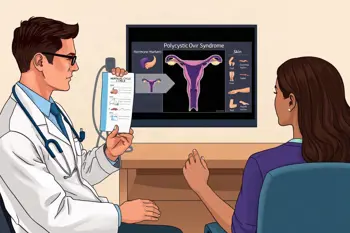
What an ultrasound can and cannot show
Ultrasound may show ovaries with numerous small follicles, sometimes described as polycystic ovarian morphology. The follicles are immature, fluid-containing structures associated with eggs, rather than necessarily being dangerous cysts. The name PCOS can therefore be misleading because ovarian cysts are not required for diagnosis, and an ultrasound finding by itself does not establish the syndrome. 2
Clinical diagnostic frameworks commonly assess three features: ovulatory dysfunction, clinical or biochemical androgen excess, and polycystic ovarian morphology. In adults, two of these three findings may support a diagnosis after other causes have been excluded. Ultrasound is consequently one component of evaluation, not a standalone screening result, and some people with significant symptoms may not have a cyst-like ultrasound appearance. 4
How clinicians evaluate possible PCOS
Assessment generally begins with the timing and pattern of menstrual cycles, changes in hair or skin, weight history, fertility concerns, family history, and other medical factors. A physical examination may assess signs of androgen excess, blood pressure, weight-related measures, and skin changes. Blood tests can measure hormone levels, and ultrasound may be considered when clinically appropriate. 6
Because irregular periods, acne, hair growth, and weight changes have multiple possible causes, clinicians must exclude alternative conditions before assigning a PCOS diagnosis. In adolescents, irregular cycles can be normal during the first year after the first period and may take several years to settle. Pulse Today reports that ultrasound or anti-Müllerian hormone testing is not advised for PCOS assessment during the first eight years after menarche. 7
When symptoms warrant medical attention
Evaluation is appropriate when periods remain persistently irregular or absent, new facial or body hair appears, acne becomes severe or persistent, scalp hair thins, or pregnancy does not occur despite attempts. Symptoms that worsen over time also merit assessment because the pattern may reflect PCOS or another endocrine, reproductive, or metabolic condition. A healthcare professional can determine which examinations and tests are relevant. 5
Follow-up does not end with identifying reproductive symptoms. PCOS can affect metabolic and mental health as well as the reproductive system, and ongoing care may address cycle protection, androgen-related symptoms, fertility goals, glucose regulation, cholesterol, blood pressure, and weight-related risks. Treatment and monitoring are individualized, with clinical decisions based on symptoms, insulin resistance, reproductive priorities, and the results of evaluation. 4
Sources
- Penn Medicine, Polyendocrine Metabolic Ovarian Syndrome: Symptoms and Causes
- Cedars-Sinai, Understanding Polyendocrine Metabolic Ovarian Syndrome
- MSD Manual Consumer Version, Polyendocrine Metabolic Ovarian Syndrome
- Merck Manual Professional Edition, Polyendocrine Metabolic Ovarian Syndrome
- Acibadem Hospitals Group, PCOS Symptoms: Causes and When to Seek Care
- Acibadem Hospitals Group, Polycystic Ovary Syndrome: Symptoms, Diagnosis, and Management
- Pulse Today, Key Questions on Polycystic Ovary Syndrome
Authored by MyTrendSpot team