Early red flags of gallbladder issues: Clinical signs, warning patterns, and when evaluation matters
Early red flags of gallbladder issues can include intermittent pain beneath the right ribs, upper-middle abdominal discomfort, nausea, bloating, indigestion, and symptoms after a fatty or heavy meal. These signs can resemble ordinary digestive upset, but persistent pain, fever, jaundice, repeated vomiting, dark urine, or pale stools indicate a need for medical assessment rather than simple self-monitoring. 1
Recognizing the earliest pain pattern
The most characteristic early symptom is discomfort in the upper-right abdomen, although some people feel pain in the upper-middle abdomen or below the breastbone. Gallstone-related pain may begin after a meal, particularly when the gallbladder contracts to release bile for fat digestion. Descriptions range from a steady ache to gripping, sharp, or cramping pain. Episodes may spread toward the right shoulder, back, or area between the shoulder blades, which can make the source less obvious. 2
- Pain can begin about 20 to 30 minutes after eating in some reported cases. 3
- An episode may last from several minutes to a few hours. 4
- Symptoms can stop abruptly when a temporary blockage resolves, but recurring episodes still warrant clinical evaluation. 5
Digestive changes that may accompany pain
Nausea, vomiting, bloating, belching, indigestion, fullness, and reduced tolerance of fried or greasy foods can accompany gallbladder-related pain. These symptoms may be more noticeable after a large or fatty meal because the gallbladder is stimulated to empty. However, digestive symptoms alone are not specific to gallbladder disease. Reflux, ulcers, pancreatitis, liver conditions, and other gastrointestinal problems can produce overlapping complaints, so symptom patterns cannot establish a diagnosis by themselves. 6
- Meal-related nausea or discomfort may recur after similar foods. 7
- Vomiting becomes more concerning when it is repeated or occurs with persistent abdominal pain. 1
- Many gallstones cause no symptoms unless they obstruct bile flow or trigger inflammation. 8
Red flags suggesting inflammation or infection
A change from brief, intermittent attacks to steady or progressively worsening pain is clinically important. Fever or chills combined with right-upper-abdominal tenderness may indicate acute inflammation of the gallbladder, commonly called cholecystitis, or an infection associated with impaired bile drainage. Persistent vomiting can contribute to dehydration and may accompany a more serious obstruction. These findings should be assessed promptly, particularly when pain does not settle or becomes severe. 3
- Persistent right-upper-abdominal pain is more concerning than a short-lived episode. 4
- Fever or chills with abdominal pain can signal inflammation or infection. 9
- Severe pain that continues for more than a few hours is a warning pattern. 1
Signs of bile-duct blockage
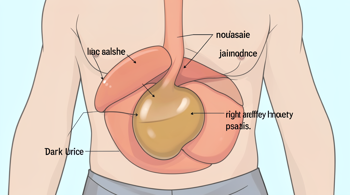
Yellowing of the skin or the whites of the eyes, known as jaundice, can occur when bile cannot pass normally through the bile ducts. Dark urine and unusually pale or light-colored stools are additional changes associated with impaired bile flow. Jaundice accompanied by abdominal pain, fever, vomiting, or chills can reflect a complication involving the gallbladder or bile ducts rather than an uncomplicated food-related episode. Such combinations require prompt medical attention. 10
| Observed change | Possible clinical significance |
|---|---|
| Yellow skin or eyes | May indicate impaired bile drainage or duct blockage. 10 |
| Dark urine | Can occur alongside jaundice when bile flow is disrupted. 1 |
| Pale or light-colored stools | May reflect reduced bile reaching the intestine. 6 |
How clinicians distinguish possible causes
Evaluation generally begins with a medical history and physical examination focused on pain location, timing, meal association, radiation, vomiting, fever, and visible color changes. Blood tests may help identify inflammation, infection, or abnormalities involving the liver and bile ducts. Ultrasound is commonly used to look for gallstones, gallbladder changes, or evidence of blocked flow. Additional imaging or endoscopic procedures may be considered when the initial findings do not explain symptoms. 1
- The history should record whether episodes recur and whether fatty foods appear to trigger them. 3
- Physical examination helps assess abdominal tenderness and the possibility of inflammation. 9
- Imaging is important because symptoms overlap with several non-gallbladder conditions. 8
What to monitor and what to avoid assuming
A symptom diary can document meal timing, pain location, duration, radiation, nausea, vomiting, fever, urine color, and stool color for discussion with a clinician. Avoiding the assumption that every episode is indigestion is important because gallbladder attacks may recur and become more intense over time. At the same time, no single symptom proves that gallstones are responsible. Chest or upper-abdominal pain can have other serious causes, so unusual, severe, or unexplained pain requires appropriate medical assessment. 5
- Record whether pain is right-sided, central, or radiating to the back or shoulder. 2
- Note repeated vomiting, fever, chills, jaundice, dark urine, or pale stools. 10
- Seek prompt medical evaluation for severe ongoing pain or combinations of pain with fever, vomiting, or jaundice. 3
Sources
- National Institute of Diabetes and Digestive and Kidney Diseases, Gallstones: Symptoms and Causes
- Mayo Clinic, Gallstones: Symptoms and Causes
- Wood County Hospital, Gallbladder Warning Signs: A Flare-Up vs. A Medical Emergency
- Southeast Michigan Surgical Specialists, Early Warning Signs of Gallstones
- Harvard Health Publishing, Gallstones: A to Z
- Johns Hopkins Medicine, Gallstones
- Cleveland Clinic, Gallstones
- MedlinePlus, Gallstones
- Stanford Health Care, Gallstones
- Acibadem Hospitals Group, Gall Bladder Symptoms: Common Signs and Red Flags
Authored by MyTrendSpot team