Natural approaches for joint flexibility and mobility: An evidence-based analysis
Defining flexibility, mobility, and range of motion
Flexibility describes how far a muscle and its surrounding soft tissues can lengthen, while mobility describes controlled movement through a joint’s available range. Range of motion includes both trainable factors, such as soft-tissue extensibility and neural control, and less-modifiable factors, including bone structure. Treating these terms as interchangeable can lead to inappropriate exercise choices and inaccurate expectations. 1
A person may therefore demonstrate considerable flexibility during a passive stretch but still have limited active control, strength, or joint function. Recent sports-science commentary also notes that flexibility training is broader than stretching: strength exercises performed at long muscle lengths and foam rolling may produce comparable chronic range-of-motion gains. 2
Movement as the foundation of joint mobility
Regular, low-impact movement is a central natural approach because prolonged sitting is associated with reduced hamstring extensibility and increased stiffness. Swimming, cycling, walking, and other controlled activities can provide repeated joint motion with less impact than high-load exercise. The available research emphasizes consistency rather than isolated sessions, since mobility adaptations depend on repeated exposure and adequate tolerance. 3
Exercise selection should reflect symptoms, current capacity, and the joint involved. A six-week randomized trial in adults with radiographic knee osteoarthritis compared isometric training alone with isometric training combined with mobilization with movement. Both groups improved over time, but the combined approach produced faster and larger changes in pain, quadriceps strength, and disability. 4
Stretching methods and measurable outcomes
Static stretching can increase maximal range of motion, although high intensity or long duration may temporarily reduce maximal isometric strength. Dynamic stretching can improve range of motion while preparing the body for movement, making it a practical option before activity. Proprioceptive neuromuscular facilitation uses contraction and relaxation cycles and represents another method with distinct intensity and volume requirements. 5
A 12-week study of dynamic hamstring stretching involved 18 healthy young adults who trained one leg three times each week while the other leg served as a control. Knee extension range of motion and stretch tolerance increased in the trained limb, while biceps femoris stiffness decreased. Knee flexor strength measures did not change significantly, indicating that flexibility gains did not automatically produce measurable strength losses or gains. 6
Self-massage, yoga, and controlled practice
Self-massage may be useful as an adjunct to stretching, but the available evidence is limited and population-specific. A randomized trial included 42 male college students aged 18 to 25 with reduced hamstring extensibility. Participants completed either daily Ayurvedic self-massage combined with stretching or stretching alone for four weeks, with outcomes including hand-toe distance, knee extension, hip flexion, muscle stiffness, and stretch tolerance. 7
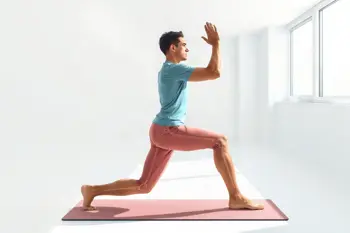
Yoga and mobility routines can combine active range, balance, breathing, and controlled transitions, although results depend on the movements used and the participant’s starting condition. A daily routine should avoid forcing painful end positions. Stretching research indicates that improved range may reflect greater stretch tolerance as well as changes in tissue stiffness, so a larger movement angle does not necessarily prove that a joint structure has changed. 2
Nutrition, hydration, and body composition
Nutrition affects the tissues and systems that support movement, but dietary claims require careful interpretation. The supplied evidence identifies anti-inflammatory eating patterns, omega-3 fatty acids, vitamin D status, and adequate hydration as relevant areas for joint and muscle health. These factors should be considered alongside total dietary quality rather than treated as isolated solutions. Vitamin D is particularly relevant when deficiency is suspected, because status is associated with muscle function and musculoskeletal symptoms. 8
Body weight also influences mechanical loading on weight-bearing joints, especially the knees. A clinical overview of osteoarthritis identifies excess body weight as a contributor to stress on these joints. Hydration supports normal physiological function, but claims that additional fluid alone can restore damaged cartilage or reverse structural disease are not supported by the supplied research. Nutrition and hydration are supportive measures, not substitutes for assessment of persistent pain or swelling. 9
Supplements and the limits of natural claims
The supplied UK guide lists devil’s claw, cod liver oil, glucosamine, and vitamin D3 with K2 among supplements discussed for mobility. However, the guide is an industry-authored source, and its statements should not be treated as equivalent to results from a large independent clinical trial. Supplement effects can vary by formulation, dose, baseline deficiency, diagnosis, medication use, and outcome measured. “Natural” describes origin, not guaranteed safety or effectiveness. 1
Curcumin, collagen peptides, and omega-3 products are also frequently discussed in joint-health literature, but evidence for reducing discomfort or improving function is not uniform across populations. Potential interactions, allergies, digestive effects, bleeding risks, and quality-control differences should be considered before use. Supplements should not delay evaluation of unexplained swelling, injury, progressive loss of function, fever, or severe pain. Regulatory oversight and product testing may differ by jurisdiction. 10
Safety, progression, and realistic expectations
Mobility work should progress gradually, remain within tolerable limits, and distinguish normal stretching discomfort from sharp, escalating, or joint-line pain. Recent research in older adults found that passive stretching improved passive range of motion, while adding vibration produced an additional active-range benefit in a very small sample of eight participants. The finding is interesting but cannot establish that vibration is necessary for general mobility training. 11
Research also varies widely in sample size, age, diagnosis, intervention duration, and measurement method. The 12-week hamstring trial involved healthy young adults, while the mobilization study involved people with knee osteoarthritis, so their findings should not be transferred automatically to every painful joint. A qualified clinician can help identify structural restrictions, inflammatory disease, neurological symptoms, or injuries that require a diagnosis rather than self-directed stretching. 6
How to evaluate a practical routine
A sensible routine can combine gentle dynamic movement before activity, controlled strengthening through comfortable ranges, and static stretching after activity or during a separate session. Progress can be tracked with functional measures such as easier stair use, improved reaching, smoother walking, or greater active range, rather than flexibility tests alone. The distinction between passive and active movement is important because mobility requires control, not simply the ability to tolerate an externally applied stretch. 2
Consistency remains more important than aggressive intensity. The research reviewed here supports regular movement and targeted training, while also showing that outcomes depend on the joint, the diagnosis, and the chosen method. A routine that causes persistent swelling, worsening pain, instability, or loss of function should be stopped and assessed. Natural strategies can support movement quality, but they cannot change every anatomical limitation or replace condition-specific rehabilitation. 4
Sources
- Nutrivity, “How to Improve Joint Mobility Naturally,” https://nutrivity.co.uk/how-to-improve-joint-mobility-naturally/
- Springer Nature, “One of These Things Is Not Like the Others,” https://link.springer.com/article/10.1007/s40279-026-02425-4
- Springer Nature, “Muscle Stretching,” https://link.springer.com/article/10.1186/s40798-025-00925-7
- Springer Nature, “Mobilization with Movement Enhances Early Rehabilitation Outcomes,” https://link.springer.com/article/10.1186/s12998-026-00636-0
- Springer Nature, “Muscle Stretching: Exploring Different Modalities,” https://link.springer.com/article/10.1186/s40798-025-00925-7
- Springer Nature, “Effect of 12-week Dynamic Stretching of Hamstrings,” https://link.springer.com/article/10.1007/s00421-026-06309-3
- Frontiers, “Nitya-Abhyanga Combined with Stretching,” https://www.frontiersin.org/journals/sports-and-active-living/articles/10.3389/fspor.2026.1800782/full
- National Institutes of Health, “Vitamin D Fact Sheet,” https://ods.od.nih.gov/factsheets/VitaminD-HealthProfessional/
- Mayo Clinic, “Osteoarthritis Symptoms and Causes,” https://www.mayoclinic.org/diseases-conditions/osteoarthritis/symptoms-causes/syc-20351925
- PubMed, “Curcumin and Joint Health Research,” https://pubmed.ncbi.nlm.nih.gov/27533649/
- Springer Nature, “Passive Stretching with and without Vibration,” https://link.springer.com/article/10.1007/s11332-025-01643-z
Authored by MyTrendSpot team