Best facilities for orthopedic surgery: A data-based guide to hospital capabilities and rankings
The phrase “Best facilities for orthopedic surgery” usually refers to hospitals and surgery centers distinguished by surgical expertise, patient safety, postoperative care, and measurable outcomes. Available 2026 research identifies a broad group of facilities rather than one universally superior institution, because national rankings, specialty evaluations, and hospital-reported capabilities assess different aspects of orthopedic care.
How orthopedic facilities are evaluated
Money’s 2026 orthopedic hospital list included 75 hospitals reviewed by its editorial team, with emphasis on safe procedures, experienced orthopedic surgeons, attentive postoperative care, and patient experience. The publication also assessed price transparency as a separate consideration by comparing final bills with publicly listed prices, although that factor was not scored in the ranking. 1
Other evaluations use different measures. Newsweek and Statista’s 2026 American specialized-care ranking considered professional and hospital-manager surveys, patient-experience data, patient-reported outcomes, and specialty-specific safety and quality measures. U.S. News’ ambulatory surgery evaluation focuses on complications, unplanned admissions, and emergency-department visits after outpatient procedures, showing why hospital and ambulatory-center rankings should not be treated as interchangeable. 5 7
Leading specialty and academic hospitals
Hospital for Special Surgery in New York was named No. 1 in orthopedics in Newsweek’s “America’s Best Hospitals for Specialized Care 2026” ranking. The same reporting states that HSS was also recognized for neurological care and that Lerner Children’s Pavilion was named among America’s Best Children’s Hospitals for pediatric orthopedics. 5
NYU Langone Orthopedic Hospital was described by NYU Langone as the No. 2 orthopedic program in the country according to U.S. News. Its reported development model centers on integration with a major academic medical center, shared quality protocols, integrated data systems, and coordinated standards across facilities in Brooklyn and Long Island. 8 These examples illustrate the role of specialty depth, academic infrastructure, and system-wide quality processes in evaluating complex orthopedic programs.
Examples of specialized facility capabilities
Montefiore Einstein’s Comprehensive Orthopedic and Spine Center in West Nyack describes itself as a freestanding outpatient musculoskeletal facility offering diagnosis, treatment, and rehabilitation for adults and children. Its multidisciplinary team includes orthopedics, neurosurgery, rheumatology, podiatry, physical medicine and rehabilitation, radiology, and pain management. The center reports a top-1% U.S. News ranking for orthopedic surgery and rehabilitation. 2
Sanford Orthopedic Hospital in Sioux Falls opened with 12 operating rooms dedicated to orthopedics and an intraoperative MRI described as the first of its kind in South Dakota. The reported use cases include orthopedic surgery, spine procedures, and tumor removal, with the technology intended to help teams identify critical locations during surgery. 10 These capabilities may be relevant to complex cases, but the presence of advanced equipment alone does not establish superior outcomes for every procedure.
| Facility type | Reported emphasis | Relevant evaluation question |
|---|---|---|
| Specialty hospital | Orthopedic concentration and subspecialty expertise | Does the facility regularly treat the specific diagnosis? |
| Academic medical center | Research, multidisciplinary support, and complex care | Are related medical and surgical services integrated? |
| Ambulatory surgery center | Outpatient safety and recovery performance | Are complications, admissions, and emergency visits measured? |
Joint replacement and robotic-assisted surgery
Acibadem’s International Joint Center in Istanbul reports care for shoulder, hip, knee, ankle, and other joint conditions, including imaging, arthroscopy, joint replacement, and rehabilitation planning. Its published figures include 125 specialists, 19 hospitals, 57 treatments, seven JCI-accredited hospitals within the group, and typical knee or hip replacement surgery times of 45 to 90 minutes. 3
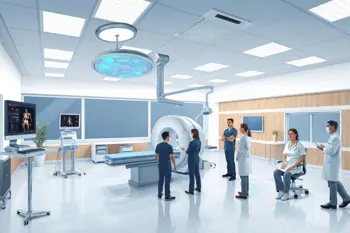
The center also reports 3D implant planning based on a patient’s anatomy, robotic-assisted options for knee and hip surgery, and typical hospital stays of one to three days for knee or hip replacement. Its affiliated facility description cites advanced operating rooms, intraoperative monitoring, regional and general anesthesia, minimally invasive techniques, and robotic-assisted procedures. 3 9 These published metrics describe program offerings, not guaranteed results for an individual patient.
Ambulatory centers and outpatient orthopedic care
U.S. News’ 2026 ambulatory-center recognition covered the top 15% of centers in each specialty, according to Orthopedic Associates Surgery Center. The evaluation used objective measures involving complications, unplanned hospital admissions, and emergency-department visits after outpatient procedures. OASC was identified as one of the recognized orthopedic centers in that year’s assessment. 7
A regional listing compiled by Southern California Orthopedic Institute identified more than 200 orthopedic ambulatory surgery centers on the U.S. News list, including more than 50 in the western United States. The listed facilities span Alaska, Arizona, California, Colorado, and other states, and include dedicated orthopedic centers as well as broader ambulatory surgery facilities. 6 Geographic availability therefore varies substantially, while outpatient suitability depends on the procedure, medical condition, anesthesia assessment, and postoperative support plan.
Risks, oversight, and selection considerations
Orthopedic surgery can involve different levels of complexity, from outpatient procedures to joint replacement, spine surgery, pediatric reconstruction, and musculoskeletal tumor care. The research shows that facilities emphasize different strengths, including multidisciplinary expertise, robotic navigation, intraoperative imaging, rehabilitation, pediatric orthopedics, or outpatient safety. A ranking position should therefore be interpreted alongside the surgeon’s experience with the specific operation and the facility’s ability to manage complications.
Patients and referring clinicians should examine how a facility reports outcomes, whether the quoted ranking applies to inpatient or outpatient care, and which accreditation or regulatory framework governs the institution. Acibadem reports seven JCI-accredited hospitals within its group, while U.S. News ambulatory assessments focus on post-procedure events rather than every aspect of hospital care. 3 Questions about revision-surgery support, emergency coverage, rehabilitation, implant selection, follow-up location, and the full expected bill can expose practical limitations that a headline ranking may not show.
International care introduces additional coordination issues, including travel, medical-record transfer, communication after discharge, and arrangements for follow-up or complications. The supplied research reports typical treatment times and hospital stays for Acibadem’s joint center, but those figures should not be interpreted as eligibility criteria or a personal recovery forecast. 3 A balanced comparison should prioritize clinical fit, safety evidence, continuity of care, and transparent explanations of uncertainty over a single numerical ranking.
Sources
- Money, “Best Hospitals for Orthopedic Surgery”
- Montefiore Einstein Comprehensive Orthopedic and Spine Center
- Acibadem International, “Orthopedic Surgery Turkey”
- Hospital for Special Surgery, “HSS Ranked No. 1 in the World for Orthopedics by Newsweek”
- Hospital for Special Surgery, “HSS Ranked No. 1 in Orthopedics in Newsweek’s Best Hospitals for Specialized Care”
- Southern California Orthopedic Institute, “The Best Orthopedic ASCs in the West”
- Orthopedic Associates Surgery Center, U.S. News 2026 recognition
- NYU Langone Health Physician Focus, “Two Decades of Integration That Built a Top Orthopedic Program”
- Acibadem International Joint Center, “World-Class Facilities and Resources”
- SiouxFalls.Business, “New Sanford Orthopedic Hospital Enhances Care and Patient Experience”
Authored by MyTrendSpot team