Liver Health Support Supplements: Evidence, Formulations, and Safety Considerations
Liver Health Support Supplements are commonly presented as tools for detoxification, antioxidant defense, digestion, bile flow, and metabolic wellness. The category includes milk thistle, NAC, alpha-lipoic acid, choline, selenium, turmeric, artichoke, dandelion, and combination formulas, but marketing claims do not automatically establish treatment value for liver disease.
What liver support supplements are intended to do
The liver performs more than 500 known functions, including processing nutrients, medications, and alcohol, regulating blood sugar, storing vitamins, producing bile, and filtering waste. Supplement labels typically translate these functions into claims involving healthy liver function, natural detoxification pathways, fat metabolism, toxin removal, or cellular antioxidant protection. These statements describe intended wellness support rather than proof that a supplement can reverse liver injury or cure a diagnosed condition. 1
Commercial formulas vary substantially. Some contain one standardized botanical, while others combine nutrients and herbs such as choline, milk thistle, selenium, NAC, alpha-lipoic acid, turmeric, artichoke, dandelion, schisandra, glutathione-related compounds, and L-carnitine. Product pages reviewed for this category show serving sizes ranging from one daily capsule to three capsules with a meal, demonstrating why ingredient labels and directions require individual review. 11 12
Milk thistle and silymarin
Milk thistle is the most extensively researched supplement ingredient associated with liver health. Its principal active mixture, silymarin, is studied for antioxidant and anti-inflammatory activity. The National Center for Complementary and Integrative Health notes that milk thistle has been investigated for several liver-related conditions, but the available evidence has not established consistent benefits across all uses. Research interest therefore does not equal a universal clinical recommendation. 1
Formulation quality matters because products may differ in extract concentration, standardization, and labeling. One practitioner-oriented product, for example, describes milk thistle extract standardized to 30% silybins, while another lists 160 milligrams of a branded milk thistle extract per serving. Such figures cannot be compared directly without knowing the full extraction and standardization details. Milk thistle also warrants professional review when liver disease or prescription medication use is involved. 13 14
NAC, glutathione, and alpha-lipoic acid
N-acetylcysteine, or NAC, has a clearly established emergency medical role in acetaminophen overdose because it replenishes glutathione and can reduce acute liver failure risk when used under medical supervision. That hospital application should not be confused with evidence that an over-the-counter NAC product prevents ordinary liver damage. Dose, timing, cause of injury, and clinical monitoring are central to its medical use. 2
Alpha-lipoic acid is included in many liver-support blends because it participates in antioxidant systems and has been studied in relation to metabolic health and non-alcoholic fatty liver disease. Product formulas frequently pair it with NAC, selenium, milk thistle, or glutathione support. The available research is promising in selected contexts but does not establish that combination supplements treat fatty liver disease. A diagnosis requires medical assessment, not label-based self-treatment. 3 13
Botanicals, bile flow, and metabolic claims
Artichoke leaf extract is commonly used in liver formulas because cynarin and related compounds may influence bile production and lipid metabolism. Dandelion root is traditionally associated with digestion and “detox” practices, but human clinical evidence confirming hepatoprotective effects remains insufficient. Traditional use can explain why an ingredient appears in a formula, but it cannot substitute for controlled human evidence or establish an appropriate treatment for abnormal liver tests. 5 10
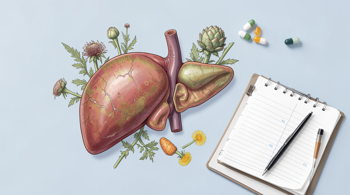
Turmeric and its active compound curcumin have shown potential in preclinical and clinical research concerning inflammation and fatty liver, while TUDCA is being studied for its effects on endoplasmic reticulum stress and liver-cell survival. These ingredients are research subjects, not automatic therapies. Some products also include choline, which contributes to normal liver and lipid metabolism, and selenium, an antioxidant-related mineral. Individual nutritional status affects whether supplementation is relevant. 4 6 12
Vitamin E and condition-specific treatment
Vitamin E is sometimes recommended medically for particular patients with non-alcoholic steatohepatitis, a specific form of fatty liver disease. The Mayo Clinic describes it as a treatment option in selected circumstances rather than a universal supplement for everyone with elevated liver enzymes or fatty liver. Medical eligibility, underlying conditions, medication risks, and follow-up testing influence whether it is appropriate. 7
This distinction illustrates a broader principle: evidence for an ingredient may apply only to a defined diagnosis, dose, population, or clinical endpoint. A general wellness capsule containing vitamin E, curcumin, or milk thistle is not equivalent to a supervised treatment protocol. Liver health management may require addressing alcohol exposure, metabolic disease, viral hepatitis, medication effects, or other causes identified through professional evaluation.
Safety, quality control, and label review
The FDA does not approve dietary supplements for preventing, treating, or curing liver disease before they reach consumers. Supplements are regulated differently from prescription medicines, and quality, contamination control, potency, and accuracy of claims can vary. Some reviewed manufacturers report third-party testing for identity, heavy metals, bacteria, contaminants, or potency, but a testing statement does not prove clinical effectiveness. 8 11 15
Potential harm is an essential part of the evidence review. High-dose green tea extract has been associated with possible hepatotoxicity in some individuals, and kava and comfrey are also recognized concerns for drug-induced liver injury. People with jaundice, dark urine, severe abdominal pain, persistent nausea, unusual itching, or abnormal liver tests should seek medical evaluation rather than adding a supplement. Combining several blends can also duplicate herbs or minerals and complicate safety monitoring. 9
How to evaluate a formulation objectively
A useful review begins with the Supplement Facts panel, not the front-label promise. Record each active ingredient, amount per serving, extract standardization, serving instructions, allergen information, manufacturer quality statements, and the intended duration of use. Combination products can contain seven or more nutrients and botanicals, while broader formulas may list more than 30 ingredients. More ingredients do not establish greater effectiveness and may make adverse reactions harder to identify. 12 14
| Evaluation point | Why it matters |
|---|---|
| Clinical purpose | Separates general wellness claims from disease treatment. |
| Standardized extracts | Improves clarity about the active compounds being measured. |
| Third-party testing | Addresses identity and contamination concerns, not efficacy. |
| Medication and diagnosis review | Helps identify interactions and inappropriate self-treatment. |
Sources
- National Center for Complementary and Integrative Health, Milk Thistle
- StatPearls, N-Acetylcysteine
- PubMed Central, Alpha-Lipoic Acid and Non-Alcoholic Fatty Liver Disease
- ScienceDirect, Tauroursodeoxycholic Acid
- Healthline, Artichoke Benefits
- Cleveland Clinic, Turmeric Benefits
- Mayo Clinic, Non-Alcoholic Fatty Liver Disease Treatment
- U.S. Food and Drug Administration, Dietary Supplements
- LiverTox, Green Tea
- Mount Sinai, Dandelion
- Cymbiotika, Liver Health+
- MitoQ, MitoQ+ Liver
- Hebron Nutrition, XYMOGEN Liver Protect
- VitaminExpress, Liver Vital Pro
- LifeSource Vitamins, Ultra Liver Complex
Authored by MyTrendSpot team