Natural ways to ease menopause symptoms at home: Evidence-Based Guidance for Daily Symptom Management
Natural ways to ease menopause symptoms at home include practical steps for hot flushes, night sweats, sleep disruption, mood changes, vaginal dryness, and bone health. Evidence from public health and medical organizations supports lifestyle adjustments, while also showing that “natural” does not automatically mean effective or safe.
Cooling strategies for hot flushes and night sweats
Hot flushes are sudden episodes of heat and sweating that can last from about 30 seconds to five minutes, while night sweats can interrupt sleep and contribute to fatigue, irritability, and forgetfulness. Johns Hopkins reports that hot flushes affect daily functioning severely for approximately 10% to 15% of women, making symptom tracking and medical discussion important when normal activities are disrupted. 7
At home, lightweight clothing, breathable bedding, a cool bedroom, a fan, a cool shower, or a cold drink may improve comfort. The NHS also identifies spicy foods, caffeine, hot drinks, smoking, and alcohol as possible triggers to reduce or avoid. Stress reduction and regular exercise may further support symptom management, although individual triggers vary. 1
Sleep routines, relaxation, and mental wellbeing
Regular sleep routines are a central lifestyle measure recommended for perimenopause and menopause. Keeping the bedroom cool can help with night sweats, while consistent bed and waking times may make sleep disruption more manageable. Healthdirect notes that sleep difficulties and mood swings can result from changing hormone levels, so sleep support should be considered alongside emotional wellbeing rather than treated as a separate issue. 2
Relaxation practices such as yoga, tai chi, meditation, paced breathing, and other stress-management techniques can be incorporated at home. Cognitive behavioural therapy, or CBT, is a non-drug approach that can help with low mood, anxiety, sleep problems, and hot flush management. These methods do not eliminate hormonal changes, but they may improve coping, symptom perception, and quality of life. 1
Exercise, weight management, and bone protection
Regular physical activity can support several areas affected by menopause. NHS guidance recommends exercise with an emphasis on weight-bearing activity to build strength and help protect against weakening bones. The University of Maryland Medical System also describes combining cardiovascular exercise with strength training, including light weights or Pilates, as useful for maintaining bone density and supporting mood. 3
Maintaining a healthy weight may help reduce the impact of vasomotor symptoms, and both Healthdirect and NHS guidance identify healthy weight management as part of a broader lifestyle approach. Exercise should be regular and suitable for current fitness, health conditions, and mobility. A gradual routine that combines aerobic movement with strengthening is more relevant to long-term wellbeing than relying on a single activity. 2
Food choices and nutrients during menopause
A healthy, balanced diet is consistently recommended during perimenopause and menopause. Calcium-rich foods such as milk, yoghurt, and kale support bone health, while diets containing whole grains, legumes, fish, healthy proteins, and antioxidant-rich foods are described as part of a Mediterranean-style pattern that may support healthy weight and reduce inflammation. 1 3
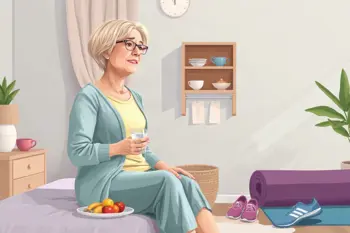
Calcium and vitamin D are important considerations for maintaining bone strength during the menopausal transition, while omega-3 fatty acids are included in general nutrition guidance for hormonal health. Soy foods contain plant isoflavones and may provide modest relief from hot flushes for some people, but effects are not uniform. Food-based approaches should complement, not replace, assessment of significant symptoms or bone-health concerns. 6
Vaginal dryness and bladder-related symptoms
Vaginal dryness is a recognized menopause symptom and may affect comfort and sexual wellbeing. NHS inform lists vaginal moisturisers and lubricants among approaches used for dryness, while also identifying vaginal creams, tablets, pessaries, gels, or rings as clinical options. Products and treatments are not interchangeable, so persistent discomfort should be discussed with a healthcare professional. 9
Pelvic floor exercises may help bladder symptoms such as sudden urges to urinate or leakage when coughing, sneezing, laughing, or lifting. These exercises are a home-based measure, but new, severe, or persistent urinary symptoms should not automatically be attributed to menopause. The NHS advises seeking healthcare support when symptoms are difficult to control or when treatment side effects continue. 9
Supplements, herbal remedies, and safety limits
Herbal supplements require more caution than their “natural” label may suggest. The University of Maryland Medical System notes that many supplements are not regulated by the FDA in the same way as medicines, so ingredients, doses, and quality can vary. The NHS and Healthdirect both advise speaking with a doctor or pharmacist before starting herbal, complementary, or other new remedies. 3 2
Black cohosh is commonly used for hot flushes, but research findings about its effectiveness are inconsistent. Soy isoflavones may offer mild relief for some individuals, yet neither option should be treated as a guaranteed solution. Supplement use also requires attention to existing medical conditions, other medicines, and personal eligibility. When symptoms substantially affect sleep, mood, work, or daily activities, non-hormonal medicines and hormone therapy can be discussed with a qualified clinician. 2 7
When home measures are not enough
Menopause symptoms vary widely, from mild or absent symptoms to problems lasting for years. Healthdirect reports that many people experience symptoms for up to eight years, while Johns Hopkins describes hot flushes lasting on average five to ten years. These ranges explain why a strategy may need adjustment over time rather than being judged after one day or one isolated change. 2 7
Medical advice is appropriate when symptoms interfere with daily activities, remain difficult to control, or cause concern about another condition. Menopause usually does not require treatment if symptoms are not troubling, but treatments are available to ease symptoms and address longer-term concerns such as bone loss. Hormone therapy is not suitable for everyone, and decisions depend on medical history, risks, benefits, and personal preferences. 4 5
Sources
- NHS, “Things you can do to help menopause and perimenopause symptoms”: https://www.nhs.uk/conditions/menopause-and-perimenopause/things-you-can-do/
- Healthdirect, “Managing menopausal symptoms without medication”: https://www.healthdirect.gov.au/managing-menopausal-symptoms-without-medication
- University of Maryland Medical System, “Natural Relief for Menopause: What Works and What to Watch Out For”: https://health.umms.org/womens-health/natural-relief-for-menopause/
- Mayo Clinic, “Menopause: Diagnosis and treatment”: https://www.mayoclinic.org/diseases-conditions/menopause/diagnosis-treatment/drc-20353401
- Cleveland Clinic, “How To Manage Menopause Without Hormone Therapy”: https://health.clevelandclinic.org/menopause-without-hrt
- Medical News Today, “How to manage menopause”: https://www.medicalnewstoday.com/articles/how-to-manage-menopause
- Johns Hopkins Medicine, “Managing Hot Flashes: Tips from a Menopause Expert”: https://www.hopkinsmedicine.org/health/expert-qa/managing-hot-flashes-tips-from-a-menopause-expert
- Yahoo Health, “Do natural remedies for menopause really work?”: https://health.yahoo.com/your-body/womens-health/menopause/article/do-natural-remedies-for-menopause-really-work-191931782.html
- NHS inform, “Treating menopause symptoms”: https://www.nhsinform.scot/healthy-living/womens-health/later-years-around-50-years-and-over/menopause-and-post-menopause-health/treating-menopause-symptoms/
Authored by MyTrendSpot team