Comparing Common Types of High Blood Pressure Treatment: A Clinical Comparison
Comparing common types of high blood pressure treatment requires more than ranking medicines by how much they lower a reading. Antihypertensive drugs work through different mechanisms, and clinicians consider blood-pressure level, kidney and heart conditions, age, other medicines, and potential adverse effects when selecting therapy. 1
How the main treatment categories differ
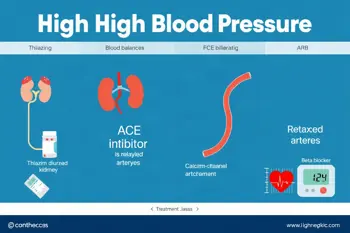
The four major first-line categories for uncomplicated hypertension are thiazide-type diuretics, angiotensin-converting enzyme inhibitors, angiotensin-receptor blockers, and calcium-channel blockers. Each lowers pressure through a different pathway: diuretics increase removal of sodium and fluid by the kidneys, while the other classes relax blood vessels or interrupt systems that raise vascular pressure. 2
Beta blockers are also used in hypertension, but they are generally not preferred as initial treatment for uncomplicated cases. They may have a stronger clinical role when high blood pressure occurs alongside coronary artery disease, a previous heart attack, heart failure, or selected rhythm disorders. 2
Diuretics: fluid and sodium management
Thiazide diuretics, including hydrochlorothiazide, lower blood pressure partly by helping the body excrete extra sodium and water. They are commonly used for mild to moderate hypertension and remain one of the established first-line options. Their practical advantages include a straightforward dosing approach and effectiveness in patients whose pressure is sensitive to sodium intake. 1
The principal limitation is the need to monitor laboratory values and individual tolerance. Diuretics can lower sodium or potassium and may increase uric acid, glucose, or calcium levels. These effects do not automatically rule out treatment, but they make kidney function, electrolytes, and relevant medical history important parts of follow-up. 2
ACE inhibitors and ARBs: blocking the renin-angiotensin system
ACE inhibitors and ARBs act on the renin-angiotensin system, which influences blood-vessel constriction and fluid regulation. Both are recognized first-line options, and they can be particularly useful when hypertension is accompanied by chronic kidney disease with albuminuria. They should not be used together because combined blockade can increase safety concerns without being a routine treatment strategy. 2
ACE inhibitors may produce a persistent dry cough and, rarely, angioedema involving swelling of the face, lips, tongue, or throat. An ARB is often considered when cough limits an ACE inhibitor. The choice still requires clinician review because kidney function, potassium levels, pregnancy status, and other contraindications can affect eligibility. 1
Calcium-channel blockers and beta blockers
Calcium-channel blockers reduce pressure by relaxing blood vessels or, in some forms, slowing cardiac conduction. Dihydropyridine medicines commonly cause ankle swelling, flushing, headache, or palpitations. Non-dihydropyridine agents can slow heart rate, so the distinction between subtypes matters when a patient has a conduction problem or takes other medicines that affect cardiac rhythm. 1
Beta blockers reduce certain effects of adrenaline on the heart and circulation. Their use is often guided by a related diagnosis rather than blood pressure alone. They may be appropriate for coronary disease, heart failure, prior myocardial infarction, or some arrhythmias, while their routine use as first treatment for uncomplicated hypertension is less favored. 2
What comparative blood-pressure evidence shows
A systematic review of randomized, double-blind, placebo-controlled trials involving more than 100,000 patients found that standard-dose monotherapy lowered placebo-corrected systolic pressure by approximately 9 mm Hg from baseline. Doubling the dose produced an additional reduction of about 1.5 mm Hg, indicating that increasing one medicine's dose may provide less additional effect than expected. 3
In the same analysis, standard-dose ACE inhibitors reduced systolic pressure by about 7 mm Hg, while ARBs and beta blockers produced reductions of about 9 mm Hg. The broader evidence also found that standard-dose dual therapy lowered systolic pressure more than monotherapy at twice the standard dose. These results describe group averages, not a guarantee for an individual patient. 3
| Class | Typical clinical focus | Important monitoring issue |
|---|---|---|
| Thiazide diuretics | Sodium and fluid reduction | Electrolytes, uric acid, glucose |
| ACE inhibitors | Renin-angiotensin system blockade | Cough, angioedema, kidney function, potassium |
| ARBs | Renin-angiotensin system blockade | Kidney function and potassium |
| Calcium-channel blockers | Vessel relaxation or heart-rate control | Swelling, headache, heart rate |
| Beta blockers | Heart-rate and cardiac-condition management | Heart rate and condition-specific tolerance |
Combination treatment, monitoring, and lifestyle measures
Many patients require more than one antihypertensive medicine to reach an individualized target. Recent clinical summaries describe four principal first-line classes and note that treatment combinations are selected according to stage, cardiovascular risk, diabetes, kidney disease, and other diagnoses. Up to 30% of adults discussed in one Harvard Health review were reported to require three medicines, illustrating the maintenance complexity of hypertension care. 6
When blood pressure remains uncontrolled despite three medicines that include a diuretic, spironolactone is a commonly considered add-on option, subject to kidney-function and potassium monitoring. Medication is only one part of management: reducing dietary sodium, maintaining a healthy weight, exercising, limiting alcohol, and following a heart-healthy eating pattern are also described as relevant measures. 8
How clinicians weigh risks and individual circumstances
No single medication class is universally superior. Providers consider the height of the blood-pressure reading, age, health history, kidney status, cardiovascular disease, diabetes, pregnancy-related considerations, possible interactions, and the likelihood that adverse effects will interfere with continued use. The 2025 AHA and ACC guidance addresses medication thresholds, comorbidities, special populations, and screening for secondary causes. 4
Ongoing treatment involves repeated blood-pressure assessment and, for some medicines, laboratory or heart-rate monitoring. Other options, including aldosterone antagonists, alpha blockers, central-acting agents, vasodilators, and renin inhibitors, may be used when clinically indicated, but their role depends on the patient's response and associated conditions. Medication changes should therefore be individualized rather than based on comparative rankings alone. 7
Sources
- Cleveland Clinic, Types of Blood Pressure Medications
- NCBI Bookshelf, Antihypertensive Medications
- NEJM Clinician, Comparing Antihypertensive Medications’ Effects on Blood Pressure
- Medscape, 2025 AHA/ACC Guideline Summary
- Frontiers in Cardiovascular Medicine, Drug Class Comparisons and Combination Approaches
- Harvard Health, Taming High Blood Pressure: How Doctors Find the Right Drug Mix
- Drugs.com, High Blood Pressure Medications
- American Heart Association, NHLBI, Mayo Clinic, FDA, CDC, and related clinical references supplied in the research data
Authored by MyTrendSpot team