Rheumatoid Arthritis Symptoms: A Clinical Guide to Patterns, Warning Signs, and Evaluation
What rheumatoid arthritis symptoms can feel like
Rheumatoid arthritis is a chronic inflammatory disease that causes pain, stiffness, warmth, redness, and swelling in joints. It develops when immune activity targets the synovium, the tissue lining a joint, and inflammation can gradually damage cartilage, bone, tendons, and ligaments. Affected joints may eventually become misshapen or misaligned. Rheumatoid arthritis commonly follows a symmetrical pattern, so the same joint on both sides of the body may be involved. 1
The condition most often involves smaller joints in the hands and feet, although other synovial joints can also be affected. Pain may occur with tenderness, visible swelling, warmth, and reduced function. Stiffness is particularly important diagnostically when it persists after waking or after inactivity. Consumer clinical guidance describes morning stiffness lasting more than 60 minutes as a typical feature, while other referral guidance identifies stiffness lasting more than 30 minutes as a reason for clinical assessment. 2
Morning stiffness and symmetrical joint involvement
Morning stiffness in rheumatoid arthritis is not simply brief discomfort after sleep. It often lasts for at least 30 minutes and may continue for an hour or longer, reflecting ongoing joint inflammation. Stiffness can also recur after sitting or resting. The pattern may distinguish inflammatory arthritis from ordinary temporary soreness, although symptoms alone cannot establish a diagnosis. Persistent stiffness accompanied by swelling, heat, or loss of function is more clinically significant than isolated occasional aching. 3
Symmetry is another recognized pattern. Both wrists, both hands, or corresponding joints in the feet may become painful and swollen, although rheumatoid arthritis does not affect every person in exactly the same way. Symptoms can begin gradually and may fluctuate, with periods when inflammation becomes more noticeable and periods when symptoms are less active. Joint tenderness and swelling affecting the same areas on both sides of the body are findings clinicians consider during evaluation. 4
Whole-body symptoms associated with RA
Rheumatoid arthritis can produce symptoms beyond the joints because it is a systemic autoimmune disease. Fatigue, weakness, malaise, low-grade fever, reduced appetite, sweats, and unintended weight loss have all been described in clinical and patient guidance. These effects may appear alongside joint inflammation or may be prominent during periods of increased disease activity. Fatigue can be substantial and may not be explained by physical exertion alone, but it is not specific to rheumatoid arthritis. 2
Inflammatory disease may also involve connective tissues and organs outside the joints. Reported extra-articular areas include the skin, eyes, lungs, heart, blood vessels, and nerves. Firm rheumatoid nodules can develop under the skin, commonly near pressure points such as the elbows. Dry eyes or dry mouth may occur in association with inflammatory conditions. These findings do not appear in every patient, and their presence or absence does not independently confirm or exclude rheumatoid arthritis. 2
How symptoms may change over time
Rheumatoid arthritis symptoms may develop progressively rather than appearing all at once. Early complaints can resemble everyday aches, overuse, aging, or other forms of arthritis, which can make recognition difficult. Persistent synovial inflammation, however, can lead to structural damage and loss of function over time. Harvard Health describes a process in which thickened joint lining releases enzymes that can damage cartilage, bone, tendons, and ligaments surrounding the joint. 1
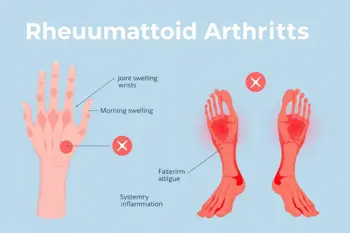
Symptoms may also vary in intensity. A period of worsening pain, swelling, stiffness, fatigue, or fever is commonly described as a flare, while symptoms may become less pronounced during quieter periods. Changes in function can include difficulty gripping, typing, walking, dressing, or using affected joints. Such limitations are clinically relevant because rheumatoid arthritis can cause progressive joint destruction, while disease-modifying treatment is intended to reduce symptoms and slow progression. 2
When persistent symptoms warrant evaluation
Medical evaluation is appropriate when joint pain, swelling, or stiffness persists rather than resolving. Guidance for patients identifies morning stiffness lasting more than 30 to 60 minutes, symptoms in three or more joints, warmth around a joint, symmetrical symptoms, low-grade fever, and fatigue as reasons to arrange an assessment. Manchester University NHS guidance emphasizes that suspected clinical synovitis should be referred for rheumatology assessment without relying on symptom duration alone. 5
There is no single symptom or laboratory result that proves rheumatoid arthritis. Diagnosis is primarily clinical and depends on the history, physical examination, pattern of joint involvement, and supporting laboratory or imaging findings. Early assessment matters because ongoing inflammation can cause irreversible joint damage and long-term disability. Other disorders, including different inflammatory and noninflammatory arthritides, can produce overlapping symptoms, so self-diagnosis based only on pain location or stiffness duration is unreliable. 5
Tests used alongside symptom assessment
Clinicians may order blood tests for rheumatoid factor, anti-cyclic citrullinated peptide antibodies, erythrocyte sedimentation rate, and C-reactive protein. ESR and CRP can indicate inflammation, but elevated results also occur in conditions other than rheumatoid arthritis. Rheumatoid factor may support a suspected diagnosis, yet it is not specific and can be positive in other autoimmune diseases or in people without rheumatoid arthritis. Results must therefore be interpreted with symptoms and examination findings. 3
Anti-CCP and rheumatoid factor testing is intended to support clinical suspicion, not to screen every person with widespread pain or fatigue. Healio clinical guidance reports that rheumatoid factor is present in approximately 75% to 85% of patients with established rheumatoid arthritis, while some patients remain seronegative. Imaging, including X-rays, may help identify joint changes, but normal early imaging or a negative blood test does not by itself eliminate the possibility of disease. 6
Sources
- Harvard Health, Rheumatoid Arthritis: https://www.health.harvard.edu/bones-and-joints/rheumatoid-arthritis-a-to-z
- Merck Manual Consumer Version, Rheumatoid Arthritis: https://www.merckmanuals.com/home/bone-joint-and-muscle-disorders/joint-disorders/rheumatoid-arthritis-ra
- Arthritis Foundation, Testing for Rheumatoid Arthritis: https://www.arthritis.org/diseases/more-about/testing-for-rheumatoid-arthritis
- Manchester University NHS Foundation Trust, Early Referral in Rheumatoid Arthritis Diagnosis: https://mft.nhs.uk/the-trust/other-departments/laboratory-medicine/information-for-gps/laboratory-medicines-newsletter-for-gps/out-on-a-limb-prioritising-clinical-suspicion-and-early-referral-in-rheumatoid-arthritis-diagnosis/
- Sharecare AskMD, Is It Time to See a Doctor for Rheumatoid Arthritis?: https://askmd.sharecare.com/learn/inflammation/arthritis/time-see-doctor-rheumatoid-arthritis/
- Healio, Diagnostic Testing and Imaging Studies for Rheumatoid Arthritis: https://www.healio.com/clinical-guidance/rheumatoid-arthritis/diagnostic-testing-and-imaging-studies-presentation-and-diagnosis
Authored by MyTrendSpot team