Early signs of kidney infection vs UTI: A Clinical Symptom Comparison
How a kidney infection differs from a bladder UTI
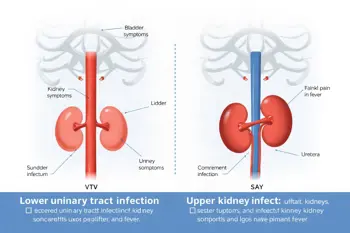
A urinary tract infection can affect the urethra, bladder, ureters, or kidneys, although most cases involve the lower urinary tract. A kidney infection, also called pyelonephritis, is a more specific type of UTI in which bacteria or viruses travel from the bladder through the ureters to one or both kidneys. 1 This anatomical distinction explains why symptoms can begin with familiar urinary discomfort and later develop into a broader illness. 4
Lower-tract infection is commonly associated with cystitis, or bladder inflammation. Typical symptoms include burning or pain during urination, urinary frequency, urgency, cloudy or strong-smelling urine, blood in the urine, and pressure in the lower abdomen or pelvis. 1 A kidney infection may include those same symptoms, but the presence of fever, chills, flank pain, nausea, vomiting, or marked malaise changes the clinical picture and warrants medical assessment. 2
Early UTI symptoms to recognize
The earliest signs of a bladder-focused UTI are usually localized to urination and the lower abdomen. Burning while urinating, an intense need to urinate, and frequent trips to the bathroom despite producing only small amounts are characteristic symptoms. Cloudy, dark, bloody, or unusually strong-smelling urine may also occur, along with pressure or pain above the pubic bone. 1 These findings do not by themselves establish whether the kidneys are involved.
Symptoms are more consistent with uncomplicated cystitis when urinary irritation occurs without vaginal discharge or irritation and without signs of systemic illness. Clinical descriptions of acute uncomplicated cystitis include dysuria, urgency, frequency, and suprapubic pain. 2 However, symptoms can be absent or atypical, particularly in older adults and people with other health conditions. Sudden confusion, agitation, unusual sleepiness, or declining daily function in an older adult should receive medical evaluation because behavioral changes have multiple possible causes. 1
Early signs that infection may have reached the kidneys
The clearest shift from a lower UTI toward kidney infection is the appearance of systemic illness. Fever above 38 degrees Celsius, chills or shaking, flank pain, tenderness near the back beneath the ribs, nausea, and vomiting are characteristic features of acute pyelonephritis. 2 Flank or mid-back pain is especially important because it indicates discomfort in the region of the upper urinary tract rather than only the bladder. 8
A person with a simple bladder infection may feel uncomfortable but otherwise remain relatively well. Kidney infection more often produces fatigue, body aches, persistent back or side pain, and a generally sick feeling. 6 Systemic symptoms can occur because infection in the kidneys may trigger a wider inflammatory response, and severe cases can progress to bloodstream infection or sepsis. 3 Urinary symptoms may be present, but they are not required in every kidney infection. 2
When symptoms require in-person medical care
Fever, chills, flank pain, vomiting, or worsening symptoms alongside urinary complaints should be treated as possible kidney involvement rather than assumed to be an uncomplicated bladder infection. Penn Medicine advises medical evaluation when symptoms do not resolve within a couple of days or are worsening, and identifies fever, chills, low back pain, nausea, and vomiting as signs of potentially more serious infection. 1 Pregnancy, diabetes, immune-system problems, urinary blockage, and difficulty emptying the bladder further increase concern. 4
Kidney infection can become dangerous because the infection may impair kidney function or spread into the bloodstream. 3 Confusion or altered mental status is particularly important in older adults, although it is not specific to UTI and can reflect several medical conditions. 11 Severe weakness, persistent vomiting, confusion, or signs of systemic deterioration should be assessed in an emergency setting rather than managed solely through self-care. The appropriate setting depends on symptom severity, pregnancy status, age, medical history, and the ability to keep fluids down.
How clinicians distinguish UTI from kidney infection
Diagnosis begins with the symptom history and a physical examination. Clinicians ask about dysuria, urgency, frequency, abdominal pain, flank pain, fever, chills, nausea, vomiting, prior infections, pregnancy, urinary obstruction, and conditions that affect immunity or bladder emptying. Examination may include checking for tenderness at the costovertebral angle, the area where the lower ribs meet the spine, because this finding supports upper-tract involvement. 14
Urinalysis can identify blood, white blood cells, bacteria, nitrites, or leukocyte esterase, while a urine culture can identify the responsible organism and help determine whether antibiotics are appropriate. 5 Blood tests may assess for serious infection and show how well the kidneys are functioning. Imaging such as computed tomography, magnetic resonance imaging, or other studies may be considered when obstruction, stones, structural abnormalities, or complications are suspected. 5 Symptoms alone can suggest the location, but testing helps guide treatment.
Risk factors, complications, and treatment considerations
Kidney infections are more common in females and during pregnancy. Risk also rises with a current or recent bladder infection, kidney stones or another urinary blockage, an enlarged prostate, urinary reflux, diabetes, immune-system problems, spinal cord injury, nerve damage around the bladder, or incomplete bladder emptying. 4 These factors can allow bacteria to remain in the urinary tract, travel upward, or resist normal urine flow. Men with urinary symptoms and people with structural or medical risk factors generally require individualized evaluation.
Urinary infections are treated with antibiotics when bacterial infection is diagnosed or strongly suspected, but kidney infections may require culture-guided therapy, closer observation, or intravenous antibiotics depending on severity. 3 Removing a urinary catheter, relieving an obstruction, or addressing another underlying urinary problem may also be necessary. 3 The central distinction is symptom pattern: burning, urgency, frequency, and lower abdominal pressure point toward a bladder UTI, while fever, chills, flank pain, vomiting, and systemic illness raise concern that infection has reached the kidneys.
Sources
- Penn Medicine, Urinary Tract Infection: Symptoms and Causes
- MIMS Singapore, Urinary Tract Infection: Initial Assessment
- Merck Manual Professional Edition, Bacterial Urinary Tract Infections
- National Institute of Diabetes and Digestive and Kidney Diseases, Definition and Facts of Kidney Infection
- National Institute of Diabetes and Digestive and Kidney Diseases, Diagnosis of Kidney Infection
- Mayo Clinic, Kidney Infection: Symptoms and Causes
- Cleveland Clinic, Kidney Infection and Pyelonephritis
- WebMD, Understanding Kidney Infection Symptoms
- National Health Service, Kidney Infection
- MedlinePlus, Acute Kidney Infection
- Healthline, Kidney Infection Symptoms
- Urology Care Foundation, Kidney Infection
- American Family Physician, Diagnosis and Treatment of Acute Pyelonephritis in Adults
- MedlinePlus, Acute Kidney Infection
Authored by MyTrendSpot team